




What's New?
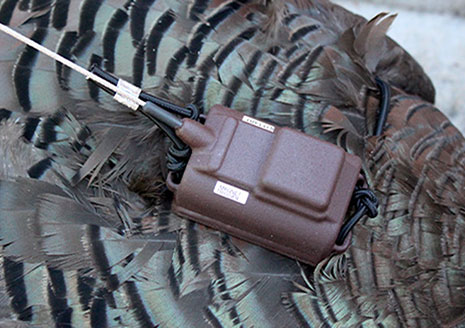
Michigan’s woods are beginning to stir this spring — and so is the science behind wild turkey management. This year, wildlife science in the state is getting a major boost. For the first time in Michigan history, researchers are launching a long-term, large-scale study of wild turkey populations.
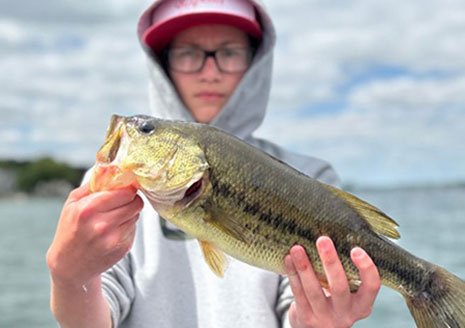
There’s something about early spring tournaments in Northern Indiana as you never quite know what you’re going to get. Between the weather, water conditions, and how fast things can change this time of year, every decision feels magnified.

New Gear
When every cast matters, line performance makes all the difference. Enter Berkley GinClear, Berkley’s premium fluorocarbon, delivering a super smooth feel, unmatched flexibility, and ultra-low memory in a high-performance package built for serious anglers. Designed to maximize casting performance and eliminate the frustrations of traditional fluorocarbon lines, GinClear makes every cast feel like the first one out of the box.
Newsflash


DNR Seeks Help with Aquatic Species Research
- Details
(Provided by Indiana DNR)
The DNR seeks volunteers to help gather information on recreational use at large northern Indiana lakes to learn about the spread of aquatic species.
Lakes involved in the project are Bass, Manitou, Maxinkuckee, Wawasee, Webster and Winona.
Volunteers will monitor selected boat ramps during high-use times to record boats entering or leaving the lake and if any aquatic species, such as plants, mussels or invertebrates, are attached. Volunteers will also record the type of watercraft and its home state, according to license plate.
Michigan DNR Expands Efforts to Stop CWD Outbreak in Deer
- Details
(Provided by Michigan DNR)
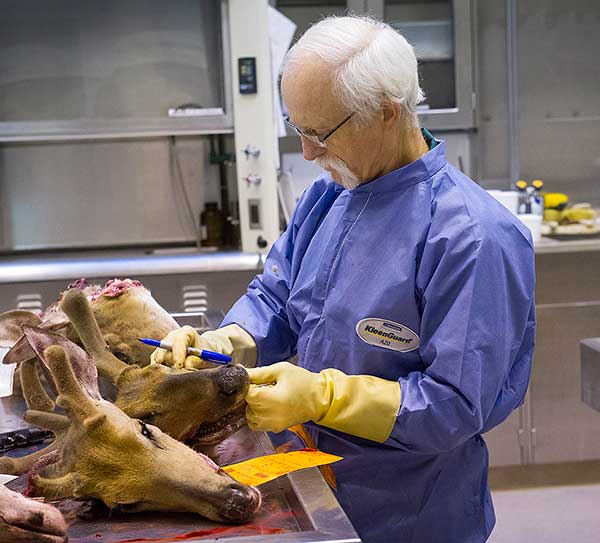 Wildlife Veterinarian Working with Deer CarcassesSince the discovery in May of a free-ranging deer infected with chronic wasting disease in Ingham County, the Michigan DNR has been hard at work sampling deer from the immediate area for additional signs of the disease and putting into effect emergency precautions to prevent as much as possible spread of the disease.
So far, no additional infected animals have been found.
Chronic wasting disease is an unusual neurological disorder that affects members of the deer family. CWD is caused by prions - mutating proteins in the animal’s nervous system - not a bacteria or virus. A form of transmissible spongiform encephalopathy, similar to mad cow disease, CWD causes lesions in the brain. Infected animals exhibit uncharacteristic behavior - they lose their fear of humans, for instance - and gradually waste away. CWD has never been shown to cause illness in humans.
Page 138 of 283
Search





Advertise with Us!

Michiana Outdoors News provides advertisers a cost effective vehicle to target thousands of sportsmen across southern Michigan and northern Indiana.
Connect With Us