




What's New?
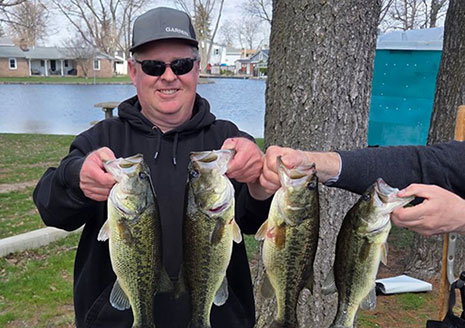
Loren Crosbie caught the only limit to win the Michiana Singles season opener Sunday at Lake Wawasee.
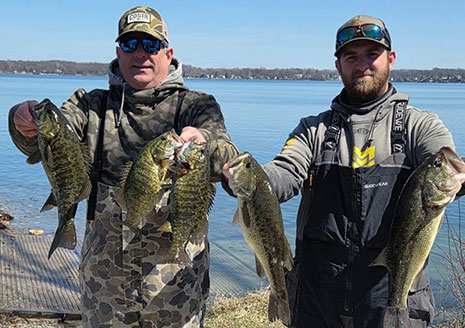
Ten teams showed up at Lake Maxinkuckee Saturday for the Casting Couples Open, and the fish cooperated despite chilly weather.
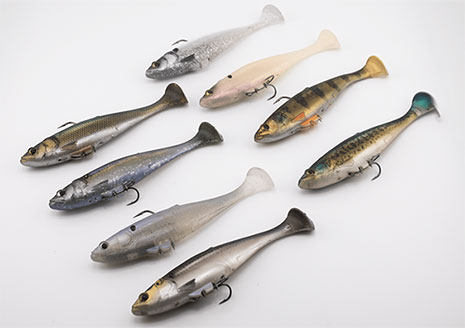
New Gear
After taking home the Best Freshwater Soft Lure category at ICAST 2025, the Z-Man SWAG LT swimbait has officially hit retailers nationwide—arriving just in time for one of the most important big-bass windows of the year: the prespawn.
Newsflash


Indiana Deer Harvest Drops Again
- Details
(Provided by Indiana DNR)
Indiana hunters harvested 120,073 deer in the 2014 season, a decrease from the previous two years.
The DNR says that was by design to reduce the deer population.
"Several years ago, we modified our management strategy to focus deer herd reduction in a strategically targeted manner to more adequately balance ecological, recreational and economic needs of Indiana citizens," said Mitch Marcus, chief wildlife biologist for the DNR Division of Fish & Wildlife. "We are no longer managing for a stable to increasing deer herd, so the declines in harvest are expected."
The 2014 total was a 4.4 percent drop from 2013 and an 11.9 percent drop from the all-time record harvest of 136,248 deer in 2012.
To view the full report, go to www.in.gov/dnr/fishwild/ and locate ì2014 Deer Reportî in the Hunting & Trapping panel.
The 2014 season was composed of three statewide segments ñ archery (Oct. 1 to Jan. 4, 2015), firearms (Nov. 15-30), and muzzleloader (Dec. 7-21). A late antlerless season was available from Dec. 6 to Jan. 4, 2015 in 63 counties. Additionally, licensed youth age 17 or younger were eligible to participate in a two-day season in late September, and designated urban zones allowed archery or crossbow hunting from Sept. 15 through Jan. 31, 2015.
Where Do Michigan Walleyes Come From? Here’s Your Answer
- Details
(Provided by Michigan DNR)
 Biologists working shock boat capture walleyes for egg taking purposes.As many anglers know, much of Michigan’s inland-waters walleye fishery is supported by hatchery-raised fish. What many don’t know is that the source of those fish - the Muskegon River, below Croton Dam - is supported by hatchery-raised fish, too.
"There’s not a lot of natural reproduction in the system,” said Rich O’Neal, the Department of Natural Resources fisheries biologist who oversees the Muskegon River watershed. “We’re getting very low production in the river. We’re not sure why, but we think water velocity or water temperature could have something to do with it. We know we get good natural reproduction further upstream.”
“There are 3 to 4 billion eggs laid here when they’re spawning, but we’re just not getting fry production.”
It took a stocking effort to rebuild the Muskegon River population after it collapsed in the 1960s. O’Neal said sea lamprey predation - the preying of one animal on another - on adult walleyes was part of the problem, but alewife predation on juveniles also was a factor. “We saw that all over the Great Lakes,” he said.
Page 141 of 281
Search




Advertise with Us!

Michiana Outdoors News provides advertisers a cost effective vehicle to target thousands of sportsmen across southern Michigan and northern Indiana.
Connect With Us