



What's New?
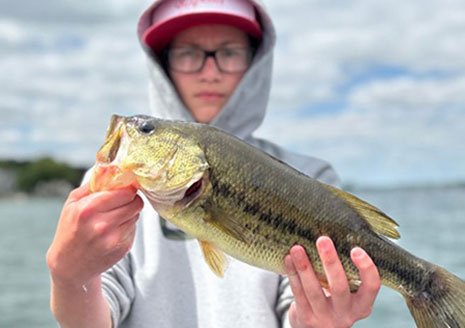
There’s something about early spring tournaments in Northern Indiana as you never quite know what you’re going to get. Between the weather, water conditions, and how fast things can change this time of year, every decision feels magnified.

It took big bags to land a top check in the Michiana Fishing League Tournament on Lake of the Woods in Bremen, Ind. last weekend.
New Gear
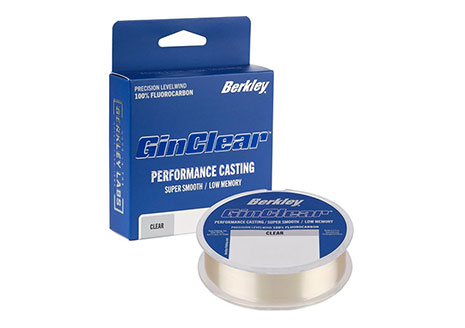
When every cast matters, line performance makes all the difference. Enter Berkley GinClear, Berkley’s premium fluorocarbon, delivering a super smooth feel, unmatched flexibility, and ultra-low memory in a high-performance package built for serious anglers. Designed to maximize casting performance and eliminate the frustrations of traditional fluorocarbon lines, GinClear makes every cast feel like the first one out of the box.
Newsflash


Indiana to Continue February Canada Goose Season
- Details
(Provided by Indiana DNR
The Indiana DNR will offer another late season for hunting Canada geese.
The season runs Feb. 1-15 in 30 counties: Steuben, LaGrange, Elkhart, St. Joseph, La Porte, Starke, Marshall, Kosciusko, Noble, DeKalb, Allen, Whitley, Huntington, Wells, Adams, Boone, Hamilton, Madison, Hendricks, Marion, Hancock, Morgan, Johnson, Shelby, Vermillion, Parke, Vigo, Clay, Sullivan and Greene.
The late season helps control the population of the breeding “giant” subspecies of Canada geese around urban areas, a common issue in Indiana and surrounding states. Indiana has offered hunters a late Canada goose season in select counties every February since 2008.
Southern Michigan Gun Season Deer Harvest Drops 10%
- Details
(Provided by Michigan DNR)
The Michigan DNR says challenging conditions and lower deer numbers in some areas have likely led to fewer deer being taken during the Michigan deer firearms season.
Firearm season deer check-station activity declined in all regions of the state compared to 2012.
Each year the DNR generates preliminary estimates of the firearm deer harvest shortly after the season closes on Nov. 30. Those estimates are replaced by a rigorous assessment of harvest and participation over all deer seasons using an annual hunter mail survey.
The 2013 firearm deer season harvest appears to have decreased in all regions this year, but particularly in the Upper Peninsula and southern Lower Peninsula. Experiences can differ widely within regions; DNR biologists estimate the harvest (compared to 2012) was down perhaps 15 to 20 percent across the Upper Peninsula, decreased only slightly in the northern Lower Peninsula, and declined perhaps 10 percent in the southern Lower Peninsula.
Page 195 of 282
Search





Advertise with Us!

Michiana Outdoors News provides advertisers a cost effective vehicle to target thousands of sportsmen across southern Michigan and northern Indiana.
Connect With Us