


By Louie Stout
The Indiana DNR takes a lot of heat about the weed treatments conducted by lake groups on northern waters.
While some of it may be justified, anglers should know that district fish biologists are aware of the key role that aquatic plants play in fish habitat.
Just look at the Kokomo Reservoir, where fisheries officials are trying hard to establish plant life in the aging lake east of Kokomo, Ind.
In 2020, we wrote about plans to get submergent plants like spatterdock and water lilly to grow in some of the mud-bottom flats. The project was requested by local anglers in a public meeting where fishermen expressed concern about the lack of habitat.
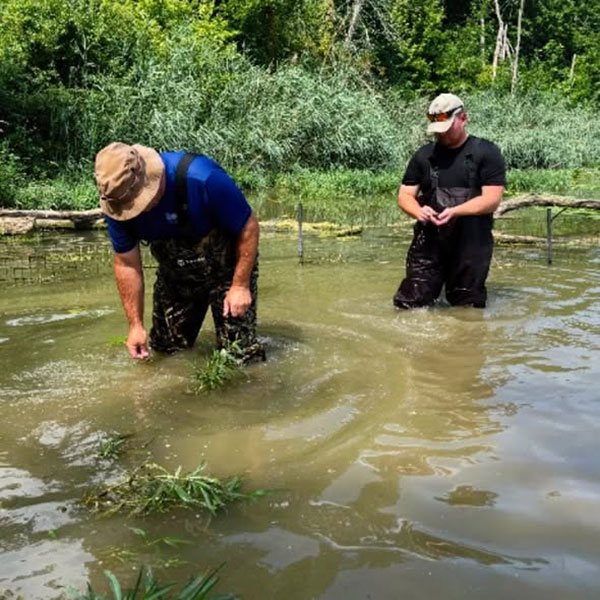
Biologist Tyler DeLauder said the DNR efforts appear to be working. They created fenced enclosures (to keep the carp out) and in some areas, the plants are beginning to expand beyond those areas. The DNR also has added some artificial structures in the lake as well.
“The ultimate purpose is for big and little gamefish and insects to utilize these areas,” he said. “We’re hoping the plant growth is exponential to help overcome carp issues.”
The reservoir lies on the southern most border of what we call Michiana and at the bottom of DeLauder’s district, but the DNR efforts and successes are notable. Kokomo serves as a test lake.
“We want to give it 5 or 6 years to see what works and what doesn’t,” he said. “Once we do, we may look for different bodies of water, including some glacial lakes. We have a few in the north without any vegetation.”
The fishery
The reservoir covers nearly 500 acres and is fed by Wildcat Creek which meanders out of Greentown, Ind. where one small, albeit shallow impoundment exists before narrowing westward and ultimately forming the Kokomo Reservoir that is dammed on the western end.
Despite the abundance of carp and turbid water, the lake has remained a pretty good fishery, hosting weeknight and weekend bass tournaments. Delauder said the lake contains crappie and bluegill as well.
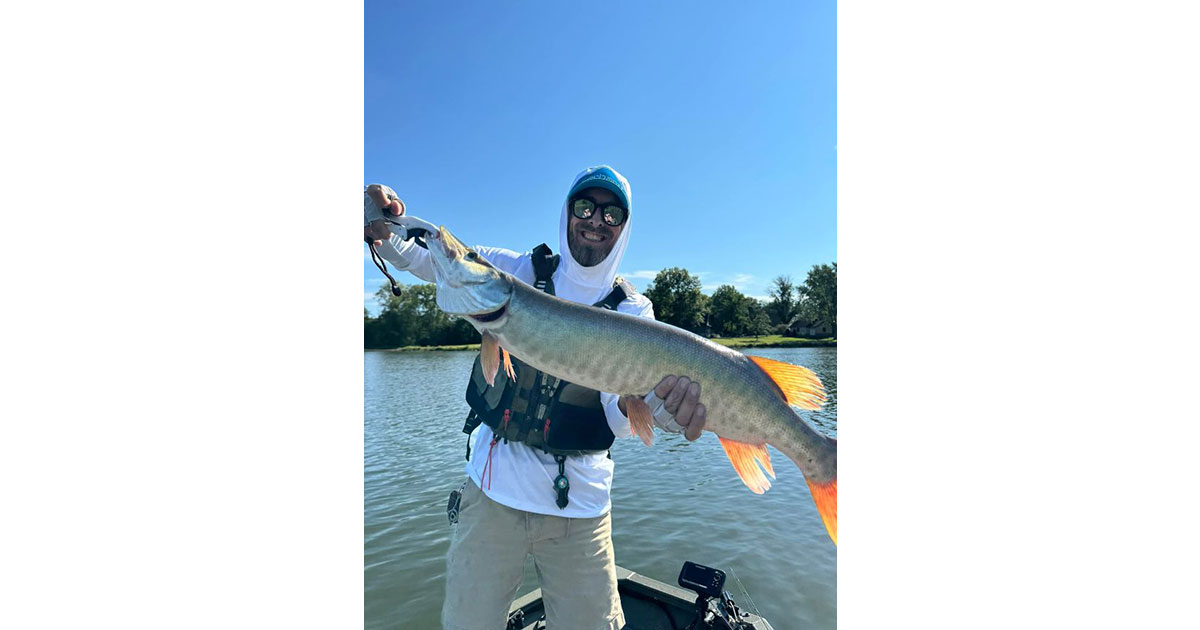
Years ago, the state stocked tiger muskie but most of those fish have disappeared. But, in 2022, Muskies Inc. were permitted to purchase and stock purebred muskies on the Greentown end of the lake and have continued to do so with about 483 fish annually. The fish averaged 12 inches; some 30-plus inchers, likely part of the first stocking, have been caught.
The state also stocks walleye fingerlings annually, and Kokomo Tribune outdoors writer John Martino says they are being caught as well.