


Sportsman Spotlight
Hometown: Osceola, Ind.
Occupation: Steel Warehouse Supervisor
Favorite species to trap: Mink. They are less predictable in the exact route they take along a bank. I like the challenge.
Favorite trapping location: Any watershed.
Hobbies when not trapping: Ice fishing and deer hunting.
If you only had one trap and why: It’s called 1.5 coil spring. I can use it to target many different species.
Best tip to give a new Michiana trapper: Learn the habits of the animal before you try to trap it. Where they go, what they do and what they eat. I have spent thousands of hours following tracks in the snow.
By Louie Stout
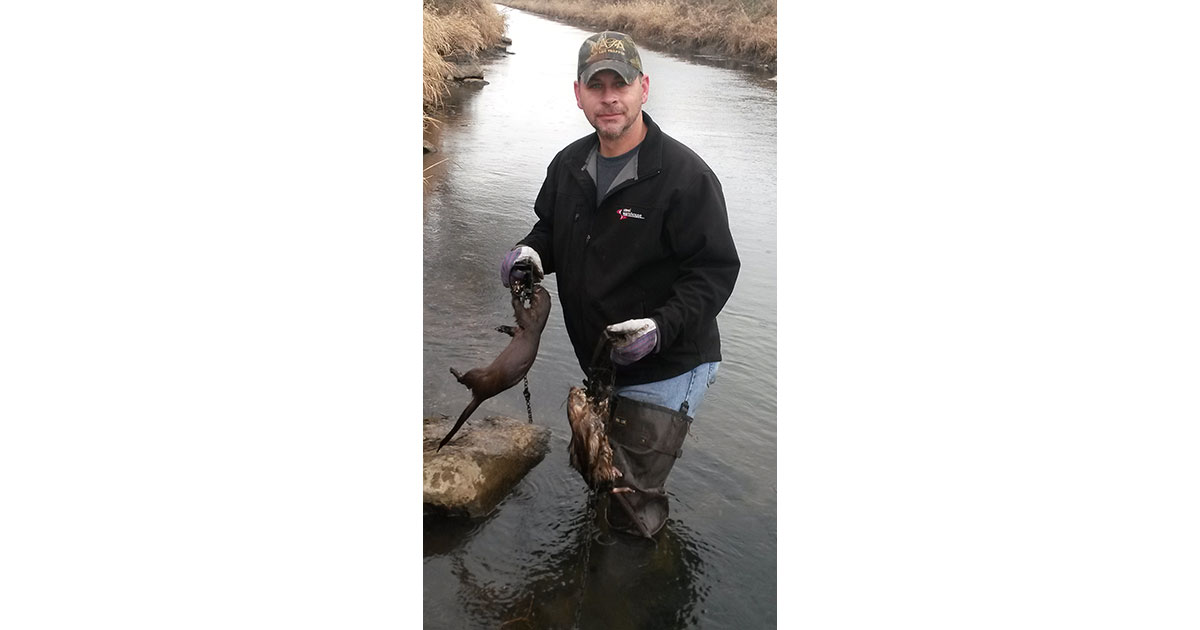
Full disclosure - Chuck Powell is my longtime fishing partner.
While most anglers know him as the guy who runs the front of my boat and catches most of the fish, he’s also an avid trapper.
And a damn good one.
Nobody spends more time outdoors year-round than he does. When he’s not fishing or deer hunting, he’s either making animal nuisance calls as a side business or trapping for fur.
Trapping isn’t new to the 56-year-old Hoosier. He began trapping age 12 by catching opossums and racoons in his neighbor’s garden.
And in 2018, he was inducted into the Mink Trappers Hall of Fame by the website, minktraping.com.
Here’s the Q/A we did with him:
MON: How did you develop your trapping skills?
POWELL: My dad introduced me to his trapper friends, Burl High and John Crump. Crump had a fox ranch that I worked on between the ages of 13 and 18. He had a lot of trapping magazines, and I read them cover to cover. I trapped all through high school, and the more I learned, the better I got at it.
MON: How long have you been nuisance trapping? Good money in that?
POWELL: About 15 years. There definitely is more money in answering calls about nuisance critters than fur trapping. I’ve done everything from raccoons to skunks and moles.
MON: So, why do you still do fur trapping during the season if it isn’t cost effective given the time it takes?
POWELL: It’s a passion I’ve had and keeps me outdoors and active. And the season kicks in about the time nuisance calls slow down.
MON: Based upon last year’s fur market, what is a coon’s value?
POWELL: Less than $10. You can’t recover the cost of gas it takes to check traps daily over a week’s time, and that doesn’t account for the time it takes to process them for the fur. We don’t have the quality of fur as some states do. Now, last year, skunks were worth about $80, but we don’t have the population to make it worth pursuing them.
MON: What’s one of the strangest nuisance calls you’ve had?
POWELL: One that stands out the most is when a family called me in a panic because a blue heron got his foot caught between the slats on their pier. I walked out, grabbed the bird’s neck, slid his foot out and sat him back on the pier and he went about his business. Easy money. It took longer to drive there than to do the call.
MON: Once you capture a nuisance animal, what do you do with it?
POWELL: It depends upon the situation, but most times they are dispatched.
MON: What’s the strangest thing you’ve caught in a trap during the fur season?
POWELL: I set a lot of traps underwater in ditches and backwater for muskrats. It’s not uncommon to catch bass and suckers.
MON: Some people say trapping is inhumane. What do you say about that?
POWELL: Years ago, the traps that were used out of necessity had forged teeth but they’re illegal today. Modern day traps are designed to not discomfort the animal.
MON: What changes have you seen in the animals you trap?
POWELL: It’s changed a lot because of loss of habitat due to the expansion of shopping malls, subdivisions and cities. The animals either die off or become very good adapting amongst us. For example, there were no coyotes to speak of when I started trapping. They came on strong in the late 1980s. I’m not seeing as many as I did during the peak.
MON: Why is that?
POWELL: Again, loss of habitat. But also, there are a lot of night hunters out there with night scopes who can shoot them all year long and who don’t utilize the fur.
MON: How has the fox population changed?
POWELL: Fox numbers diminished when the coyotes came in, but now that the coyote population is down, we see fox numbers climbing again. They are mostly red fox, and I rarely see any gray fox because they prefer thickets and heavy brush, which have disappeared considerably due to urbanization.
MON: What other species are rare but live amongst us?
POWELL: There are reports of badgers, but I don’t see many. Armadillos are shifting this way, but I haven’t come across any of those, either. I have never trapped a bobcat but have trail camera views of them.