


By Louie Stout
The Waldron Chain of Lakes in Indiana’s Noble County – also known as Duke’s Bridge - has become a hot spot for bass anglers.
Tournament results in recent years show the lake has some quality bass and it’s become a popular early season/late season tourney site.
Anglers must launch in a channel along the north branch of the Elkhart River. With fish being released there after a tournament, many anglers have asked, “are those fish making it back to the lakes and to where they were caught?”
The Indiana DNR plans to find out. Beginning in late April or May, fish managers will begin collecting bass from the lakes, inserting tiny transmitters into their bellies, and releasing them. In addition, receivers will be submerged at strategic locations in the various lakes.
“We’re excited about this project and hope to learn a lot,” said DNR District Biologist Tyler DeLauder. “When a fish carrying a transmitter swims by a receiver, it will record it. We will go out periodically and pull the receivers, download the information, and put the receivers back in the water. This should begin to tell the story on what those fish are doing after being released at the ramp.”
DeLauder said he only has 10 transmitters, as they are very costly.
“We’re using the less expensive ones and they still cost $375 each,” he noted. “There are better ones that provide water depth in which the fish are swimming and water temperature, but they cost $1,000 each.”
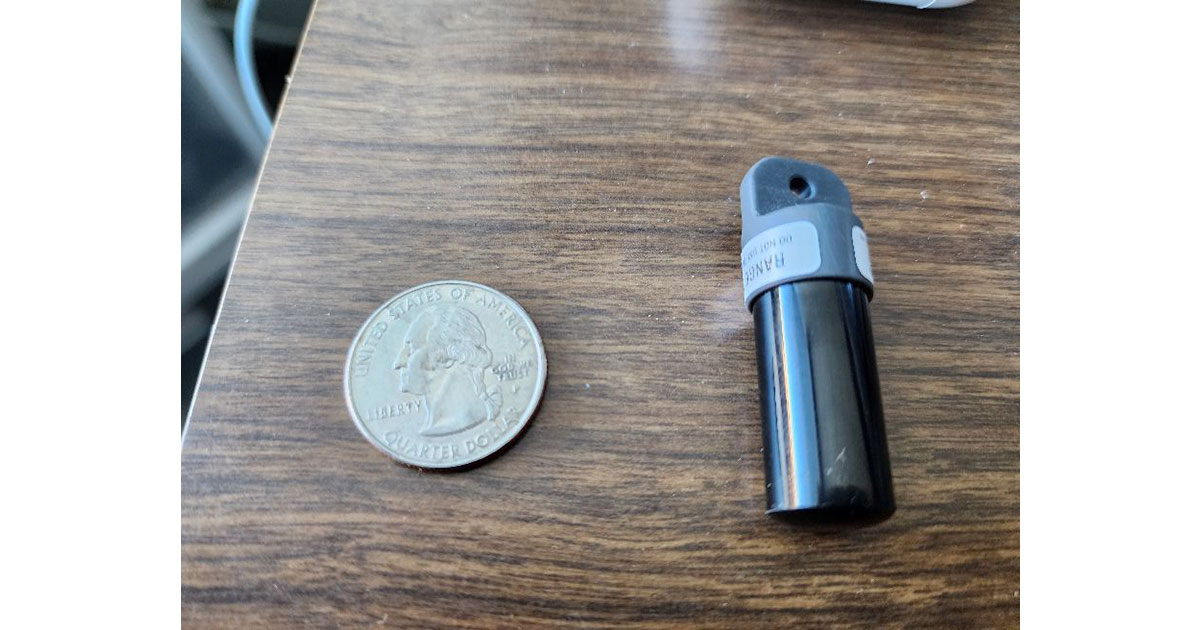
Anglers will know if fish they catch are carrying a transmitter because a small, orange-colored tag will be protruding from the belly. DeLauder encourages anglers to not remove the tag unless they plan to keep the fish. If so, he’d like to get the transmitter returned so biologists can use it again. It’s the size of an AA battery and lasts for up to 600 days.
“I realize this (10 tagged fish) is a small sample size but we think it will give us answers to our questions about fish movement on that lake,” DeLauder said. “Years ago, we did a similar project on Wawasee, but today’s technology is better. Ultimately, we’d like to do a smaller lake and get tags for bluegill and other fish to track their seasonal movements.”
The biologist said that he would be interested in talking to an angler or group representative who would like to buy additional tags for the project.
You can contact him at the North East Regional Office, (260) 244-7049.