


- Details
By Louie Stout
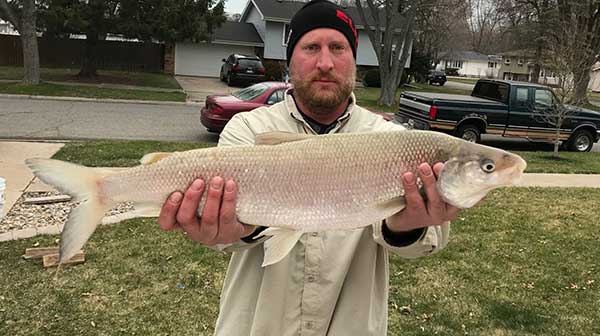 Dustin Meeter with State Record Whitefish
Another state record whitefish caught from Lake Michigan is a pretty good indication those delectable native fish may be coming back on the south end of the lake.
The Indiana record has been broken five times in six years, with the most recent occurring April 13 by a Crown Point angler fishing near Burns Harbor.
Dustin Meeter broke the record last month by nearly a half pound with a 6-pound, 3-ounce fish that erased the record set last year. He was jigging for lake trout at the time.
- Details
By Louie Stout
 Trophy Turkeys Are No Challenge to this Grandma
On one hand, Betty Vanlue isn’t your stereotypical grandmother.
Indeed, she has three daughters, seven grandchildren and three great grandchildren she loves dearly. Her grandkids call her “Neenie” and like hanging out and grandma’s house.
But come hunting season, they’ll find her in the woods.
Hunting.
That’s quite evident when you walk around her home and see the walls decorated with deer heads and turkey beards all harvested by her.
Vanlue added another trophy to her wall last month when she shot a 22-pound tom turkey with a 9 ½-inch beard off her farm opening day.
She was in the woods at 7 a.m. April 23 and shot the bird at 8.
“I called him in (with a box call), took one shot and dropped him in his tracks,” said the proud grandmother.
- Details
By Louie Stout
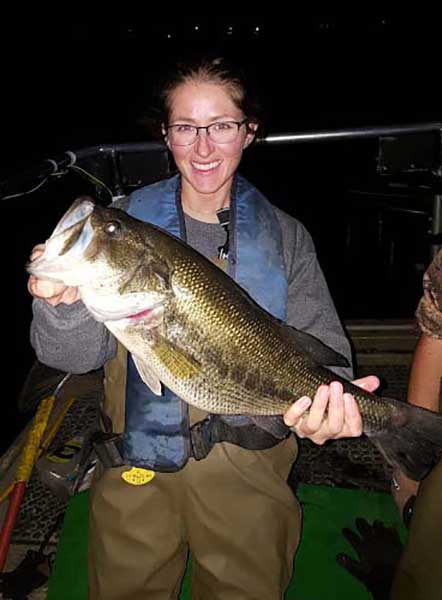 Best Bet for Quality Bass? Try Bruce Lake
If you're looking for a diamond-in-the-rough bass lake, put Bruce Lake on your radar.
The 245-acre lake on the Pulaski/Fulton County line, seven miles southeast of Winamac, Ind., yielded a good population of quality bass during a DNR survey there last year.
"We turned up 30 bass over 18 inches in four hours of electroshocking," said Indiana District Fisheries Biologist Tom Bacula. "The biggest we saw was a female that was 6 pounds plus. There are some real studs in there."
The survey was conducted at the end of April last year.
- Details
By Louie Stout
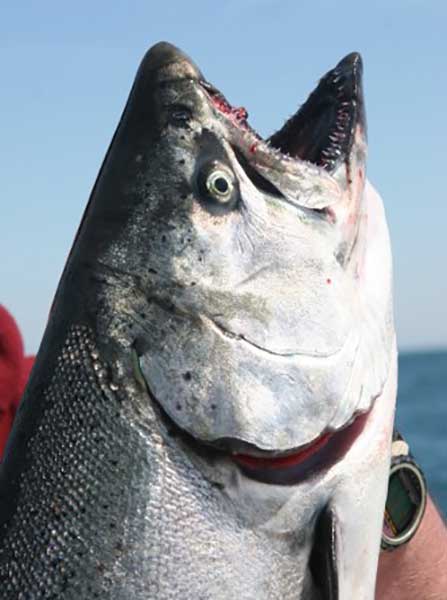 Will Stocking Changes Impact Lake Michigan Fishery?
Indiana’s updated stocking plan may put smiles on Lake Michigan anglers’ faces, but it does raise some curious questions.
Lake Michigan biologist Brian Breidert announced last week that Indiana will get 40,000 brown trout from Michigan to replace the fish it couldn’t get from Illinois this year. He also said it also will stock 7,000 more king salmon this year and additional 15,000 next year.
The brown stocking is a great deal. Michigan browns are bigger (6 inches) compared to the fingerlings they we were getting from Illinois, so survival should improve.
Unfortunately, none of those are going into the St. Joseph River. Some 30,000 will go into the East Chicago Marina and the remaining 10,000 into Trail Creek at Michigan City.
“Stocking browns in the St. Joseph at South Bend is something I am thinking about for the future,” said Breidert.