

 Tournament News Powered By Lake Drive Marine

Wednesday, May 06, 2026

- Details
By Al McGuckin
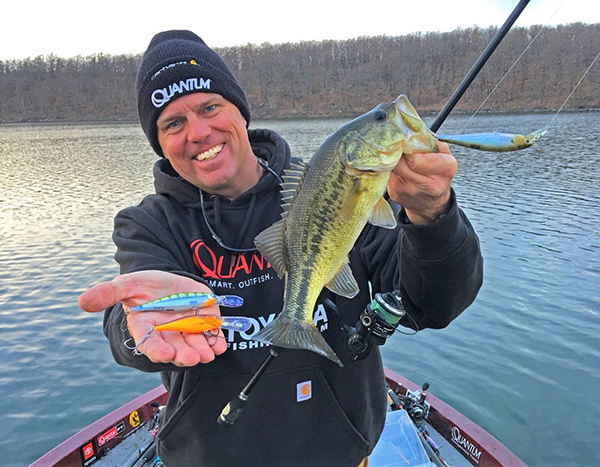 Cast Your Cold Water Crankbaits with Spinning Tackle
Bass fishing’s funniest man, Gerald Swindle, said it best on the Classic weigh-in stage a couple years ago. “I’m headed for a hot shower. I’ve been standing in a cold wind all day casting a Rapala Shad Rap, which is about like trying to cast a potato chip in a hurricane.”
If you know Swindle, you know that a Shad Rap might very well be his favorite cold water lure. But if you’ve ever tried to throw the legendary balsa bait, or a suspending jerkbait, on baitcasting equipment, especially when the wind is more than a whisper, you may find yourself cussing under your breath, or heck, possibly even out loud.
I’ve been there and done that more than I’d like to admit, and amid a recent bout of maddening backlash based frustration I flashed-back to 25 years ago, when I first learned to throw suspending jerkbaits for cold water bass – on spinning tackle.
Yes, believe it or not, the best anglers in the Ozark Mountain region who helped make these wintertime baits famous, used spinning tackle in nearly equal proportion to baitcasting equipment. And then, for whatever reason, spinning sticks and ‘egg beater’ reels seem to fall out of winter fashion.
And that’s unfortunate; because spinning tackle truly offers a multitude of performance-based reasons to be paired with your favorite cold-water treble hook laden lures.
Basic physics favor spinning tackle for lighter lures
With lighter lures like a Shad Rap, it’s tough to generate enough momentum on a baitcasting reel’s spool to spin sufficiently. So in turn, the friction slows the lure’s launch through the air. And by the time the spool finally does get up to speed, the momentum in the lure is too low, and the result is often a backlash.
Longer casts, and fewer backlashes
The positive result of pairing lighter balsa baits and jerkbaits with spinning tackle is simple, you’ll get far fewer backlashes, plus, much longer casts. And longer casts help increase your catching success, not only by allowing these diving lures to stay in the strike zone longer, but also to spook fish less in the clear cold waters where these visually oriented lures work best.
Upsize your spinning reels
Size 25 and 30 are the most popular spinning reel sizes for bass anglers, but legendary pros like Kevin VanDam nearly always use a size 40 spinning reel.
Why? Back to that physics class we spoke of a minute ago. Larger spools provide even less friction as the line leaves during the cast. Plus, you’re able to pick up more line with each turn of the handle during the retrieve while fighting that 5-pounder.
Fully capable of fighting big fish
Finally, speaking of 5-pounders, don’t ever believe you can’t fight big fish on spinning tackle. As proof, Bass Fishing Hall of Fame member Shaw Grigsby has lost count of the bass over 5-pounds he’s landed on spinning tackle, and the number of freight train tugging smallmouth caught on spinning tackle annually is staggering.
The key is to make sure you’re using a quality reel with the drag set just loose enough to allow big fish some tugging room. Pair it with a 6’ 10” to 7’ medium action rod with plenty of tip. A rod of this length and action will provide added launch momentum on the cast, and necessary amounts of forgiveness, so as not to tear hooks free from the mouths of big fish.
Lastly, take your time and be patient during the fight, but by all means, don’t be afraid of spinning tackle. Instead, embrace its advantages. Spool up a size 30 or 40 reel with 8 or 10 pound line, tie it to your favorite cold water crankbait, and let ‘er rip, Tater Chip.
- Details
Rapala Report
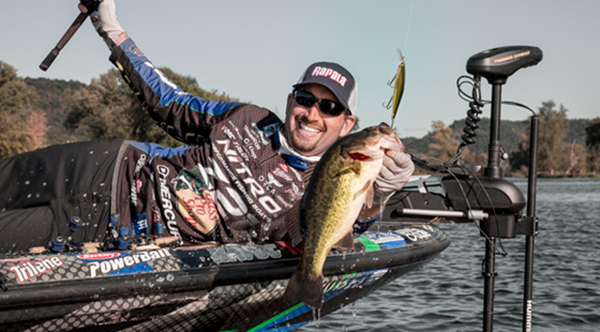 Jerkbaits Catch Early-Winter Bass
When water temperatures drop below 52 degrees in Tennessee’s Douglas Lake, you can load your boat with bass by jerking Rapala Shadow Rap Deeps across and over shallow shelves near steep breaks into deeper water.
“Those fish were back in really flat stuff feeding throughout the fall, but in early winter they’ll head to stuff that’s going to be real steep,” says Ott DeFoe, a five-time Bassmaster tournament champion. “When they’re in transition, a great bait to connect with them is that Shadow Rap Deep. It’s got good side-to-side darting action, its flat sides give it a rolling flash, and as its name indicates, it’s a fairly deep-running bait – it will run 8 or 9 foot deep on 10-pound line.”
While most look-alike jerkbaits follow a forward trajectory with each twitch of the rod tip, the Shadow Rap’s action stands out. Not only does it dart side to side, it’ll spin around almost 180 degrees with the right action applied. As a result, it can trigger bites in three phases of your retrieve – initial kick, snap back to action, and on the pause, while slowly sinking, nose down.
- Details
Provided by Z-Man
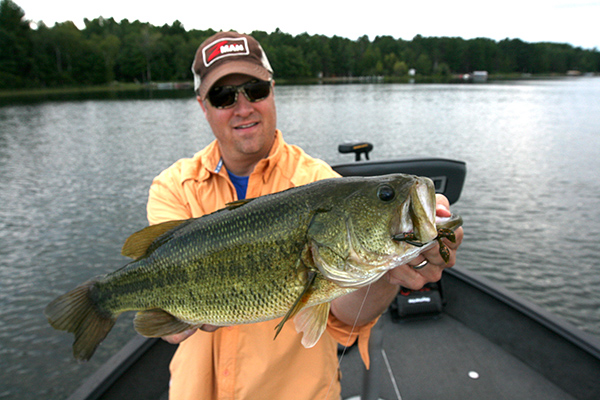 Next Generation ‘Ned Rig’ Baits Create New Possibilities
To hear Ned Kehde – founder of the Ned Rig - tell it, the bass-catching power of his “little jig” is so great there’s simply no reason to change it.
“In years past, we’ve experimented with just about every new rigging refinement you can think of.” notes Kehde. “In the shallow impoundments we fish, none have been so fruitful as an exposed-hook, mushroom-style jig dressed with half a ZinkerZ or other finesse worm. Day after day, season after season, it inveigles dozens and dozens and dozens of bass.”
The Ned-Miki
 Next Generation ‘Ned Rig’ Baits Create New Possibilities
Interestingly, the same simple motivation to catch more bass has inspired anglers across America to create unique and individualized versions of the Ned Rig framework—both in retrieve and the way they fasten a finesse bait to a hook.
Longtime Ned Rig fan Joey Nania, professional angler and Alabama based fishing guide, has devised a couple key mods to the presentation. Recently, he’s guided clients to loads of spotted, largemouth and striped bass, wielding a concoction he calls the Ned-Miki Rig.
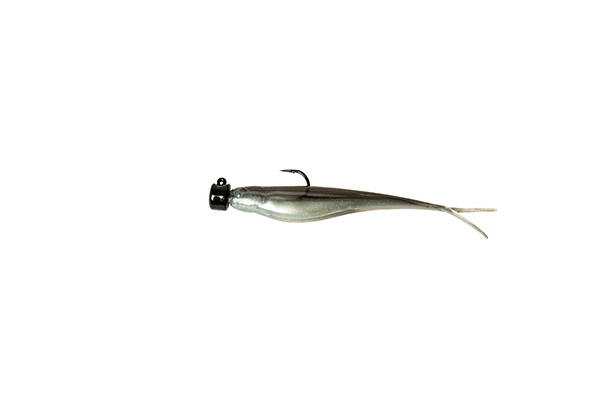
“As bass fans know, the Damiki Rig has been a money presentation for enticing shad-focused bass suspended in 15 to 30 feet,” says Nania. “But you need a really well-balanced, 90-degree jighead and a compact shad-shaped bait to pull it off. Having fished the Z-Man NedlockZ HD jighead for a lot of my regular Ned Rig fishing, I realized this head would really shine for ‘video-game’ fishing—working individual bass on sonar, vertically, playing cat-and-mouse. It’s versatile enough that you can cast the bait to suspended fish, too, just letting it glide and pendulum as you work it back to the boat.”
A 1/10- or 1/6-ounce NedlockZ HD, says Nania, melds perfectly with a Z-Man StreakZ 3.75, a bait he calls “one of the best small shad imitations ever. And because it’s made from ElaZtech, the bait’s super buoyant. When you pause and let the Ned-Miki soak, the bait maintains a natural horizontal posture. Similar fluke-style baits aren’t buoyant, making them ride tail-down, rather than hovering horizontal like a live shad.”
Northern anglers fish a similar method, keying on suspended or rock-hugging smallmouth bass. The Ned-Miki has even evolved into a superlative substitute for a dropshot rig, which isn’t quite so precise for big sluggish smallmouths hunkered down between boulders.
“Watch the bait drop on the sonar screen until it’s about 1 foot above the fish’s head,” Nania explains. “Hold the bait still. When a bass begins to rise and chase, lift the bait to take it away. Sometimes, a bass will chase the Ned-Miki up 15 or 20 feet, absolutely crushing it on an intercept course. Other times, you have to entice them a little, using the bait’s super-soft, high-action tail to close the deal. Almost like a dropshot, but even more dead-on.”
All-Terrain Ned
 Next Generation ‘Ned Rig’ Baits Create New Possibilities
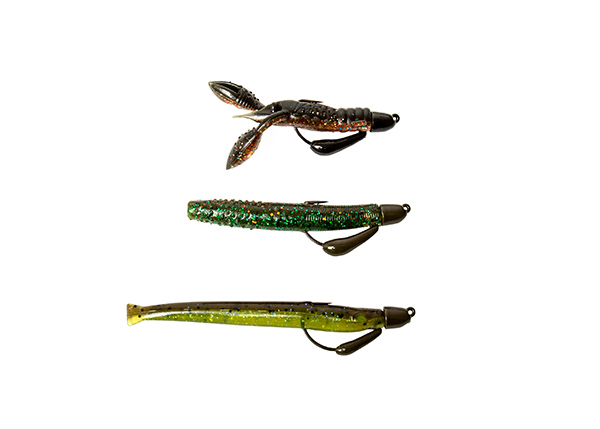
Going where no Ned Rig has gone before, Nania is ecstatic when he mentions another new finesse device. “What can I say about the Finesse BulletZ, man? This jighead is off-the-charts cool. Rig one with a Finesse TRD, MinnowZ or TRD CrawZ and fish simply can’t tear it off. I’ve had the same bait on the same jighead for the past week, and dozens of bass later, it’s still going strong.”
Made to snake Ned Rig style ElaZtech baits through the thickest cover, the Finesse BulletZ sports a subtle bullet-shaped head and a slender keel weight molded precisely onto a custom, heavy-duty size 1 VMC EWG hook. “People look at this jig and wonder how the heck you rig a bait without tearing it. It’s funny because it’s actually a non-issue with ElaZtech, which is pretty much tear-proof. And once the bait’s in place, it’s there until you take it off.
“Goes without saying that the bait’s weedless,” says Nania. “But I’m also just discovering how well the little jig skips under docks,” he adds. “Regardless of the cover— rocks, brush, grass, manmade structures, etc.—this is one incredible jig-bait combo for finessing big bass in places you couldn’t previously throw a Ned Rig.
“I like to rig a 1/10-ouncer with a TRD MinnowZ—Smelt and Hot Snakes are two of my favorite patterns—and skip it under docks. Rigging the same bait on a 1/6-ounce Finesse BulletZ jig also shines for casting into deeper schools of bass.”
Nania notes how the jig’s keel weight makes the bait glide and slide horizontally, rather than nose-down. “It’s like some radical, improved version of the slider head, except this jig perfectly matches 2- to 4-inch finesse-style baits. And you can pull it right through the thickest brush piles with no problem at all.”
From southern impoundments to northern lakes and rivers, the Finesse BulletZ jig may be at its best when rigged with Z-Man’s authentic mini-crayfish bait, the 2.5-inch TRD CrawZ. “The TRD CrawZ is a subtle, unassuming little critter,” says professional angler Luke Clausen. “But rigged with the Finesse BulletZ jig, the bait rides in this freakishly lifelike, claws-up posture. Put it in the water and its buoyant little claws flap and wave, virtually taunting bass to bite—and they do,” Clausen laughs.
Ned-Neko?
 Next Generation ‘Ned Rig’ Baits Create New Possibilities
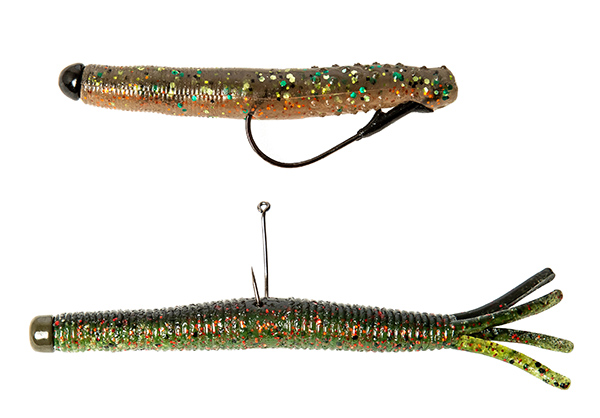
Blurring boundaries between Ned-style and other finesse presentations, creative anglers have concocted what we’ll call the Ned-Neko Rig. Coupling a Finesse TRD, Hula StickZ or other buoyant finesse bait with a Neko hook and Neko weight yields astonishing action, and an intriguing underwater posture.
Hooking configurations depend on cover and bass activity level. The simplest is to Texas-rig your chosen finesse bait onto a #1 to 2/0 Neko style hook. Finish the Neko-Ned Rig by inserting a 1/32- to 1/8-ounce Neko weight into the bait’s tail-end, resulting in a compelling pogo-stick-action along bottom. Also effective is a drag-and-deadstick retrieve, particularly in small, high-percentage zones.
Or, you can get extra wacky (pun intended), and hook the worm right through the middle, leaving the Neko weight in the tail. The toughness of ElaZtech even eliminates the need for an O-ring; just a 1/0 Gamakatsu Finesse Wide Gap hook, your favorite TRD and another alluring look bass can’t say no to.