




Seaguar Report
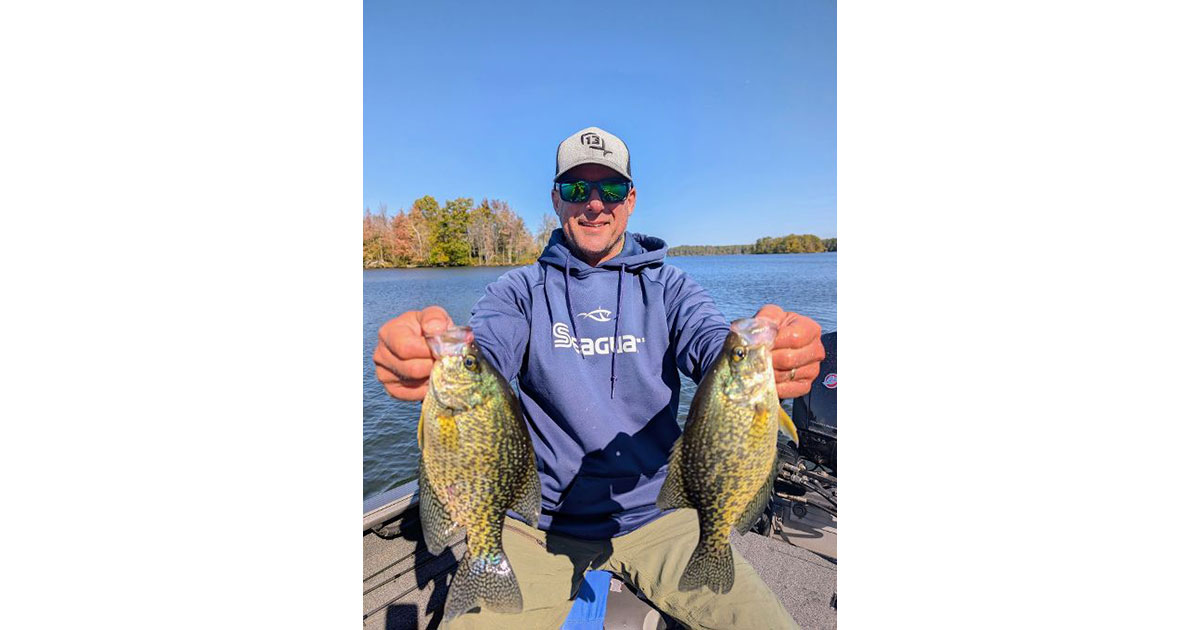
One of America’s most sought-after panfish is the crappie which can be caught in bunches when you find them.
From north to south, they are targeted by anglers looking for fun and to fill their freezers with these tasty filets. Fall months and into winter can be some of the best fishing of the year.
Wisconsin guide Jeff Evans guides clients looking for some late season open water action.
Deep Basins in the North
As winter begins to creep in, Evans and other anglers in the northern states head to the deeper basins to chase crappie. It’s part of their annual migration to wintering areas and can provide some fantastic fishing.
“Late in the season, as the days shorten and the water starts to cool down into the 50s and 60s, the crappie will start to move into the main lake basins, especially the mud basins,” Evans shared. “The crappie that head out there start feeding on bloodworms coming out of the bottom. The best depth ranges are between 20 and 30 feet of water, as this is where crappie spend their winter. Ice anglers would benefit from extra fall fishing so they can locate where these schools of crappie are because they won’t be far when ice forms.”
Locating these schools is something that’s done with the help of his electronics. “You have to trust your electronics this time of year, and once you find them, it’s going to be very obvious,” he said. “I’m looking for fat, short blobs on the graph that are very close to the bottom. You don’t want to start fishing until you see bunches of them; seeing one or two is not worth stopping on, and you want your screen to just light up with them.”
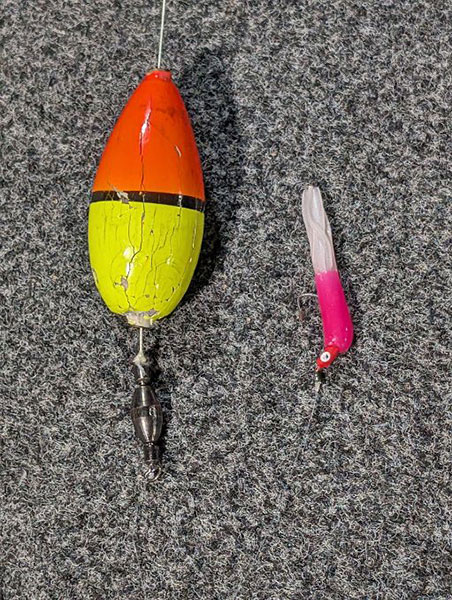
To catch fall crappie, Evans and his clients rely on a tried-and-true rig with a slip bobber and small jig. “Slip bobber fishing is a staple for crappie and we fish small plastics and fish it just off of the bottom because most of the fall, they are going to be really close to the bottom,” he said. “We rig it so it’s about six inches off the bottom with a 1/64-ounce jighead, most of the time with a small plastic bait, mainly small tube baits."
As for colors, he keeps it simple. "I’ve tried all kinds of colors and it always seems to come back to pink and white, no matter what lake we’re on," Evans said. "To keep our bait down, we use a 1/8-ounce egg sinker, a barrel swivel, and a 1/8-ounce slip bobber that is counterbalanced so it barely floats, because a lot of times they hardly bite, and when one just breathes on it, that bobber will move.”
Evans uses a 6-foot, 10-inch ultralight 13 Fishing Defy rod with a 1000-size Daiwa spinning reel and spools it with 20-pound Seaguar Smackdown braided line. From his barrel swivel to the jig, he opts for a 12-inch section of 8-pound Seaguar Gold Label fluorocarbon.
“Smackdown is a great braided line that really holds the slip knot for the bobber very well, it sticks where I want it to stick and won’t slide up,” he said. “Gold Label is the ultimate leader for finesse fishing. It’s thin, flexible, and does everything I want to line these shy fish, which can get pretty goofy at times.”