

 Tournament News Powered By Lake Drive Marine
Friday, June 12, 2026
Friday, June 12, 2026
Thursday, June 11, 2026

- Details
MDNR Report
 Michigan Trout Season
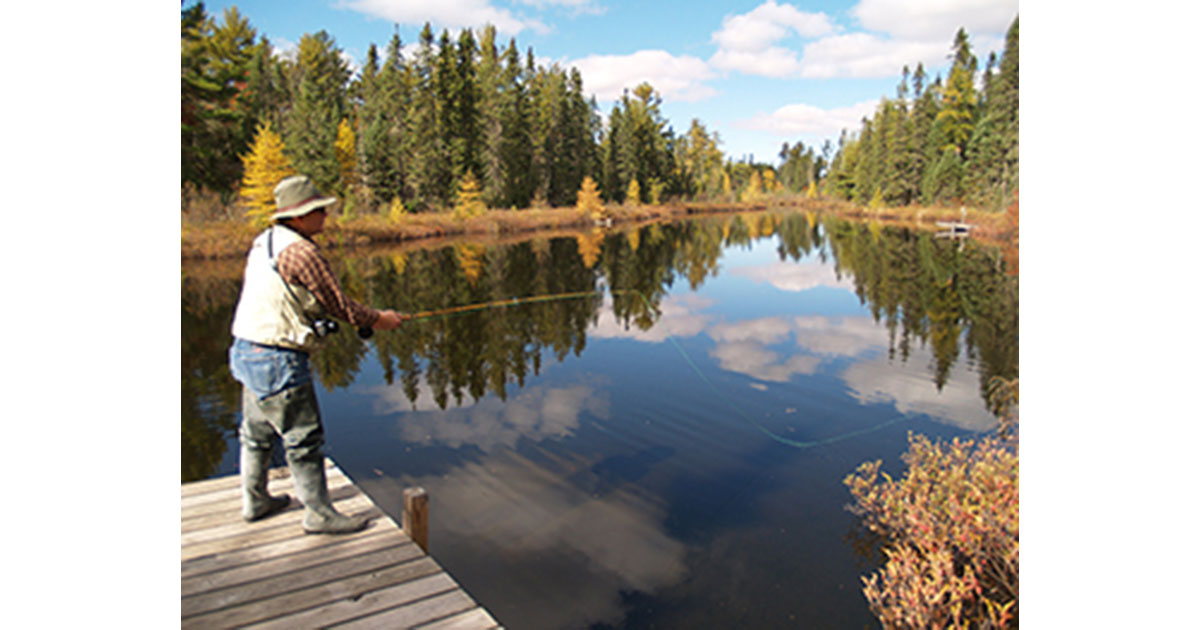
Michigan’s statewide trout opener approaches, and anglers across the state are making plans for April 27, the last Saturday of the month.
Beyond gathering gear and choosing the perfect spot, here are some helpful tips to protect our natural resources and ensure a great experience without any snags.
Buy a license
The 2024 fishing license year began April 1, and there are several ways to get a new license.
Purchase online at Michigan.gov/DNRLicenses or at DNR customer service centers across the state. Many sporting good outlets and service stations also sell fishing licenses.
Licenses can be purchased on the Michigan DNR Hunt Fish app, too. Access license info, maps, certificates and more on the go – download from the App Store for Apple devices and the Google Play Store for Android devices.
If you have questions about buying a license, contact the DNR’s license sales help desk at 517-284-6057.
Check the regs
It’s always a good idea to check regulations before heading out on any outdoor excursion.
Michigan fishing regulations, with the latest changes highlighted in red print, are available for download to your cellphone through the DNR Hunt Fish app, providing handheld access even when no phone service is available. Printed copies are also available for free where fishing licenses are sold or online at Michigan.gov/DNRRegs.
Color-coded regulation maps also are available online and can be downloaded or printed for easy access.
Protect our waters
Michigan’s trout streams are under increasing threat from harmful species that affect habitat and food sources for trout and other fish. Both didymo (rock snot) and New Zealand mudsnail can be moved to new locations on waders, nets and gear. To protect our waters, be prepared and take the time to decontaminate before moving to a new river or stream.
Didymo is a microscopic diatom (single-celled alga) that thrives in cold, low-nutrient streams. Under the right conditions, prolific growth – or blooms – result in thick mats that can cover river and stream bottoms.
Didymo blooms were first observed in Michigan waters in 2015 in the St. Marys River and then the Manistee and Boardman rivers in 2021 and 2022, respectively. Didymo has the potential to spread to new areas when cells attach to anglers’ waders and gear.
New Zealand mudsnails are only about 1/8 inch long, but they can change aquatic habitats by reaching extremely high densities and outcompeting native macroinvertebrates, leaving fish food in short supply.
New Zealand mudsnail populations are known to be present in the Au Sable, Boardman, Grass, Pere Marquette, Pine and Upper Manistee rivers in Michigan. Mudsnails can survive out of water for several days. Because of their small size, they are easily transported on boats, anchors and fishing gear such as waders and nets.
Learn about more actions anglers and boaters can take to prevent the spread of invasive species.
- Details
IDNR Report
 Indiana Trout
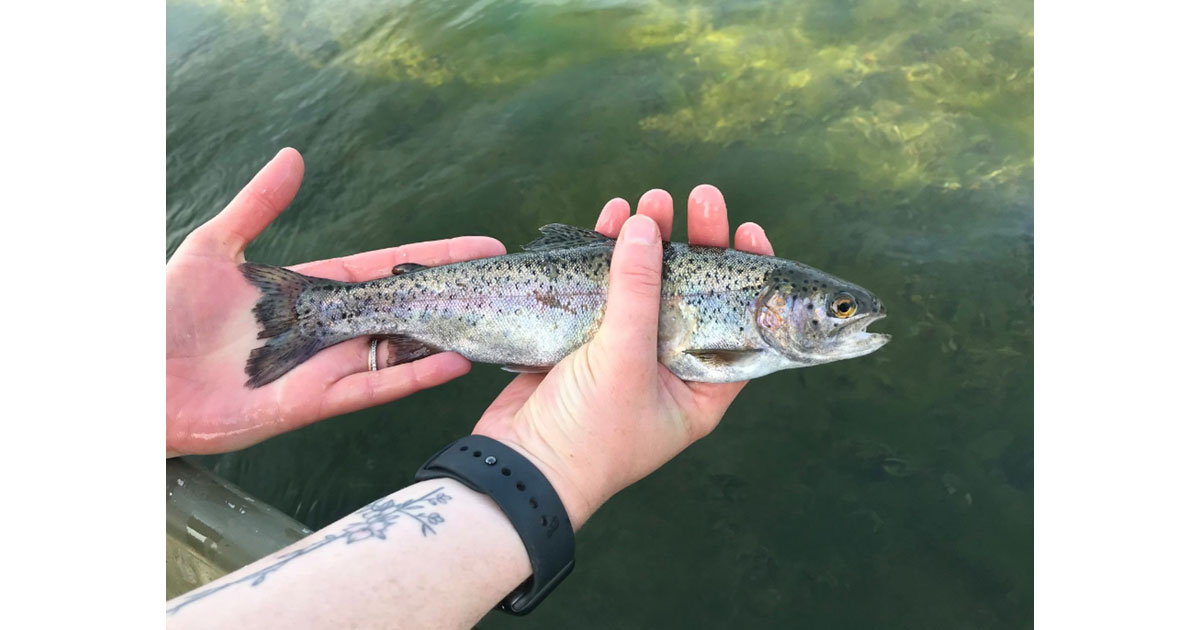
The Indiana DNR Division of Fish & Wildlife plans to stock nearly 63,000 rainbow and brown trout across the state this spring in preparation for inland trout fishing season, which, for inland streams, opens Saturday, April 27.
Thirty-five bodies of water across 21 counties are anticipated to receive fish before and after opening day.
Most of the lake stockings of rainbow trout were done last month, starting the week of March 11. Anglers don’t have to wait to fish for those, as trout fishing on inland lakes is open year-round.
For streams, more than 23,000 rainbow trout are expected to be stocked in the days leading up to opening day. Several sites will get additional rainbow trout stockings until Memorial Day weekend.
In addition to the rainbow trout stockings, 10 bodies of water will receive brown trout stockings in May.
To find a stocked stream near you, see this year’s trout stocking plan at on.IN.gov/fish-stocking.
Trout will bite on a variety of artificial baits such as spinners and flies, but natural baits such as worms and bee moths tend to be the most popular.
The bag limit for trout in inland waters other than Lake Michigan and its tributaries is five per day with a minimum size of 7 inches. No more than one of an angler’s catch can be a brown trout. There is no size limit for trout on inland lakes except for harvested brown trout caught below the Brookville Lake tailwater or from Oliver, Olin, or Martin lakes, which must be 18 inches or larger.
To fish for trout, anglers age 18 and older must have an Indiana fishing license and a trout/salmon stamp. To purchase yours for this year, visit on.IN.gov/INHuntFish.
- Details
By Louie Stout
The weather has played havoc with spring fishing for trout and salmon, but there is good news – the fish being caught are not only healthy but of good size.
The steelhead run on the St. Joseph River is ongoing thanks to rise and fall of water temperatures and rain. However, high, dirty water has plagued anglers.
After a big push in March, there has been 5,460 steelhead go up river through South Bend ladders, including 210 that moved up the first four days of April.
If that seems a bit low, keep in that there were no fish stocked by Michigan in 2020 due to the covid lockdown. Most of the fish moving up now are three-year-olds.
“I anticipate more coming with the current weather,” said Lake Michigan Biologist Ben Dickinson. We’ve got fish moving in, fish that are spawning, and fish that have already spawned and moved back to the lake. It’s been a weird spring.”
Meanwhile, coho fishing on Lake Michigan has been nothing short of spectacular – when the wind and weather is suitable for boaters. Unfortunately, shore anglers haven’t had a good year.
“The fish didn’t show up early and when they did come, harbor and near shore waters were warmer than they prefer,” said Dickison.
However, boat anglers were finding excellent coho fishing from Chicago to St. Joseph, Mich. Fish were being caught in 20 to 40 feet prior to the recent wind and weather.
“The coho were big this year, averaging 19 to 20 inches and 2 ½ to 3 ½ pounds, with a few 4 pounders,” the biologist added. “A few kings have showed up and appear nice and healthy.”
Another bright spot has been the brown trout fishing, which Dickinson says has been the best he’s seen in the 11 years of working for the Indiana DNR.
“Anglers are doing very well on browns when fishing around East Chicago, Hammond and Portage,” he noted.
Some anglers around Gary continue to catch perch when they can get out, but nothing like they were during winter. Perch will be spawning soon and the summer fishery will be dependent upon whether the lake gets an abundance of south winds.
“It can’t be worse than it was last summer when it was really bad,” he said.
- Details
GLSI Report
Hear about the latest information and research for our Lake Michigan salmon and trout fishery at the Great Lakes Salmon Imitative (GLSI) Fisheries Meeting Feb.17.
The program is free and open to the public. There will also be an open forum question and answer sessions with all presenters.
Here is the agenda:
Results from the Lake Michigan diet study on what salmon and trout are eating by Dr. Brian Roth, Associate Professor, Department of Fisheries and Wildlife, Michigan State University.
Dr. Roth will present results of his multi-year study of the aquatic food web in Lake Michigan and what our salmon and trout are feeding on.
How the states surrounding Lake Michigan cooperate to manage our fishery via the Lake Michigan Committee along with a historical overview and current status of the forage base in Lake Michigan by Jay Wesley, Lake Michigan Basin Coordinator, Michigan Department of Natural Resources
Jay Wesley will explain how the Lake Michigan Committee works together to coordinate fisheries management of Lake Michigan and will also speak on changes and the current status of the forage base and how that affects stocking decisions and overall management of our fishery.
- Details
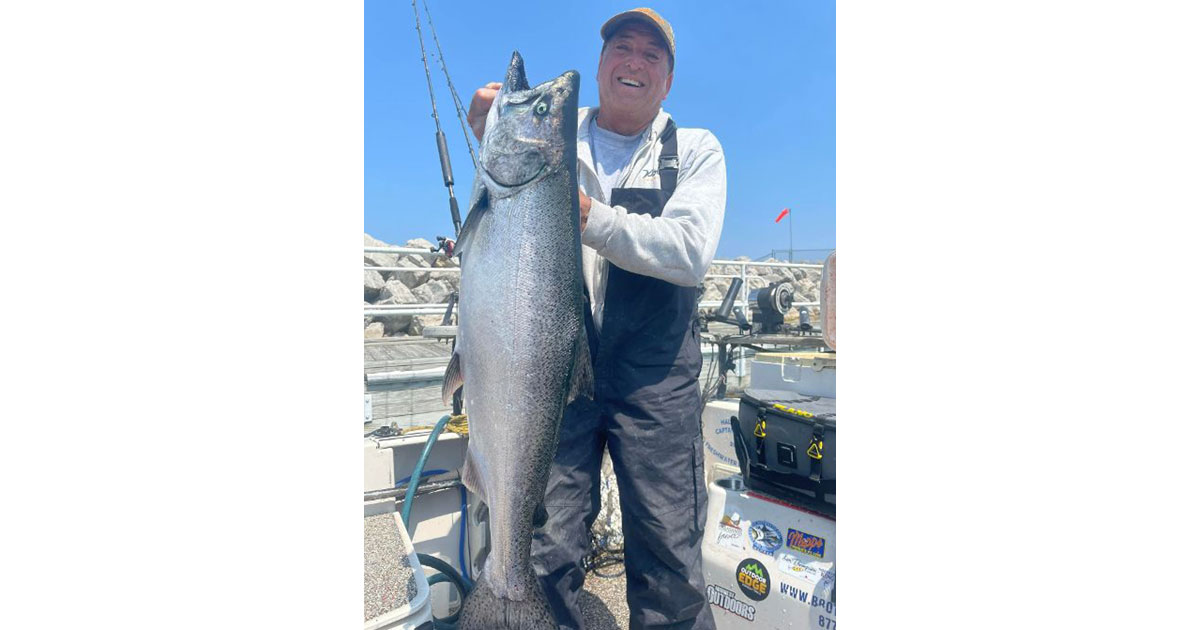 Chinook (King) Salmon
A project to improve chinook (king) salmon stockings at the East Chicago Marina by the Lake County Fish and Game Protection Association (LCFGPA) has received approval from the Indiana DNR and other local officials.
When it’s time to stock salmon fingerlings, 37,500 of them will be released into a large, floating cage, called a net pen which will be located inside the East Chicago Marina. Volunteers from Lake County Fish and Game Protection Association will feed the pen fish three times per day and monitor the water quality and health of the fish through the period.
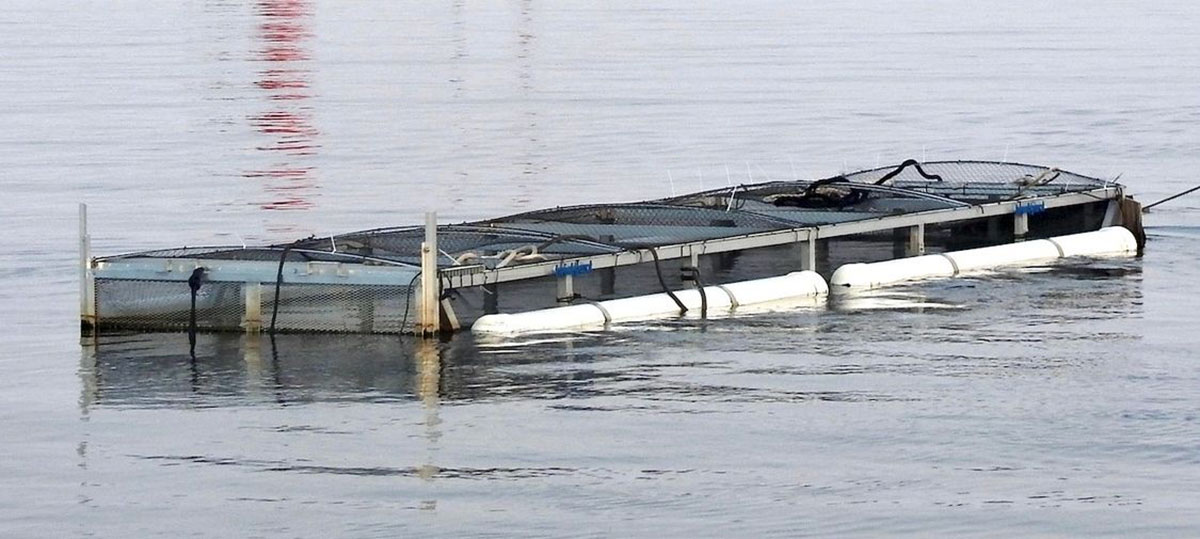 Net Pen for Salmon Fingelings
The net pen is currently under construction and will be positioned in the marina by April 1. The exact date of the stocking will be determined at a later date by the Mixsawbah State Fish Hatchery manager, depending on biological factors. The date the pen will be opened so the smolts can begin their life in the wild will depend on their final development in the pens. That’s expected to be about three weeks.