




What's New?
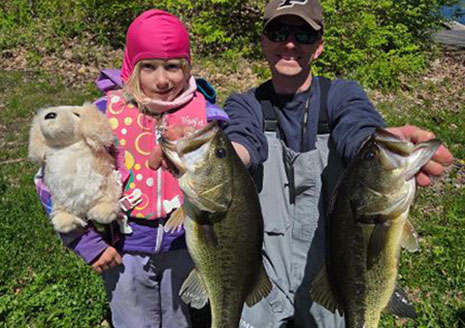
Not only did the couples in the Casting Couples opener start on a 30-degree morning, but the bite at Pine and Stone lakes was tough.
Despite a cold start in the morning, the catch was pretty good in the Tackle Shack season opener at Lake Maxinkuckee.
New Gear
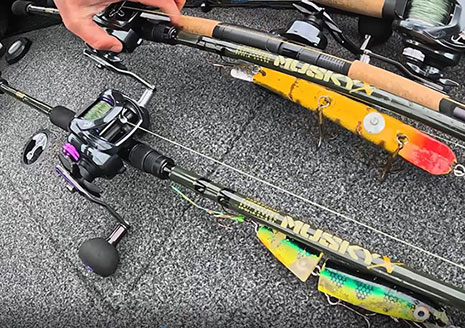
St. Croix Rod expands the angler-favorite Mojo Musky lineup with three all-new longer models – a 10’ heavy power JOMFG100HF2, a 10’ extra-heavy power JOMFG100XHF2, and a 10’6” heavy power JOMFG106HF2. All are two-piece with a 70/30 split that places the junction low in the stiffer section of the rod.
Newsflash

Michigan Records Safest Hunting Season; No Fatal Incidents in 2014
- Details
Provided by Michigan DNR
Michigan recorded no fatalities during all hunting seasons in 2014, according to reports compiled by the DNR Law Enforcement Division. Ten incidents involving injuries were recorded in the state - nine in the Lower Peninsula and one in the Upper Peninsula.
“We had 10 incidents reported for 2014, which ties with last year for the fewest number of reportable hunting incidents since Michigan started tracking them in the 1940s," said Sgt. Tom Wanless of the DNR's Recreational Safety, Education and Enforcement Section.
Indiana Alters Trout/Salmon Stocking to Improve Fall Runs
- Details
By Louie Stout
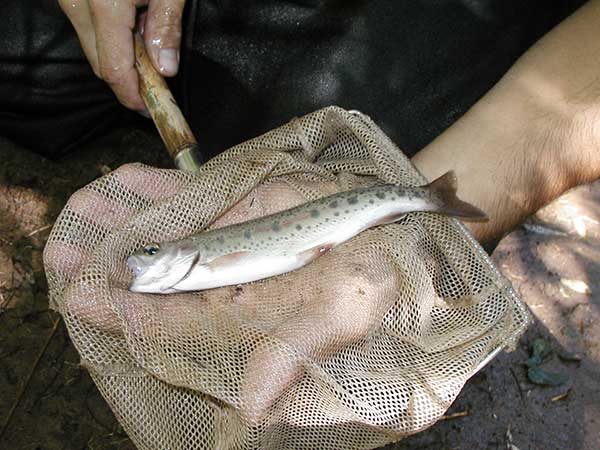 Naturally-produced steelhead smoltAddition by subtraction may not make sense to some, but trout and salmon fish managers believe it does when stocking the St. Joseph River.
Beginning this year, Skamania will be stocked in fewer numbers, but biologists believe it will increase the fall returns because the fish will be stocked as a larger size and survive better.
Previously, Indiana stocked 130,000 7-inch Skamania. Beginning this year, that number will be reduced to about 75,000 8-inchers.
The strategy has worked with walleye on the St. Joe, where a stocking number reduction, coupled with planting larger fish sizes, has delivered a better fishery.
Page 149 of 284
Search



Advertise with Us!

Michiana Outdoors News provides advertisers a cost effective vehicle to target thousands of sportsmen across southern Michigan and northern Indiana.
Connect With Us