



- Details
IDNR Report
Indiana Conservation Officers are investigating a tree stand accident that occurred Thursday afternoon in DeKalb County.
At approximately 4:30 p.m., officers and emergency personnel responded to the area near the intersection of County Road 17 and County Road 28 in the town of Auburn for a report of a hunter falling from a tree stand.
Upon arrival on scene, officers discovered that Nicholas Pranger, 28, of Ashley, was attempting to climb onto his tree stand when he fell. Pranger was wearing full body harness; however, it was not fully connected when he fell.
Pranger was transported to Parkview Regional Medical Center in stable condition with a back injury. The incident is still under investigation.
Indiana Conservation Officers would like to remind all hunters to wear a full-body safety harness when hunting from an elevated hunting platform and to stay connected.
Assisting agencies include Corunna Fire Department and the DeKalb County Sheriff’s Department.
- Details
MDNR Report
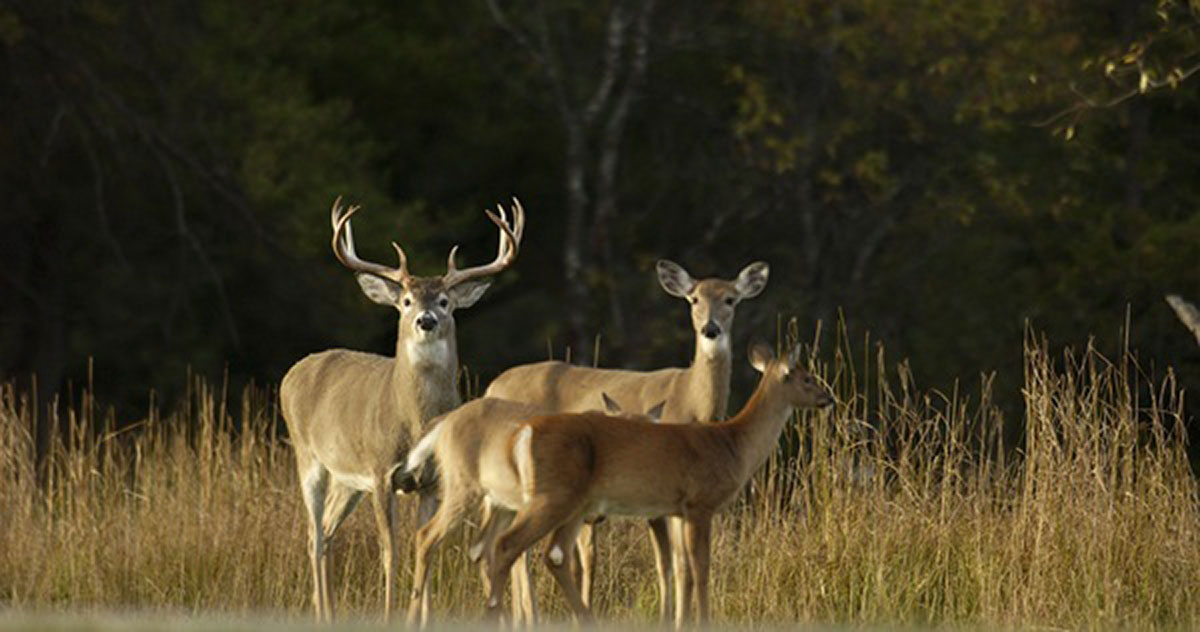
Opening day of Michigan's traditional firearm deer hunting season (Nov. 15) is right around the corner, and many hunters are busy scouting land, watching trail cameras and preparing equipment.
To ensure a safe season on both public and private land, the Michigan Department of Natural Resources is urging hunters to follow best practices to help them avoid the most common violations conservation officers see every year.
Properly license, tag your deer
Make sure to purchase your license with enough time to receive the tag in the mail. It takes several business days to receive tags. Before field-dressing or moving a deer, kill tags must be filled out to include the month and date the deer was harvested, animal gender and number of antler points, if any. Kill tags must be properly placed on the deer. Stick the tag to a piece of string, wire or a zip-tie that can be attached to the deer. Conservation officers often see the wrong kill tag on game – such as fish or turkey licenses on deer. This usually is a simple mistake made in the dark that can easily be corrected by retagging the deer as soon as the error is noticed.
Remember that reporting your deer within 72 hours of harvest is just as important as tagging it. A great deal of information hunters need to know is available on the DNR Hunt Fish app. Regulation summaries are also available from most hunting license vendors across the state.
Know and safely transport your firearm
Proper handling and transportation of your firearm are key to safe hunting. Take the time to familiarize yourself with your firearm and make sure it is properly sighted and functioning before your hunt. If it’s been a while since you used your firearm, consider visiting a local shooting range to practice. Many ranges have extended hours this time of year. Locate ranges through the DNR Hunt Fish app or visit Michigan.gov/ShootingRanges.
When transporting a firearm, be sure it is unloaded in both the barrel and magazine and enclosed in a case or carried in the trunk of a vehicle.
Know your target and what's beyond it
Know the area you’ll be hunting, including nearby buildings and properties. No one may hunt with a firearm within 450 feet of an occupied structure, including buildings, dwellings, homes, residences, cabins, barns or structures used for farm operations unless they have permission from the landowner.
Each year, conservation officers investigate property damage caused by firearms. Rifle rounds travel long distances, and hunters are responsible for where bullets end up.
Respect landowner rights
Always respect posted “no trespassing” signs and property boundaries. If a deer runs onto private property, the hunter cannot retrieve it without the landowner’s permission. Conservation officers usually are contacted when trespass disagreements escalate, and a resolution cannot be reached.
Hunting near someone else’s property? Contact the landowner ahead of time; don't wait until you're tracking game. Most of the time, a friendly call or visit to your neighbor will remedy the situation.
And remember, all hunting regulations apply to private property.
Share public land
Research and scout the land you plan to hunt before opening day. State-managed public land is a popular place to hunt. Conservation officers often respond to confrontations over hunting spots, blocked roads and illegal posting of “no trespassing” or “no hunting” signs on state-managed public land. COs, who often are asked to help resolve these disputes, said hunter confrontations over hunting spots frequently erupt due to last-minute hunters randomly picking their spots.
Tree stands and ground blinds on public land are just that: public. Regardless of who constructed or tends to these blinds, when they’re on state-managed public land, they are available on a first-come, first-served basis. Public land cannot be posted or reserved.
A person placing a tree stand or ground blind that is left overnight on public land must have one of the following affixed in legible English that can easily be read from the ground: their name and address, complete driver’s license number or DNR Sportcard number. Hunting platforms cannot be affixed or attached to any tree by nails, screws or bolts.
Refer to the current deer hunting regulations for additional information about the different types of ground blinds.
Leave land better than you found it
Practice the “leave no trace” ethic and don’t litter. Whatever is brought into the woods must be taken back out. Leaving propane bottles, hand-warmer wrappers, food wrappers, bottles and other trash is illegal and may result in a fine.
It is the responsibility of all people spending time outdoors to be good environmental stewards and clean up after themselves. Learn more about responsible recreation.
Wear hunter orange
Nov. 15-30, deer hunters, including those using archery equipment, are required by law to wear caps, hats, vests, jackets or raincoats of hunter orange. The orange must be always worn on the outermost layer of clothing and visible from all directions, regardless of whether hunters are on private or shared public land, even if hunting from within a blind.
Hunter orange garments may have a camouflage pattern as long as the pattern is at least 50% hunter orange. The DNR recommends wearing as much hunter orange as possible to increase visibility to other hunters. Don’t worry; hunter orange does not deter deer.
Know, follow baiting regulations
Deer baiting and feeding are banned in the entire Lower Peninsula.
In the Upper Peninsula, baiting may occur from Sept. 15 to Jan. 1. Bait volume at any hunting site cannot exceed 2 gallons. Bait must be spread on the ground and in an area that measures a minimum of 10 feet by 10 feet or its equivalent. Mechanical spin-cast feeders are legal to use provided the feeder does not distribute more than the maximum volume allowed. On commercial forest land, bait must be brought in each night, unless the landowner has given permission. Use bait sparingly to help curb the spread of diseases like bovine tuberculosis and chronic wasting disease.
Hunt in season, during legal hours
During firearm season, a hunter may legally shoot game starting 30 minutes before local sunrise and until 30 minutes after local sunset. Anyone who witnesses or suspects hunting outside of legal hours should immediately call or text the DNR’s Report All Poaching hotline at 800-292-7800. Fast reporting makes it more likely that a conservation officer will identify the suspect.
Respect other hunters
Michigan law prohibits anyone from obstructing or interfering with the lawful taking of animals. Hunter harassment – when a person or organization intentionally sabotages another hunter’s quality opportunity to take game – is a misdemeanor offense. Examples include spraying repellent around a hunter’s blind, creating loud noises and/or barriers that prevent or deter a hunter or game from accessing an area, or destroying other hunters’ equipment such as trail cameras and blinds.
Anyone who feels targeted by hunter harassment or who witnesses a natural resource violation should immediately call or text the Report All Poaching Hotline at 800-292-7800. Information can be left anonymously. Monetary rewards may be offered for information that leads to the prosecution of violators.
For more information on the firearm deer season, hunting safety, lands open to hunting, hunting regulations and more, visit Michigan.gov/Hunting. The 2025 Michigan deer hunting preview also is available.
- Details
St. Joseph Parks Report
St. Joseph County Parks will implement a muzzleloader deer management program at Spicer Lake Nature Preserve located in New Carlisle, Ind.
The deer management hunt will take place December 6 and December 7. The Spicer Lake Nature Preserve will be closed to the public on these dates. To emphasize deer population reduction, the management program will be an antlerless hunt.
Four hunters (one being an alternate) will be selected by lottery to participate. Hunters must possess a valid deer license bundle, muzzleloader license, county antlerless license or lifetime comprehensive license. Applications for the lottery will be available on the St. Joseph County Parks web site. The deadline for applications is November 4.
In addition to being a county park, Spicer Lake is also a state dedicated nature preserve, a classification given to high quality ecosystems. Review and approval for the deer management program was required by the Division of Nature Preserves of the IDNR.
Visit www.sjcparks.org for info.
- Details
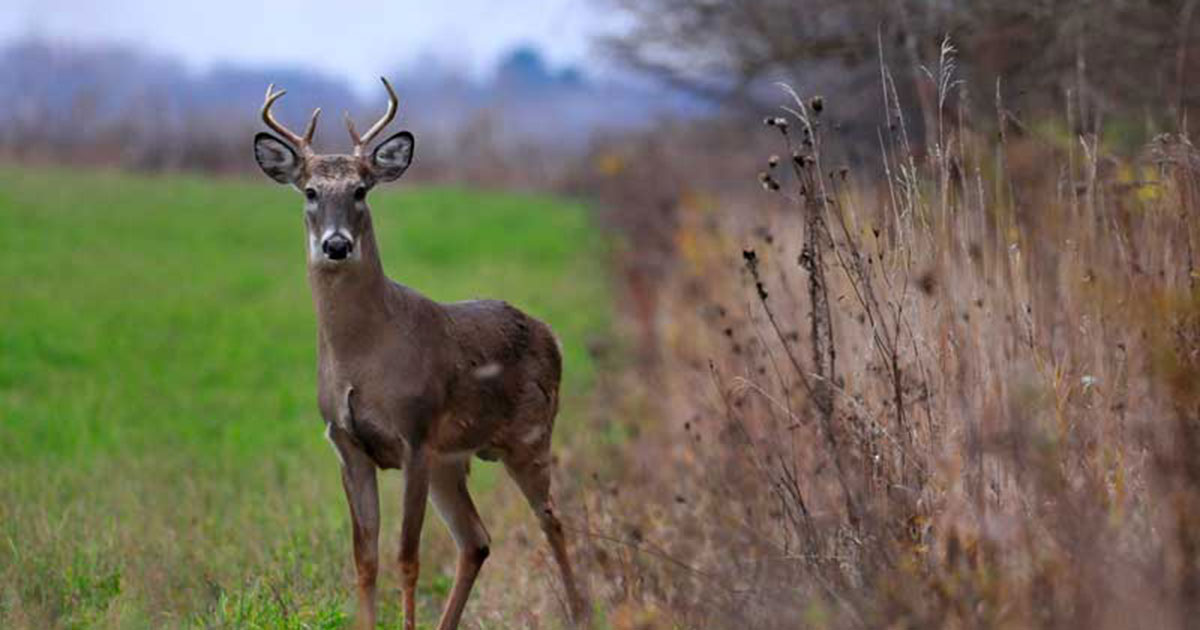
Deer Hunting Season Dates
- Reduction Zone Season: Sept. 15, 2025 - Jan. 31, 2026 (where open)
- Archery Season: Oct. 1, 2025 - Jan. 4, 2026
- Firearms Season: Nov. 15 - Nov. 30, 2025
- Muzzleloader Season: Dec. 6- Dec. 21, 2025
Deer Hunting Regulations Changes
Indiana DNR has made big changes to Indiana’s deer hunting rules. These changes are in effect for the 2025-2026 hunting season. The changes were made, in part, to make Indiana’s hunting regulations easier to understand. The rule changes include:
- The statewide bag limit is now 6 antlerless deer and 1 antlered deer.
- A newly created county antlerless bag limit replaces the season antlerless bag limits and county bonus antlerless quotas. Because of this change, the new multi-season antlerless license has replaced the bonus antlerless license.
- Antlerless deer cannot be taken with a firearm during firearms season at Fish & Wildlife areas.
- Only 1 antlered and 2 antlerless deer can be taken with the bundle license.
- The use of crossbow equipment is now allowed using the archery license.
- Portable tree stands and ground blinds can now be placed on DNR properties in Deer Reduction Zones between noon Sept. 1 and Feb. 8.
- State law prohibits the use of drones (unmanned aerial aircraft) to search for, scout, locate or detect a wild animal during the hunting season and for 14 days prior to the hunting season for that animal.
- Hunters can now use rifles with a centerfire cartridge that has a bullet diameter of .219 inches (5.56 mm) or larger on both public and private lands.
Note that the change to cartridge diameters resulted from a bill enacted by state law, IC 14-22-2-8. For questions about equipment, regulations or changes in them, or which license you need, contact the Deer Information Line at INDeerInfo@dnr.IN.gov or 812-334-3795.
Deer Reduction Zones Explained
Deer reduction zones (DRZs) are special areas where hunters can help manage high deer populations. Here’s what you need to know:
- Season Dates: The deer reduction zone season runs from Sept. 15, 2025, - Jan. 31, 2026.
- Bag Limit & Earn-A-Buck: In these zones, you can harvest up to 10 deer in addition to the statewide bag limit, but only one can be antlered. If you want to take an antlered deer, you first need to harvest an antlerless deer. This is called “earn-a-buck.”
- Licenses Needed: To hunt in a reduction zone and fulfill the DRZ bag limit, you must have one of the following licenses: a deer reduction zone license, a resident youth hunt/trap license, a lifetime comprehensive hunting license, or a lifetime comprehensive hunting and fishing license, or you must meet a license exemption. Note that the standard deer license bundle cannot be used to fulfill the reduction zone bag limit. You need a valid deer reduction zone license for each deer you take (e.g., you need 10 DRZ licenses to harvest 10 deer).
- Local Laws: The rules for the reduction zone do not override local laws about discharging projectiles. Make sure to follow any local regulations regarding the use of firearms or other equipment. You also need permission from the landowner to hunt on private property and to make sure that public lands you are going to hunt are open for hunting.
- Equipment Use: In these zones, you can use archery equipment from Sept. 15, 2025 – Jan. 31, 2026. Firearms and other legal hunting equipment can be used from Nov. 15, 2025 – Jan. 31, 2026.
- Hunter Orange Requirements: If you hunt from Nov. 15, 2025 – Jan. 31, 2026, within a DRZ, you must wear hunter orange clothing.
- Restrictions: There are specific rules about licenses when hunting on DNR-managed properties. Check with the property where you plan to hunt for details.
For more information and to see a map of the deer reduction zones, visit on.IN.gov/deer-reduction.
Reporting Deer Harvested in a Deer Reduction Zone
If you harvest a deer within a deer reduction zone, you need to follow these steps to check it in correctly:
- Check-In Requirement: You must register your deer through the CheckIN Game system online at GoOutdoorsIN.com or by calling 260-368-5880. You need to indicate whether the deer was harvested in a reduction zone.
- Count Toward Bag Limit: You must decide if you want your deer to count toward your limit for the zone. If you’re using the zone to take a second antlered deer or to reach your limit for antlerless deer, make sure to count those deer toward the zone limit when you check them in.
- Not Counting Toward Bag Limit: If you’re hunting in a deer reduction zone but don’t want your harvested deer to count toward the zone limit, or if you’re using a license that isn’t valid for the reduction zone, you should indicate that the deer will not count toward the limit.
Deer Disease Updates
Testing for chronic wasting disease
Chronic wasting disease (CWD), a fatal disease impacting white-tailed deer, has been detected in wild deer in two areas of Indiana: LaGrange County and Posey County. These detections resulted in a CWD Positive Area including LaGrange, Noble, Steuben, and DeKalb counties and a one-year CWD Enhanced Surveillance Zone including Posey, Vanderburgh, and Gibson counties. DNR offers free, statewide CWD testing for hunters by either taking your deer to one of DNR’s drop-off coolers at select Fish & Wildlife areas (FWAs), state parks, state fish hatcheries (SFHs) or through advertised private businesses such as taxidermists. These options are available during all seasons. View the statewide 2025-2026 sampling locations and their hours of operation via the interactive map at on.IN.gov/CWD. If you hunt in a CWD Enhanced Surveillance Zone, there are multiple options for having your deer tested:
- Submit your deer’s head to a DNR drop-off cooler (all seasons). Find these locations on our interactive map at on.IN.gov/CWD and on the table below. Please note the type of station listed on the table below.
- Refer to the list of private businesses that are taking samples in this zone (all seasons). Find these locations on our interactive map at on.IN.gov/CWD.
- Bring your checked-in deer to a DNR-staffed check station at the these locations during open firearms weekend only (Nov. 15 and 16)
Alternatively, hunters may independently submit their deer to the Purdue Animal Disease Diagnostic Lab (ADDL) for testing, for a fee. To do so, hunters should complete the submission form and follow the shipping instructions on Purdue ADDL’s website.
Deer data dashboards
Our online deer data dashboards are now live with information from the 2024-25 harvest season, as well as the latest After Hunt Survey and Annual Deer Survey. The data includes harvest data, population trends, deer-vehicle collisions, deer damage permits, public opinion on deer management, and other useful information at the county and statewide levels. Use the buttons below to view the data:
Questions and Concerns
For questions about equipment, regulations, or which license you need, contact the Deer Information line by emailing INDeerInfo@dnr.IN.gov or calling 812-334-3795. For questions related to harvest reporting, your online account, or license-purchasing errors, call 317-232-4200 or 877-463-6367 or email INHuntFish@dnr.IN.gov. For questions about reserved hunts, email DFWReservedHunts@dnr.IN.gov or call 812-486-9648.
Got a TIP? Report a poacher or polluter
Turn in a Poacher (TIP) protects fish and wildlife resources by increasing public support and involvement in bringing violators to justice. If you have evidence of a poacher or polluter, you can report potential violations by calling 1-800-TIP-IDNR (800-847-4367) or by filing a complaint at tip.IN.gov. If your anonymous information leads to an arrest, you may receive as much as a $500 reward.
- Details
IDNR Report
With the statewide archery deer season underway, Indiana Conservation Officers remind hunters to stay safe.
More than 300,000 people are expected to participate in some form of deer hunting in Indiana during the various deer hunting seasons that run through Jan. 31, 2026, and the overwhelming majority will do so safely.
When injuries occur, the most common are from accidents involving hunting from tree stands and elevated platforms. To avoid such injuries, hunters should follow the safety tips listed below when hunting from an elevated position.