

- Details
IDNR Report
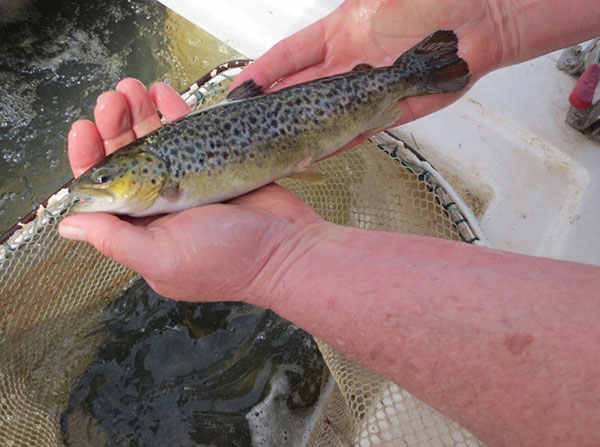 Brown Trout
The Indiana DNR is expanding its inland trout program to include rearing brown trout in-house at state hatcheries.
In June, Indiana DNR Division of Fish & Wildlife officials received nearly 2,500 brown trout from the Ohio DNR. Most of those trout were stocked into streams in northern Indiana, including Pigeon River, Little Elkhart River, and Solomon Creek, but 400 were held back at Curtis Creek Trout Rearing Station to develop as broodstock. These are adult trout used for egg production. Once mature, the adult trout will produce enough fertile eggs to meet the demands of the new rearing program.
- Details
IDNR Report
Beginning July 6, hunters can apply for a variety of Indiana reserved hunts on public lands by visiting on.IN.gov/reservedhunt.
The online method is the only way to apply for the hunts listed below. No late entries will be accepted. Applicants must possess a hunting license that is valid for the hunt for which they are applying.
Hunters will be selected through a random computerized drawing. Applicants will be able to view draw results online within two weeks after the application period has closed. An email will be sent to all applicants when draws have been completed.
Applications for the following hunting opportunities open July 6.
Applications must be submitted by 11:59 p.m. on Aug. 9:
- Details
IDNR Report
DNR biologists have confirmed a black bear sighting that occurred in northeast Vanderburgh County before sunrise this morning. The closest town to the location is Elberfeld, in Warrick County.
Biologists confirmed the bear from photos taken by the landowner.
“This is Indiana’s fourth confirmed black bear,” said Brad Westrich, DNR mammalogist. “With expanding bear populations in neighboring states, this is expected.
“Human-bear conflicts can be avoided if you remove or secure potential food sources from your yard. Bears can smell food from more than a mile away.”
Black bears are rarely aggressive toward humans.
- Details
IDNR Report
The Indiana DNR has received reports of sick and dying songbirds from 15 counties statewide. As the investigation continues, the DNR recommends all Hoosiers remove their birdfeeders statewide.
The 15 counties are Clark, Delaware, Hamilton, Jackson, Jefferson, Johnson, LaGrange, Lake, Marion, Monroe, Newton, St. Joseph, Union, Washington, and Whitley.
The DNR is working with the Indiana Animal Disease Diagnostic Laboratory (IN ADDL) and the USGS National Wildlife Health Center to determine the birds’ cause of death.
The affected songbirds showed neurological signs of illness as well as eye swelling and crusty discharge.
- Details
IDNR Report
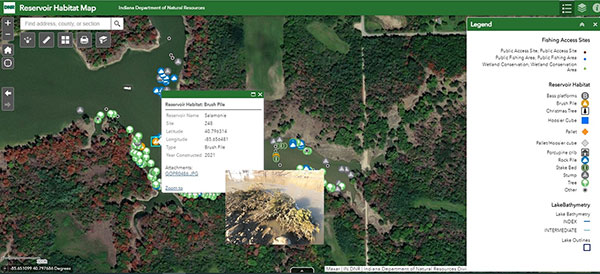 Interactive Reservoir Habitat Map
Anglers can find fish habitat structure locations and more on DNR’s new interactive reservoir habitat map.
Habitat structure, such as bundles of Christmas trees, rock piles and wooden platforms, improves aquatic habitat for fish by creating areas for cover, nesting, and more. The structure also attracts bait fish and provides other feeding opportunities.