





By Louie Stout
If you’re not getting panfish to bite your traditional ice fishing baits, think outside the box.
That’s what Chuck Powell has done and feels he’s stumbled onto a lure additive that gets him a few more bites.
Well, he didn’t exactly stumble onto it. He read once about ice anglers who were doing well by adding a piece of beaver tail to their jigs instead of more traditional larvae bait.
It was a perfect fit since Powell is an avid trapper with several beavers stored in his freezer being prepared for market.
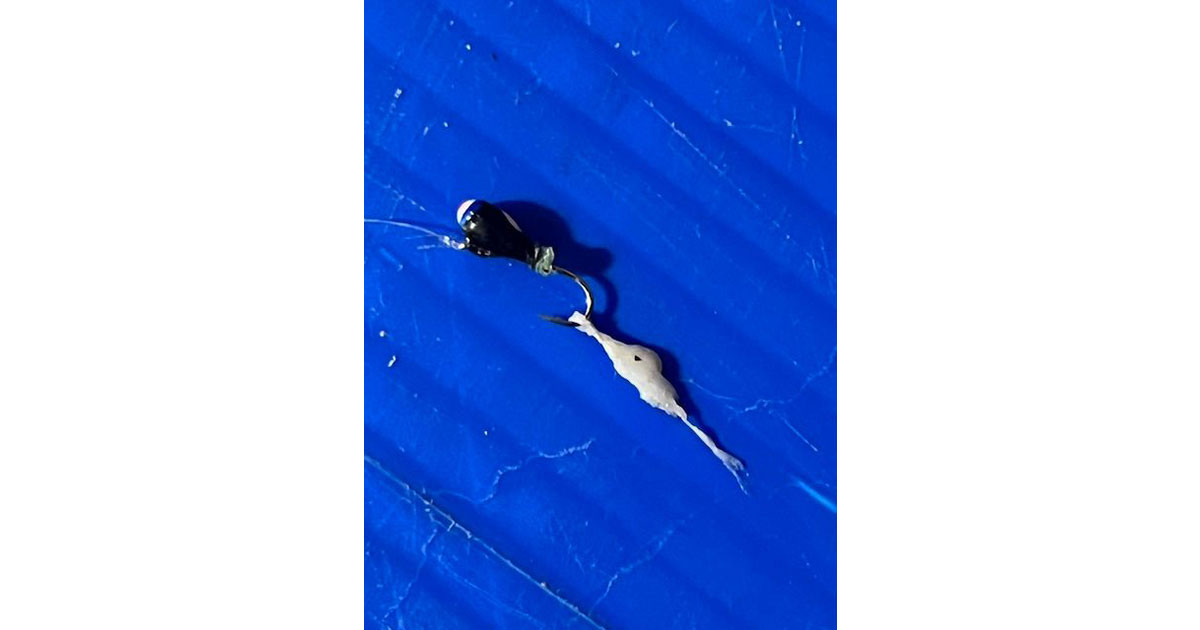
He began cutting tiny strips from the Grisel and fat on the underside of the tails. The flesh, which he pokes onto his tiny jig hook is translucent until it gets into the water which turns it white.
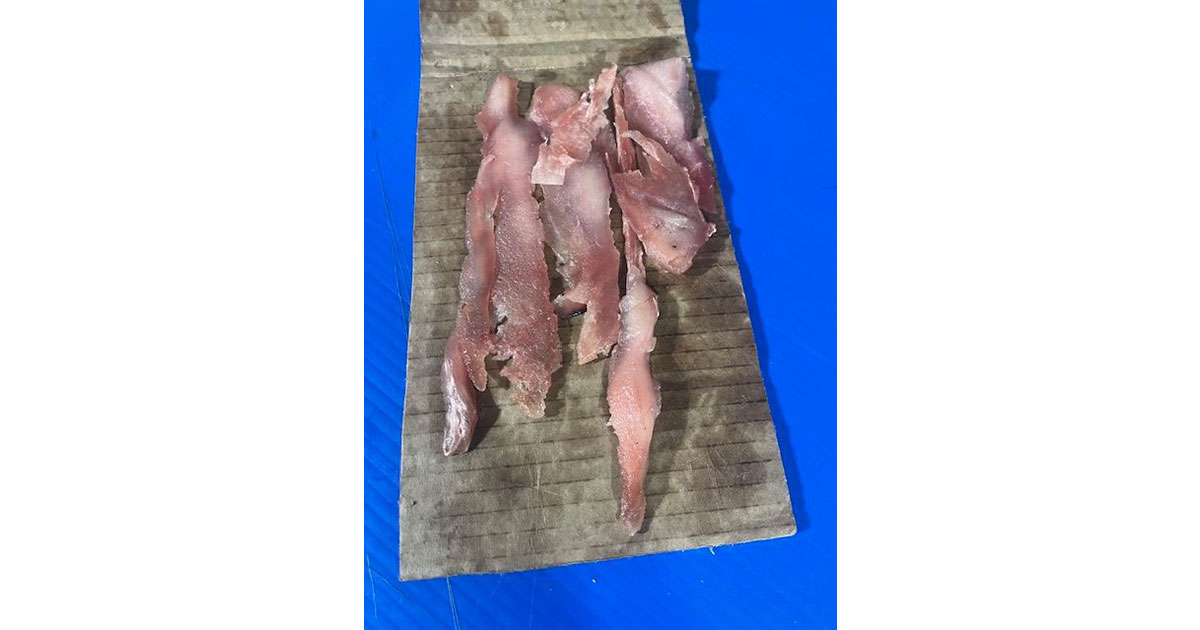
“I started playing with it a week or two into the ice season,” he recalls. “It worked to some degree, so I began trimming it differently and cut into different sizes to see they all worked.”
It’s still a work in progress, he says, but he’s found that a 3/8-inch of beaver tail works best on bluegills while a ½-inch seems to be better for crappies.
“I try to cut them with a thin tail at the end,” he says. “I want it to mimic a larvae or bug of some sort.”
The results have been impressive.
“I have caught as many as 30 fish on one strip I fished in two different outings,” he says. “There are days it works extremely well and others when tiny plastics work best.”
He says the beaver strip floats, releases a bit of oily substance and has a very natural fluid motion on the back of his 3 mm tungsten jig. He stores them in water and in a Zip Loc bag.
“It’s like using livebait, I guess, but more durable,” says Powell. “I haven’t had any rot or dry out. I’m still learning and may try to add some dye for coloring or solution to preserve it. And since I have a supply, why not try it and save money on livebait?”