


- Details
(Provided by Indiana DNR)
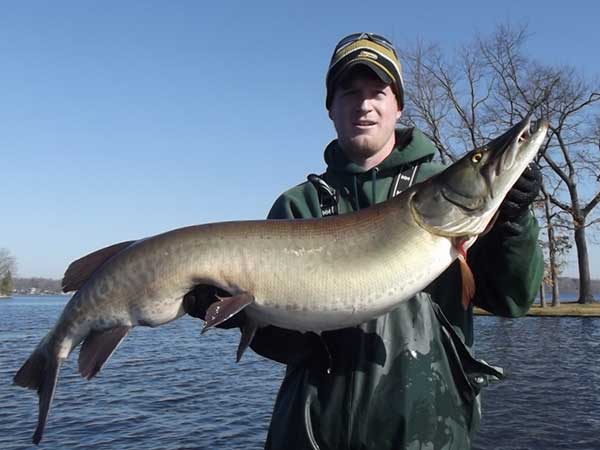 Biologists concerned that muskies are being moved by anglers.
The list of northern Indiana waters where muskies can now be found continues to expand ó a trend DNR biologists say is not necessarily a good thing.
Although muskie fingerlings are stocked each year into eight lakes in the region to provide muskie fishing, muskies are now showing up in waters where no DNR stockings or legally permitted private stockings have occurred.
Not all lakes are suitable for muskies, a large predatory sport fish. The DNR stocks them in lakes with an overabundance of forage fish, such as gizzard shad. In lakes where forage fish aren't abundant, muskies could outcompete native sport fish such as largemouth bass and Northern pike for food.
"Our biggest concern is that some fish may find suitable spawning habitat, reproduce, and eventually compete with other fish," said Jeremy Price, northern Indiana fisheries supervisor. "So far muskie reproduction has been limited in Indiana. We would like to keep them where they are."
- Details
By Louie Stout
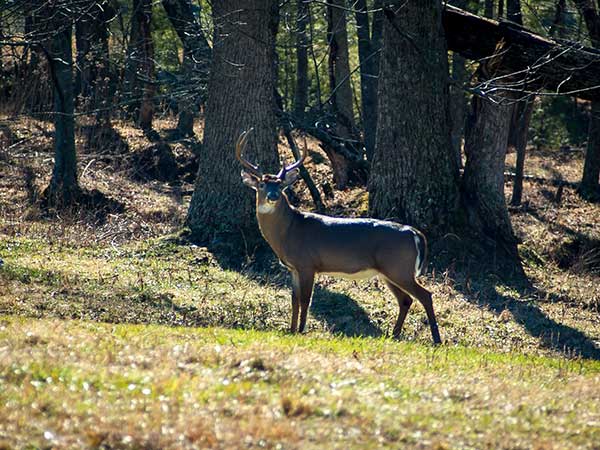 Hunters took more bucks last fall. - Photo credit - Bob Robertson
If you thought there were fewer bucks to shoot last fall’s deer season in Indiana, think again.
In fact, the buck harvest was up statewide and Michiana was no exception. St. Joseph and adjoining counties all saw slight increases in the buck harvest.
Apparently Michiana hunters were more interested in shooting bucks than does because the antlerless harvest was down.
The statewide harvest was similar. The buck kill was up 10 percent while the antlerless harvest was down 1 percent compared to 2014.
- Details
(Provided by Indiana DNR)
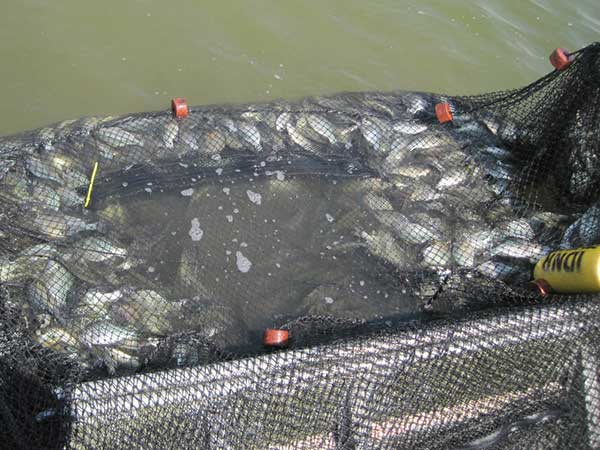 DNR studies crappie populations in northern Indiana.
Catching nearly 5,000 black crappies in one day at Shipshewana Lake might be an angler's dream, but for Steve Donabauer the catch was nearly a nightmare.
Donabauer, a DNR fisheries biologist, caught them in late April in two trap nets as part of a region-wide study of crappie numbers and sizes. Most were small. Where crappies are over-populated, competition for food can be intense.
The first-of-its-kind study will help DNR biologists understand crappie populations in northern Indiana's glacial lakes. Previous information on crappies has been limited because they are difficult to catch in standard fish-population surveys.
"We bought some newly designed trap nets that can target crappies, especially in the spring," Donabauer said. "The huge catch at Shipshewana Lake obviously proved they work."
- Details
(Provided by Indiana DNR)
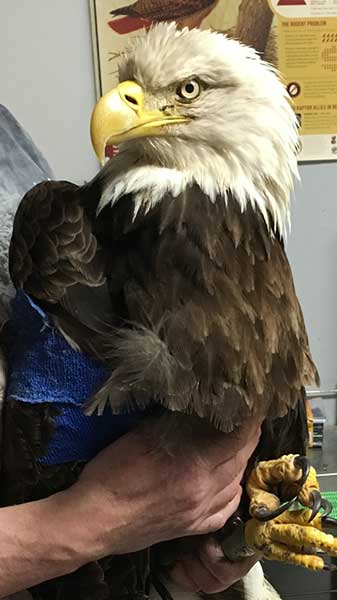 Oldest wild bald eagle in Indiana rescued - Photo by Indiana Raptor Center
Oldest wild bald eagle in Indiana rescued - Photo by Indiana Raptor Center
What's likely the oldest bald eagle living in the wild in Indiana was found with a dislocated wing and rescued near Worthington, in Greene County April 15.
It was the first time the 28-year-old bird had been sighted since leaving the hack tower at Monroe Lake in September 1987. Back then, it was too young to fly, and the DNR's bald eagle reintroduction program was in its infant stages, too.
"This bird represents everything we've done in Indiana in eagle restoration," said Allisyn Gillet, the DNR's nongame bird biologist.
The age of the bird was determined by a band identifying it as bald eagle C14. The sex of the bird has yet to be determined.
- Details
By Louie Stout
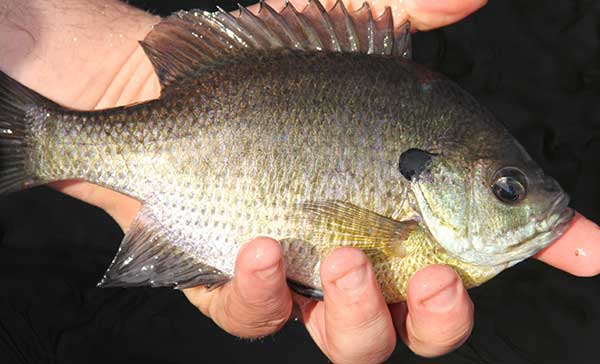 Bluegill limit, hunting proposals, back on Indiana DNR agenda.
That bluegill daily bag limit proposal that the Indiana DNR has been kicking down the road is back on the agenda for public consideration.
It’s one of many fish and wildlife rule changes the DNR has put up for public debate.
The latest bluegill proposal is similar to the one that came up a few years ago before it got shelved despite public support. Indiana currently doesn’t have a bag limit on bluegill.
The new plan tweaks the old one. While the first suggestion called for a 25-fish bag limit, the new recommendation asks for a bag limit. The amount of gills an angler could keep in one day of fishing would be determined later.
In addition, the DNR clarified the possession limit. When the bag limit came up a few years ago, vacationers complained it prohibited them from storing fish caught on an extended vacation. Under the new plan, anglers could store an unlimited number of fish as long as they were cut, wrapped and frozen, canned, vacuum-packed or otherwise preserved for long term storage.