


- Details
MDNR Report
Calling any nature enthusiasts, outdoor lovers or conservation-minded folks – the Michigan Department of Natural Resources is hiring for a variety of temporary wildlife positions that may be right for you! These spring jobs, available around the state, could be especially attractive to those looking to enter the conservation work force or seniors and retirees who want to get more involved in the outdoors.
Whether you’re looking to gain new skills or seeking an interesting job steeped in natural resources, the DNR Wildlife Division has several options. Temporary workers are crucial to maintaining the healthy wildlife populations that are central to quality hunting and wildlife watching experiences. People in these roles:
- Assist with wildlife habitat maintenance and improvement, which may include farming, planting trees, cutting clearings and adjusting water levels.
- Help with mowing, landscaping and facility maintenance duties.
- Handle tasks related to wildlife surveys, wildlife sample collection, crop damage inspections, nuisance animal control and equipment operation and maintenance.
“These positions are a great way to experience the conservation field and learn new skills,” said Jennifer Schafer, human resource liaison for the DNR Wildlife Division. “Each of these roles within the wildlife team not only contributes to vital conservation efforts but also offers a rewarding and hands-on experience.”
Apply for DNR jobs
Apply for current postings on the State of Michigan's Department of Natural Resources jobs page. Search "wildlife" to show the Wildlife Division opportunities.
DNR career info
Taking care of the outdoors is a big responsibility. Learn more about the variety of seasonal, part-time and full-time positions, as well as career pathways and benefits.
Applications are due by Monday, Feb. 5. The listed job titles for these temporary positions include:
- Spring non-career wildlife assistant.
- Spring non-career wildlife state worker.
Questions? Call Jennifer Schafer or Brandi Holden at 517-284-9453 or email DNR-Wildlife-HR-and-Development@Michigan.gov.
- Details
MDNR Report
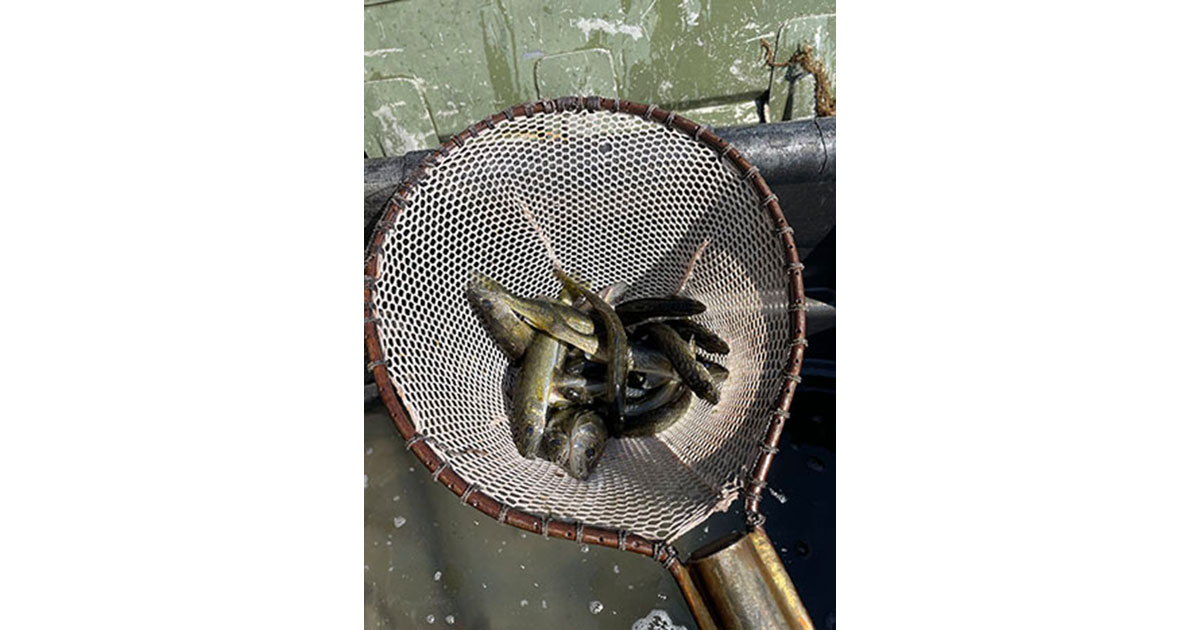 Michigan DNR stocked over 1 million fish in 2023
The Michigan DNR announced the totals from its 2023 fall fish stocking efforts. The DNR stocked six different species – totaling 1,076,204 fish that weighed 14.5 tons – at 103 locations throughout the state.
“It was another outstanding fall fish stocking season that will provide enhanced fishing opportunities throughout Michigan,” said Ed Eisch, assistant chief of the DNR Fisheries Division. “When added to our successful spring and summer stocking efforts, that brings the total for 2023 to more than 10.4 million fish stocked in Michigan’s waters.”
The number and type of fish stocked vary by hatchery, as each facility’s ability to rear fish differs because of water supplies and temperature. In Michigan, there are six state and three cooperative hatcheries that work together to produce the species, strain and size of fish needed by fisheries managers. These fish must then be delivered at specific times and locations for stocking to ensure their success. Most fish in Michigan are stocked in the spring.
- Details
MDNR Report
p style="text-align: center;"> Recreation Passport
Starting Jan. 1, Michigan residents will pay $14 for the Recreation Passport – just a dollar more for a year’s worth of vehicle access to state parks and recreation areas and a host of other state-managed outdoor destinations.
The moderate fee change is the result of a statutory provision that ensures Recreation Passport funding keeps pace with the economy. Basically, the law says that the Michigan Department of Natural Resources does not determine the cost of the Recreation Passport; instead, adjustments are based on the Detroit Consumer Price Index, as determined by the federal Bureau of Labor Statistics.
New fee, program support
Effective Jan. 1, 2024, the resident Recreation Passport vehicle fee increases from $13 to $14, while the cost for motorcycles will not change.
The Recreation Passport is valid for 12 months when purchased at time of license plate registration renewal through the Secretary of State. Although some residents have already received their registration renewal notices (reflecting the old fee), the new rate takes effect Jan. 1 for all in-person and online transactions.
There's a $5 convenience fee (except for Belle Isle Park) when the Recreation Passport is not purchased at the time of license plate registration renewal through the Secretary of State, and is instead purchased at a state park or recreation area.
- Details
MDNR Report
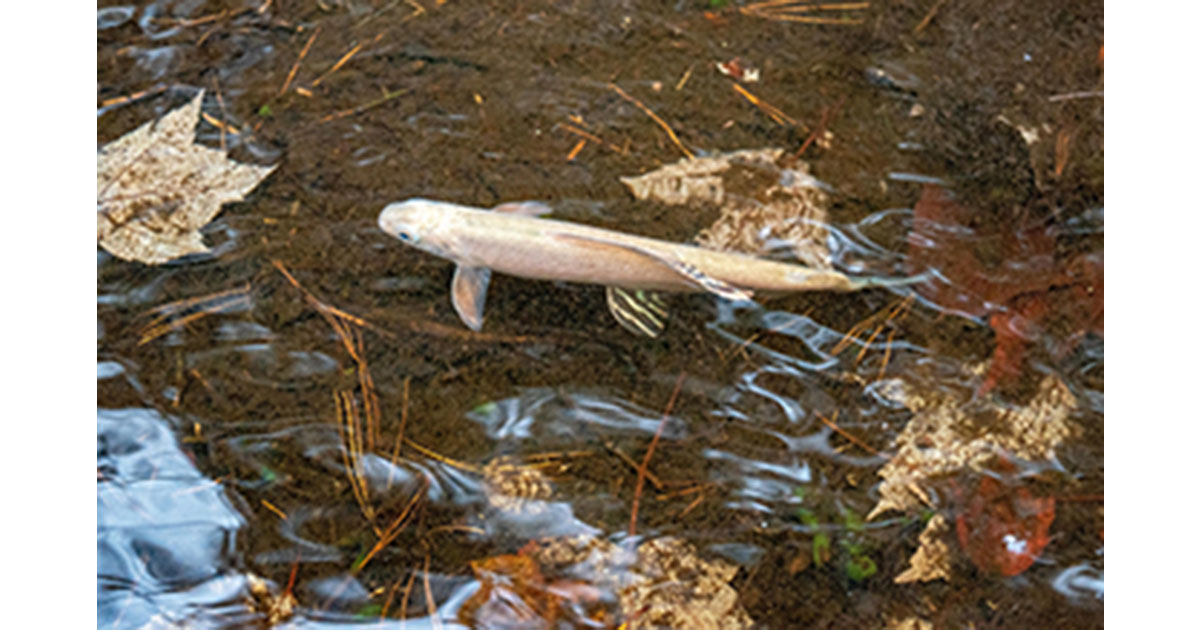 Artic Grayling
In early November, three Michigan lakes were stocked with Arctic grayling.
These fish are surplus from the establishment of a grayling brood stock as part of the Michigan Arctic Grayling Initiative. The initiative has been underway since Little River Band of Ottawa Indians and the Michigan Department of Natural Resources began a partnership aimed at reintroducing this iconic species to Michigan waters in 2015.
The full partnership now includes nearly 50 stakeholder and partner groups, along with the general and angling public.
Four hundred grayling were stocked at Alger County’s West Johns Lake, 300 at Penegor Lake in Houghton County and nearly 1,300 in Manistee County’s Pine Lake.
The fish were taken from the Marquette State Fish Hatchery in Marquette and represented year classes from 2019 and 2021.
“When starting a year-class of brood stock, you always start with more than you will need in the end to allow for potential losses to disease, mechanical issues, et cetera,” said Ed Eisch, assistant chief of the DNR’s Fisheries Division. “Such losses never materialized with the two year-classes that were stocked. The numbers needed to be thinned down to levels that are safe to carry into the future at the Marquette hatchery.”
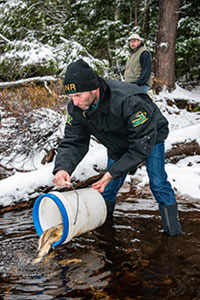 Stocking Arctic GraylingWith the third year-class recently clearing their requisite health inspections, it is highly likely that there will be additional surplus available for stocking again next fall.
- Details
By Louie Stout
In this era of some lake associations destroying aquatic habitat, it’s refreshing to see one who is doing just the opposite.
Lake officials at Diamond Lake in Cass County, Michigan are in the planning process of providing MORE fish habitat to the 1,078-acre lake near Cassopolis.
The Diamond Lake Association’s Lake Preservation Committee plans to submerge 10 tree cribs in various sections of the lake, add log barriers along some seawall areas and place boulders around some shorelines to reduce erosion. A lake resident offered to provide the hardwoods for the cribs and the committee will handle the manual labor.
“Fishermen who live on our lake believe fish stocks aren’t what they used to be and this is one way to help the fishermen and the lake,” said Sheryl DeLuca, vice president of the association and the committee chairman. “We know that a good fishery is the sign of a healthy ecosystem.”