


- Details
MDNR Report

If you plan to take part in Michigan’s spring turkey season (April 19 through June 7) and you still need to take a hunter safety class, sign up soon. These classes are commonly offered ahead of the spring turkey season or in the fall before the start of firearm deer season.
To purchase a hunting license in Michigan, anyone born on or after Jan. 1, 1960, is required to successfully complete an approved hunter safety education course.
“We don’t want to see people wait until the week before they want to hunt to try locating a hunter safety class, at which point classes often are full,” said Lt. Tom Wanless, recreational safety, education and enforcement supervisor with the Michigan Department of Natural Resources.
There are four options for completing hunter safety education in Michigan, all of which require at least four hours of in-person instruction:
- Traditional classroom-based course.
- Online course followed by an in-person field day.
- Interactive online course (with animations and videos that put students in virtual real-life scenarios) followed by an in-person field day.
- Take-home study course followed by an in-person field day.
Wanless said the DNR-managed hunter safety education program helps the next generation of hunters learn how to safely, responsibly enjoy hunting and understand the importance of wildlife management and conservation.
“These classes build confidence and teach lifelong skills, such as firearm safety, wildlife and habitat management, and how to use a map and compass, to an average of 15,000 students every year,” Wanless said.
Once you successfully complete the hunter education course and receive your certificate, it is valid for life.
Learn more about the program and register for a class at Michigan.gov/HunterEducation.
- Details
MDNR Report
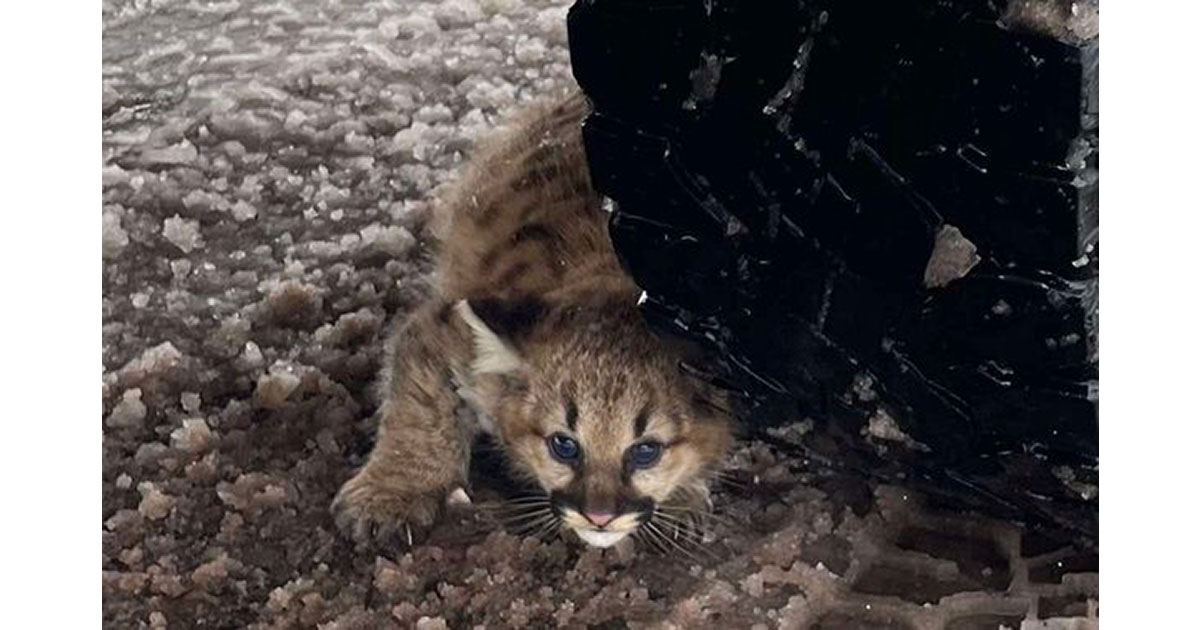
For the first time in more than 100 years, cougar cubs have been discovered living in the Michigan wild.
State biologists on Wednesday confirmed the existence of two cougar cubs on private land in Ontonagon County in the western Upper Peninsula. The spotted cubs, believed to be 7 to 9 weeks old, were verified from photographic evidence of the cubs taken March 6 by a local resident.
This is the first time cougar cubs have been verified since the big cats were hunted out of existence in Michigan in the early 1900s, said Brian Roell, large carnivore specialist for the Michigan Department of Natural Resources. Roell, a wildlife biologist for 26 years, led the team that verified the cubs.
“It’s pretty exciting, considering this could be the first known cougar reproduction in modern times in the western Great Lakes states,” said Roell, referring to Michigan, Wisconsin and Minnesota. “It really shows that we have a unique place in Michigan where someone has a chance to see a wolf, a moose and a cougar in the wild. It’s something that should be celebrated, that we have the habitat to support an elusive animal like this.”
The cubs were spotted and photographed without their mother. Cougar cubs are highly dependent on their mothers, often staying with them for the first two years of life.
Although cougars are native to Michigan, most of them now appear to be transient animals, dispersing into Michigan from Western states. The DNR has verified 132 adult cougar reports, Roell said, but DNA testing has confirmed only male cougars to date.
The cubs have not been spotted since March 6. “Those young cougars are very vulnerable right now,” Roell said. “We don’t know where they are or if they’re even alive. Mother Nature can be very cruel.”
Sightings can be logged in the DNR’s Eyes in the Field reporting system. Roell said cougars are on the list of endangered mammals in Michigan, meaning it’s illegal to hunt or harass them, which includes trying to locate their den. It’s also illegal to trespass on private property, he noted.
For the latest information on cougars, including the DNR’s cougar sightings photo page, visit Michigan.gov/Cougar.
- Details
MDNR Report
Washtenaw is now the 15th Michigan county where chronic wasting disease has been identified in the wild deer population, according to the Michigan DNR. An adult buck found acting ill in Salem Township recently tested positive for CWD.
The Michigan State University Veterinary Diagnostic Laboratory, which works with the DNR to identify CWD in Michigan’s wild deer herd, confirmed the CWD finding. The U.S. Department of Agriculture’s National Veterinary Services Laboratory, in Ames, Iowa, also confirmed the test result.
CWD is a fatal neurological disease that affects white-tailed deer, elk and moose. The disease is chronic, slow developing, and spreads slowly across the landscape. To date, CWD has also been detected in wild deer in the following Michigan counties: Clinton, Dickinson, Eaton, Gratiot, Hillsdale, Ingham, Ionia, Isabella, Jackson, Kent, Mecosta, Midland, Montcalm and Ogemaw.
Prior to focused CWD surveillance in Washtenaw County, voluntary sampling between 2016 and 2019 resulted in 824 deer tested. In 2021 and 2022, focused CWD surveillance efforts were conducted to gather additional samples, and 875 more deer were tested. While this is the first positive in Washtenaw County, 39 deer in neighboring Jackson County have tested positive for CWD, through combined DNR collections and direct hunter submissions to the MSU Veterinary Diagnostic Laboratory.
- Details
MDNR Report

The Michigan Department of Agriculture and Rural Development, in partnership with the U.S. Department of Agriculture and a variety of local and regional organizations, has completed its 2024 spotted lanternfly monitoring efforts. Throughout the summer and fall, teams across Michigan worked collaboratively to monitor and track the spread of this invasive pest, resulting in new detections in Macomb and Lenawee counties, as well as new findings in previously affected areas.
"We are grateful to our partners for their ongoing work helping us monitor the spread of spotted lanternfly in Michigan," said Steve Carlson, MDARD’s Pesticide and Plant Pest Management Division Director. “This collaboration allows us to collect critical data on new infestations which helps better understand how this pest is spreading across the state."
- Details
By RACHEL LINCOLN, Michigan DNR
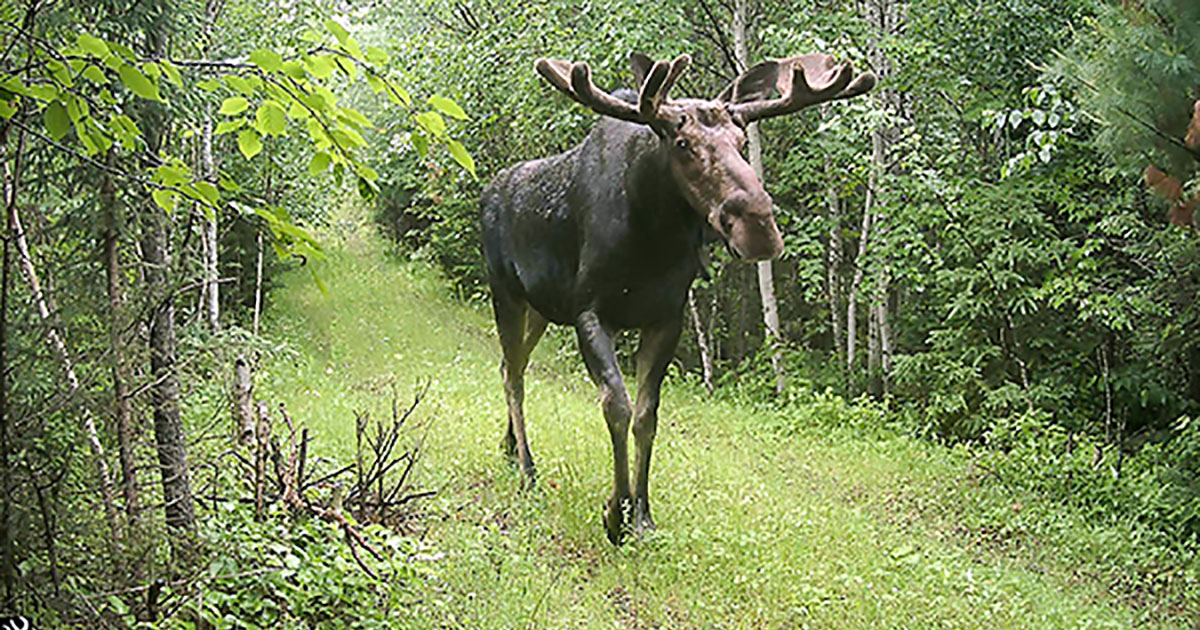
The 1,000-pound Michigan bull moose, standing 6 feet, 5 inches tall with 40-pound, paddle-like antlers, is the iconic symbol of the Upper Peninsula’s wildness.
Despite their majestic status, Michigan's moose have faced significant challenges over the past century. To understand the factors shaping their survival today, researchers are examining population trends and the hurdles moose encounter.
“Michigan’s moose are a vital part of the Upper Peninsula’s ecosystem and identity,” said Tyler Petroelje, northern Michigan wildlife research specialist for the Michigan Department of Natural Resources. “Through this new study of factors limiting moose population growth, we’re working to uncover a clearer path for the future of moose in Michigan.”
Aerial survey
DNR wildlife biologists have conducted aerial surveys to estimate the moose population in the western U.P since 1997. Every other year in January, survey planes fly low in a grid pattern over Marquette, Baraga and Iron counties as researchers record the number of moose spotted.
Doing the survey in winter makes it easier for trained spotters to see moose against the leafless, snowy landscape, but it’s still impossible to count every moose. Instead, the numbers are adjusted using a statistical model to estimate the population.
The 2023 U.P. DNR moose survey showed a population of 426 moose in the western part of the region. The 95% confidence interval estimates a range between 334 and 518 individuals.
In addition to the regular aerial survey, researchers will begin a new project later this month to explore the reasons behind the slowed moose growth rate.
The full name of the study is “Factors limiting moose population growth in the western Upper Peninsula.”
New moose study
Through this new effort, the DNR, Keweenaw Bay Indian Community and Northern Michigan University will work together to try to better understand the trends and challenges the Michigan moose herd faces.
“As co-stewards of our shared land and natural resources, the Keweenaw Bay Indian Community welcomes the opportunity to work with the DNR and NMU to help answer important questions about the Michigan moose population,” said Erin Johnston, wildlife and habitat manager for the KBIC Natural Resources Department in Baraga.
Researchers anticipate fitting 60 moose with new tracking equipment over the next two years. During this first year of the study, 20 moose will be captured and equipped with radio collars, which will provide precise location data.
Tracking these movements will help researchers understand moose survival and causes of mortality, pregnancy rates and birthing events.
“There is a need to examine why moose population growth in the Upper Peninsula has been stagnant over the past decade,” said Diana Lafferty, associate professor in biology at NMU. “As such, measuring vital rates like reproduction, survival, immigration, emigration, as well as identifying factors that may be limiting moose population growth, such as parasites, disease, predation, vehicle collisions and habitat alteration are essential for understanding and modeling population dynamics.”
During the capture operation, spotter planes will report moose locations to nearby helicopters and ground crews. Moose will be sedated, and crews will move in quickly to collect biological information and fit the moose with a tracking collar.