

 Tournament News Powered By Lake Drive Marine

Friday, June 12, 2026
Friday, June 12, 2026
Thursday, June 11, 2026


- Details
(Provided by IDNR)
Michigan's decision to cancel its muskie-stocking program this year due to a virus outbreak in adult fish they capture for muskie eggs has prompted Indiana DNR officials to say a similar situation could develop in the Hoosier state.
Viral hemorrhagic septicemia virus (VHSv), which is responsible for a number of dead fish in Lake St. Clair and the Detroit River, could potentially show up in Lake Webster, Indiana's only source for muskie eggs.
"If VHSv does show up in Lake Webster, we wouldn't want to bring infected eggs into our hatchery system where they could contaminate the water and spread to other fish," said Dave Meuninck, manager at the Bodine State Fish Hatchery and DNR fish disease coordinator.To reduce the risk, Meuninck processes dozens of fish collected each spring from Lake Webster for testing during Indiana's muskie egg-taking operation.
The fish, including bluegills, bass, and other species, are captured in traps used to catch adult muskies.
- Details
By Louie Stout
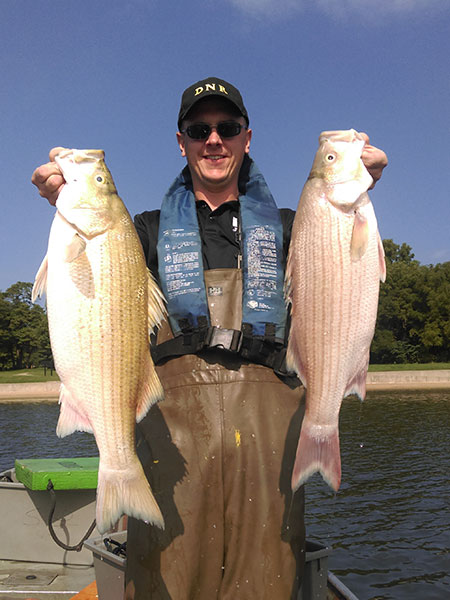 Indiana biologist Tom Bacula poses with 10- and 8-pound wipers he captured in nets while studying the wiper population at Potato Creek State Park.
Indiana biologist Tom Bacula poses with 10- and 8-pound wipers he captured in nets while studying the wiper population at Potato Creek State Park.
When you make out your fishing “to-do” list for next year, consider tackling the hybrid bass that are taking a foothold in Worster Lake at Potato Creek State Park.
Most people don’t know much about these gamefish that have been stocked in the park lake annually since 2011. They were planted by the Indiana DNR with hopes they’d feed heavily on the gizzard shad that have created problems for Worster Lake fish managers for years.
Best known as “wipers,” the fish are a cross between a white bass and the freshwater striped bass. The combination produces the voracious feeding habits of white bass yet one that grows to larger sizes, thanks to the striped bass genetics.
District fisheries biologist Tom Bacula says the wiper fishery is doing well and one that anglers should consider targeting. He was at the lake last fall surveying the population and came away pleasantly surprised.
“I was very impressed with the numbers and size of fish collected, especially with it being a relatively young fishery,” said Bacula. “It appears as though we have all year classes present.”
- Details
(Provided by IDNR)
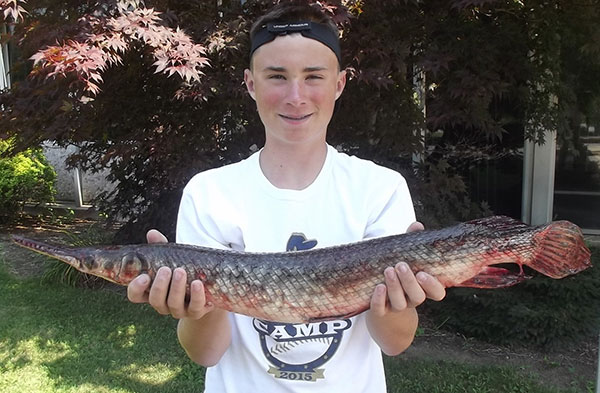 Indiana State Record Spotted Gar
Jaxton Orr, a 13-year-old who lives in Fort Wayne, broke the Indiana size record for spotted gar last week while fishing on Big Lake in Noble County.
The size of Indiana state fish records are determined by weight. The record fish weighed 6.0 pounds. The old record for spotted gar was 5.1 pounds, caught from Turtle Creek Reservoir in Sullivan County in 2014 by Dale Haas. Orrís fish was 34.7 inches long and its girth measurement was 11 3/8 inches. DNR fisheries biologist Jed Pearson verified the record.
- Details
(Provided by All Creation Media)
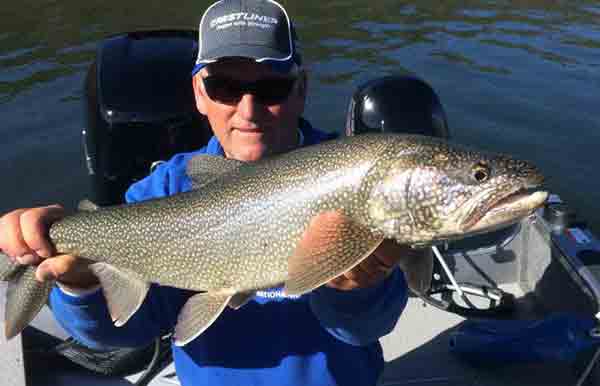 Understanding Gamefish Strike Zones
Many anglers agonize over finding the hot lure or perfect color pattern for the conditions at hand, but veteran guide Bernie Keefe argues they'd catch more fish by focusing on strike zones instead.
"A strike zone is the area in which fish will respond positively to your presentation, and the size of these areas changes frequently, even during the course of a day on the water," he explains.
While Keefe concentrates most of his time connecting clients with feisty trout including lakers, browns and 'bows, along with Kokanee salmon, he's also a veteran walleye and pike fan, and says the strike zone concept applies to virtually any gamefish.
"Same with technique," he says. "Strike zones are a big deal whether you're casting, jigging or trolling."