

 Tournament News Powered By Lake Drive Marine
Friday, June 12, 2026
Friday, June 12, 2026
Thursday, June 11, 2026

- Details
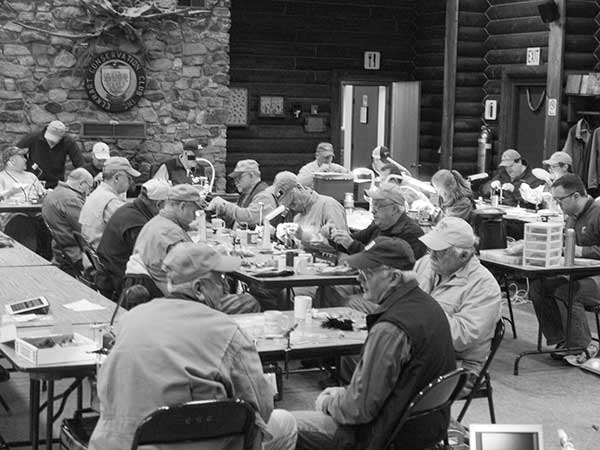 Eighth Annual Tie-a-thonOn April 12th members of St. Joseph River Valley Fly Fishers, a Federation of Fly Fishers associate club; members of Kalamazoo Valley Chapter of Trout Unlimited and many others, will come together to tie flies for three worthy causes. Each cause will use the flies to further their mission of fly fishing to educate and heal in their respective ways.
Here is a look at each of the three causes:
The National Fishing in Schools Program (NFSP) is a 501(c) (3) not-for- profit organization is designed to promote fly fishing and traditional tackle fishing among school kids within Michigan, Indiana and beyond.
The “Fishing in Schools” program accommodates students irrespective of gender, physical ability or natural aptitude. The program’s objective is to teach students in grades 6-12 ‘how to fish’ in school gymnasiums. A core two-week foundation curriculum unit for Physical Education teachers is the norm. It addresses four National Academic Standards (PE, science, language arts & technology.) The complete curriculum meets six. For more information, check out www.flyfishinginschools.org.
- Details
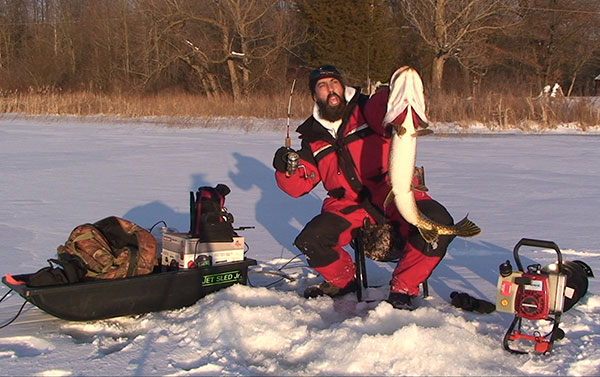 Keith StantonD&R Sports Center is hosting a free, two-day weekend Ice Fishing Show Dec. 7-8 at the Kalamazoo store.
Renowned ice fishing pros will share their experience, tips and tricks for successful ice fishing and more than 25 representatives from the leading ice fishing tackle and equipment companies will display their latest product innovations.
The two-day event is free to the public Saturday from 9-5 and Sunday 10-4.
Keith Stanton, known as the “PikeKilla” and president of Malyn Entertainment, will present his seminar: “Pike Under Ice.” He will demonstrate his PikeKilla™ lure and the vertical jigging techniques he has perfected. He will also share his proven methods for spearing pike and the proper use of pike decoys to attract trophy fish.
- Details
(Provided by Michigan DNR)
The Department of Natural Resources, Fisheries Division’s Southern Lake Michigan Management Unit will conduct a public meeting to discuss muskellunge management on Gun Lake in Barry County.
The meeting will be held on Thursday, July 18 from 7 to 9 p.m. at the Orangeville Township Hall, located at 7350 Lindsey Road in Plainwell.
The meeting will provide an opportunity to discuss a proposal to increase the muskellunge minimum size limit from 42 to 46 inches on Gun Lake to protect this naturally reproducing population.
- Details
As muskie fishing in Indiana has grown to national prominence, so too has the state’s muskie guide business.
Anglers now routinely hire licensed guides to fish for muskies, primarily at six natural lakes in the northeast corner of the state.
Muskies are large predatory fish that grow up to 4 feet long. Catching them usually requires experience and heavy-duty equipment.
According to DNR estimates, Hoosier anglers spend about $100,000 to $150,000 annually to hire muskie guides.
“That is big business when you consider a little more than a decade ago muskie guides in Indiana were unheard of,” said Jed Pearson, a DNR fisheries biologist in Columbia City. Pearson manages most of the muskie lakes in the state.
- Details
A 12-inch muskie captured last month by DNR biologists in Steuben County marks the first indication of natural reproduction of the popular sport fish in any Indiana lake.
While electrofishing for largemouth bass, biologist Neil Ledet and his survey crew netted the one-year-old muskie in shallow water on the north side of Ball Lake, an 87-acre natural lake.
Ledet thinks the fish came from natural reproduction because the DNR quit stocking Ball Lake five years ago. From 1997 through 2008 the DNR released 6,700 muskie fingerlings in the lake.
Stockings were discontinued when a survey revealed few Ball Lake anglers fished for muskies and few were caught, despite the fact that adult muskies were present.