

 Tournament News Powered By Lake Drive Marine

Friday, June 12, 2026
Friday, June 12, 2026
Thursday, June 11, 2026
- Details
By Louie Stout
 Michigan River Walleyes Are Reproducing
Veteran walleye anglers have contended for years that walleyes always have reproduced naturally in the St. Joseph River.
While there might be some of that in Indiana waters, Hoosier biologists say they have yet to find very many.
They know this because they do young-of-the-year surveys every fall while assessing how previous stockings have gone. They encounter fish they have stocked but no additional youngsters.
The situation must be different in Michigan’s lower St. Joe waters.
Michigan DNR studies conducted the past couple of years reveal a growing number of naturally produced walleye in Michigan’s section of the St. Joe.
- Details
(Provided by IDNR)
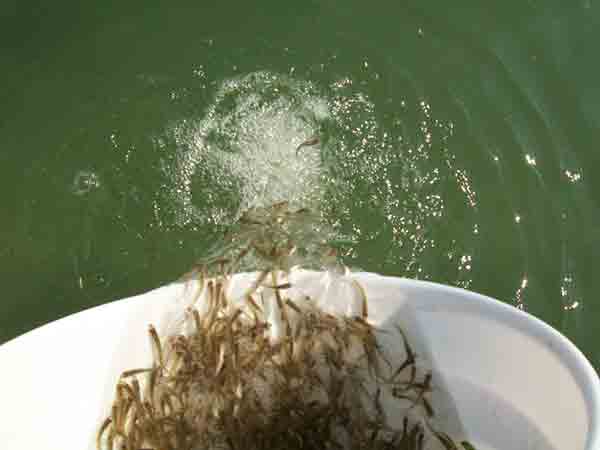
If DNR plans move forward, Shriner Lake, north of Columbia City, could be stocked with 1,200 walleye fingerlings this fall.
The walleyes will measure 6-8 inches long and will be skimmed from a stocking of 6,690 walleyes at Sylvan Lake in Noble County.
If successful, the transfer could be permanent.
"We have developed a very dense walleye population at Sylvan Lake and think we can scale back the stocking program there without affecting the quality of walleye fishing," said Jed Pearson, DNR fisheries biologist. "Doing so frees up some fingerlings that we can stock in other lakes."
By stocking Shriner Lake, Pearson hopes to expand walleye fishing opportunities into Whitley County. Other DNR walleye stockings occur at Pike and Winona lakes in Kosciusko County.
- Details
(Provided by All Creations Media)
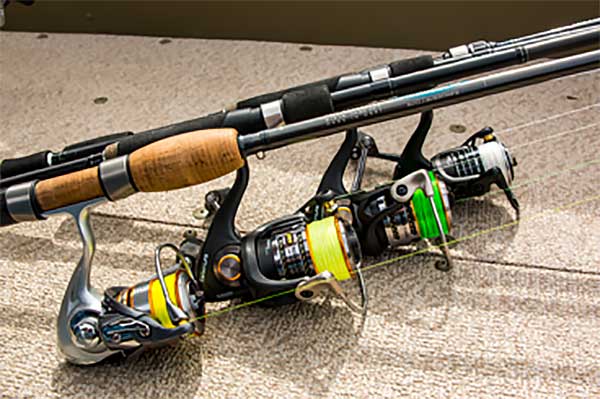 Catch more walleyes by choosing the right colored fishing line.
There are many ways to tip the odds in your favor when you're angling for the next big catch. One of the easiest, least expensive and most effective is by spooling up with line that's a perfect fit for the conditions at hand.
After all, line plays a key role in many facets of fishing, from the presentation phase to strike detection, hook-setting and fighting fish.
Many anglers make this connection and work hard to choose lines with the right blend of strength, abrasion resistance, size and handling characteristics. But veteran fishing guides and decorated touring pros Scott and Marty Glorvigen maintain that few fishermen pay full attention to one of the most critical aspects of line selection-the color factor.
"People tend to forget about using line color as a tool to catch more fish in different situations," says Scott. "But choosing the right color can be key to success."
Take spring walleye fishing on rivers, for example.
"Colored line that's easy to see is a godsend when vertical jigging early season walleyes," says Marty. "You can tell whether the bait is directly below the rodtip, which is where you want it for optimum control and to avoid snags as much as possible. If the line is perpendicular to the surface, you're fine. But if it runs up- or downstream, you need to adjust your boat speed or jig weight."
- Details
(Provided by IDNR)
The Indian DNR stocked another 25,000 walleye fingerlings in Kokomo Reservoir in May, marking the 20th year that walleyes have been released into the 484-acre Howard County impoundment.
The walleyes averaged 1.5 inches long and were produced at the Cikana State Fish Hatchery near Martinsville.
Walleyes are popular among Hoosier anglers and are stocked in Kokomo Reservoir to provide walleye fishing opportunities in central Indiana.
Sampling by DNR fisheries biologists has shown that walleye survival is good at Kokomo Reservoir.