

- Details
MDNR Report
 Recreation PassportPacking up for a camping trip. Fishing from your favorite pier. Parking the car, ready to enjoy thousands of miles of motorized and nonmotorized trails or drop your boat in the water ...
Those are just a few outdoor amenities and experiences that start with the Michigan Department of Natural Resources’ valued-packed Recreation Passport, which gives year-round vehicle access to 100-plus state parks and recreation areas, more than 1,000 state-managed boating access sites, 140-plus state forest campgrounds, and parking at thousands of miles of trails and other outdoor spaces.
Next month, people will see a slight increase in the cost of a Recreation Passport. Effective March 1, the Recreation Passport resident vehicle fee increases from $12 to $13 (and from $6 to $7 for motorcycles) – the first such increase since 2020.
New nonresident Recreation Passport fees, including the nonresident annual pass that went from $36 to $39, went into effect Jan. 1, 2023.
- Details
MDNR Report
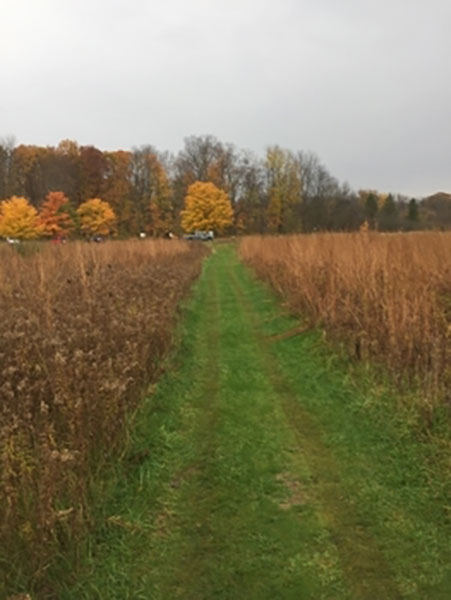 DNR Wildlife Habitat Grant Program
Now through March 16, the Michigan DNR Wildlife Habitat Grant Program will be accepting applications.
“We are excited to support those who want to increase habitat and enhance existing habitat through the Wildlife Habitat Grant Program,” said DNR Wildlife Division Chief Jared Duquette. “Healthy and abundant habitats not only benefit wildlife, but also benefit Michigan residents.”
Funding is available for local, state, federal and tribal governments, profit and nonprofit groups, and individuals through an open, competitive process. The minimum grant amount is $15,000, and the maximum is the total amount of funds available for the grant cycle, which is approximately $1 million for 2023.
- Details
MDNR Report
A handful of locations throughout Michigan’s state parks and recreation system will temporarily close this summer and fall, but for good reason: road reconstruction, historic preservation, upgraded electrical and water distribution systems, visitor center enhancements, new toilet and shower buildings and other work aimed at making the visitor experience more enjoyable and comfortable.
Many of these critical projects are possible through millions of dollars in federal relief COVID-19 funding – the American Rescue Plan Act of 2021 – while other planned projects are funded through Recreation Passport dollars and various state and federal grants.
A total $250 million in American Rescue Plan Act funds was made available to the Michigan Department of Natural Resources last March to help address a long list of critical needs in state parks and trails and build a new state park in Flint. These federal ARPA relief funds are part of a $4.8 billion infrastructure package outlined in Gov. Gretchen Whitmer’s Building Michigan Together Plan.
"It wasn’t more than a few years ago that we were trying to identify nearly $300 million in funds to assess a backlog of state park infrastructure needs," said Ron Olson, DNR Parks and Recreation chief. "Today, we have the great fortune of administering a once-in-a-lifetime investment of $250 million over three years, allowing us to deliver tangible improvements at these outdoor spaces that people love and return to, season after season."
Federal funding requirements stipulate that ARPA funds must be obligated (committed to a project) by Dec. 31, 2024, and spent on that project by Dec. 31, 2026.
- Details
By DAN SAMPSON, Regional Hatchery Manager, MDNR Fisheries Division
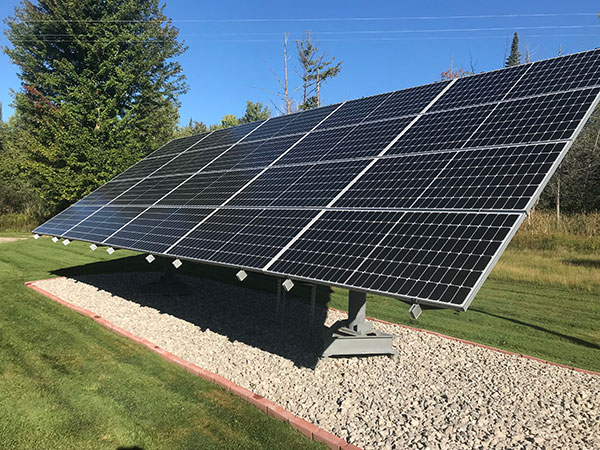 Hatchery Solar Panels
As Michiganders, we truly love to get outside on sunny days, maybe for a day at the beach, a skiing trip with friends, boating on our favorite lake, bike riding on trails or camping at one of our beautiful state parks.
Regardless of what we have planned, the sunlight has a way of brightening our spirits and adding positive vibes to our lives, even on days when we seem just too busy to go out and truly unwind in it.
Michigan Department of Natural Resources fish hatchery staffers are no different when it comes to enjoying the sun. For hatchery managers, though, those sunny days will soon come with an extra silver lining.
Starting in 2023, solar panels will be installed at state fish hatcheries, contributing to paying the bills, producing electricity to help rear fish.
Starting in the southern part of the state in March and moving north through July, Solar Harvest, a solar energy company, will install solar arrays at five of the six DNR fish hatcheries.
Only the Marquette State Fish Hatchery in Marquette will be left out because nearby hills and trees block some light and reduce the amount of time solar panels could be producing electricity. This means that not enough electricity would be produced to offset enough power to make the investment worthwhile.
Luckily, though, that’s not the case at the other hatcheries.
Larger arrays
Three of the solar arrays will be the same size, each designed to produce 189.24 kilowatts and each offsetting power from Consumers Energy. These three larger arrays will be installed at the Wolf Lake, Harrietta and Oden hatcheries.
Although they will have the same design output capacity, the cost savings will vary due to site-specific physical factors and differences in electrical rates at each hatchery.
Projected annual energy cost savings are expected to be about $17,000 at Wolf Lake, $19,700 at Harrietta and $19,500 at Oden.
Wolf Lake State Fish Hatchery’s array installation will begin in March and is planned to be completed by early April. The location will be north of the production raceway building, paralleling Michigan Highway 43.
This array will be noticeable by hatchery visitors but will not be highly visible from the highway, due to trees along the north side of the property.
Wolf Lake’s solar array is expected to offset 17% of the main hatchery’s electricity needs and will pay for itself in 17 years.
Harrietta State Fish Hatchery’s array will be the next one installed, to be completed by the end of April. This one will be easily seen, with its location just west of the settling pond and in clear view of West 30 Road.
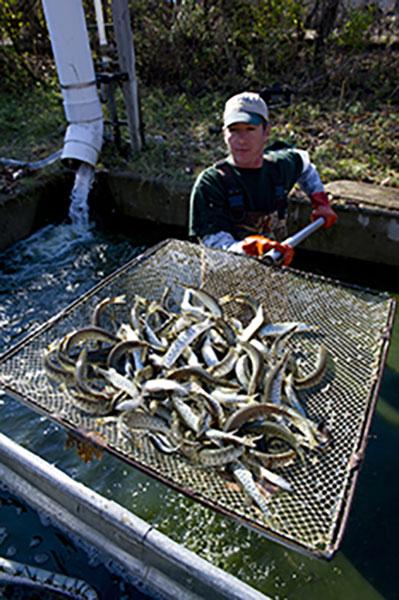 Hatchery Solar Panels
The location was selected because there is a steep, wooded hill just to the south of the hatchery that needs to be avoided. Harrietta’s solar array is expected to offset 18% of the main hatchery electricity needs and will have a payback period of 15.3 years.
Oden’s large array, one of two at this hatchery, will be installed in June. It will be situated in a sunny location just north of the brood stock building and will produce electricity for the main hatchery.
The site is well off South Ayr Road and will not be visible from the road, but visitors will be able to see it from the main hatchery. Oden’s large array is expected to offset 16% of the hatchery electricity needs and have a payback period of 15 years.
Smaller installations
Additionally, three smaller arrays will be installed at DNR hatcheries, including one at Platte River, one at Thompson and a second one at Oden. These arrays will vary in size and mounting style due to agreements with power companies and site conditions.
The Platte River State Fish Hatchery will receive a smaller, ground-based solar array by the end of May, which will offset power supplied by Cherryland Electric. This one is designed to produce 125.5 kilowatts for the main hatchery and is expected to produce enough energy to save the DNR about $13,000 per year.
The location for the array will be near the weir and salmon maturation ponds, visible to hatchery visitors but not noticeable from U.S. Highway 31. Platte’s array is expected to offset 12% of the hatchery electricity needs and has a payback period of 15.6 years.
The smaller of the two arrays at Oden State Fish Hatchery will be installed in late June. This one is designed to produce 51.46 kilowatts and is projected to save about $6,600 in energy costs per year.
It will supply a significant amount of the power needed to keep the viewing chamber dry, allowing visitors to watch what’s happening underwater in the stream at Oden State Fish Hatchery.
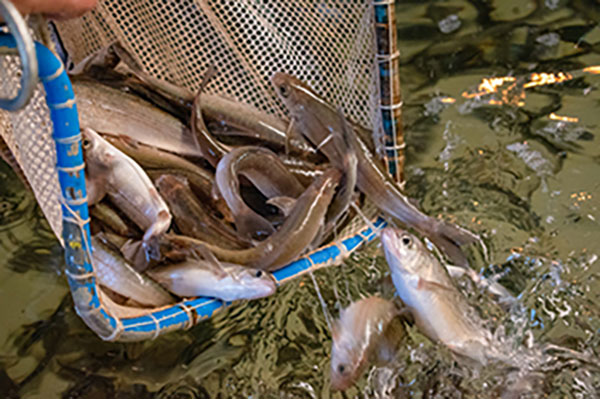
Additionally, it will offset electricity used in the isolation building, which is used to isolate new groups of fish that are planned to be used as future brood stock, including Arctic grayling.
The location for this array will be to the west of the isolation building, south of Oden’s big fishponds. It will not be visible from any road but will be somewhat visible to visitors who use the trail to the ponds.
The smaller array at Oden is expected to offset 76% of the electricity used from this meter and has a payback period of 13.8 years.
The sixth and final array will be installed at Thompson State Fish Hatchery in July. This one will be a roof-mounted system that is designed to produce 126.99 kilowatts of power and is expected to save about $13,000 annually.
Unlike the others, this array won’t be as noticeable because it will be mounted on top of the production raceway buildings, which are not easily seen from the road or hatchery grounds. Thompson’s array is expected to offset 16% of the main hatchery electricity use and has a payback period of 15.6 years.
 Hatchery Solar Panels
Adding these six arrays will dovetail nicely with an existing 6-kilowatt array at the Oden State Fish Hatchery Visitor Center. Significant funding was provided for this array from by the Frey Family Fund via the Charlevoix County Community Foundation and Friends of Oden Hatchery, with construction completed in autumn of 2020.
This array reduced electricity supplied by Consumers Energy from a three-year average (2017-2019) of 11,423 kilowatt hours to a two-year average of 5,255 kilowatt hours and dropped the cost over those same time periods from $1,851 to $870.
- Details
By KATIE GERVASI
Law Enforcement Division
Michigan DNR
 Michigan Timber
George Berkeley, an Anglo-Irish philosopher, originally posed the question: “If a tree falls in a forest and no one is around to hear it, does it make a sound?”
Considering there are about 20 million acres of forest land in Michigan, a lot of tree falls go unheard.
What else happens in the depths of the forest?
How are forests and other remote locations – home to Michigan’s finest natural resources – monitored?
What happens when someone steals those valuable resources?
A group of career officers is responsible for patrolling and protecting Michigan’s natural resources.
In addition to policing hunting and fishing violations and performing a wide range of other duties, Michigan Department of Natural Resources conservation officers investigate crimes of natural resource theft that occur in these remote locations, where many people believe they will leave no trace.
Forest resources
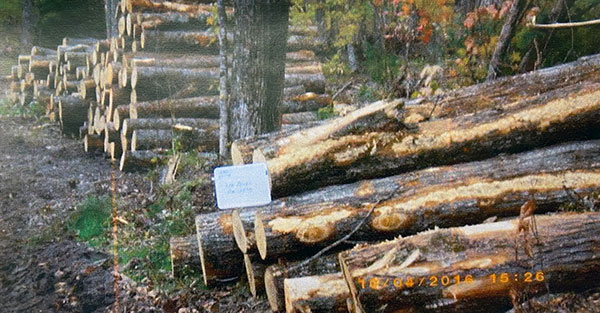
“You don’t know something is missing until it’s gone,” said Doug Heym, DNR Forest Resources Division unit manager for timber sales and utilization. “If you have forested property of any kind – keep your eye on it because timber rustling (theft) does occur.”
Michigan’s traditional forest industry generated an estimated $22 billion in 2019. That’s a significant source of income and jobs to local economies, especially in the northern two-thirds of the state, where most of the forest land is located.