

 Tournament News Powered By Lake Drive Marine

Friday, June 12, 2026
Friday, June 12, 2026
Thursday, June 11, 2026

- Details
The St. Joseph County Chapter of Izaak Walton will host a one day “learn-to-tie flys” class for beginners April 22.
The class will teach the basics of fly tying and many techniques needed to advance in your fly tying skills.
The class will be taught by experienced fly tiers with explanation of what the fly represents and how to fish the pattern. Vises and materials will be provided along with recipe and diagrams of how to tie each pattern. There will be 6 to 8 difference patterns taught, time permitting.
- Details
Mercury Report
 Soft Plastics
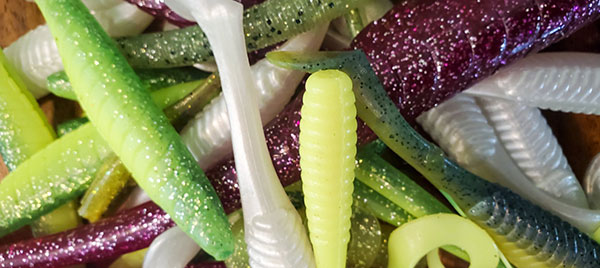
One of the simplest, yet most effective lure combos for catching a variety of fish species is a soft-plastic jig tail rigged on a lead jighead. When reeled, twitched or jigged through the water, these tails swim and flutter with impressive fish-catching action.
Sometimes the toughest challenge is choosing the right one. Soft-plastic jig tails come in thousands of sizes, styles, colors and brands. So how do you know which to choose in any given fishing situation? By following these five simple tips, you can confidently pick out a tail that gives you a good shot at success.
1. Match the Hatch
Choose a tail that’s similar in size and profile to the common forage fish where you’re fishing. The predators in any given body of water generally key in on body shape and size as much as any other factor when they go on the hunt, so you want to choose an offering that matches up with their prey. If you’re fishing for Spanish mackerel chasing anchovies, a small, slender tail will be a top pick. If the target is bass in a lake full of 4-inch shad, a 4-inch tail with a deep body should do the trick.
2. Choose a Tail’s Action According to Angler Skill Level
Beginners who haven’t mastered the art of subtly twitching and jerking a jig to make it look lively will almost always do better using a twister or paddle-style tail, which produces its own swimming action as it moves through the water. But there’s one big exception, covered by tip No. 3.
3. Change Up Based on Presentation
Horizontal and vertical presentations can require different soft plastics to get the best action. For instance, many paddle tails and twisters look great on a straight retrieve, but will spiral when allowed to free-fall, which isn’t the most natural look. Straight, tube or forked tails tend to fall at an angle to the bottom, and by twitching the tip you can get many to fall like a feather, slewing back and forth one way then the other — an effective presentation. So, while all the above work well when casting out then jigging horizontally as you retrieve, when you’re jigging vertically, using tails that won’t spiral is often a better bet. Since there can be so much variation in how different jigs fall, when jigging vertically the smart thing to do is to hold your lure next to the boat, give it a few jerks and watch how it falls before sending it down deep.
- Details
FAF Report
 Future Angler
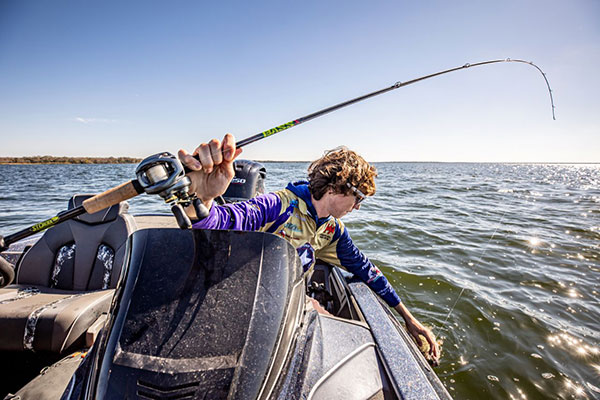
Bass fishing clubs have made a big splash on the high school scene in recent years, helping bridge the gap between academics, competitive sports and the great outdoors for teens across the country.
While the number of high school bass fishing clubs is growing at a rapid pace, there’s plenty of room for more, which is why the non-profit Future Angler Foundation (FAF), in conjunction with Into The Outdoors Education Network, offers a free series of four classroom videos with lesson activities covering all aspects of high school bass fishing, including a youth-to-youth introduction designed to help students form a club and get it up and running in their very own schools. These peer-driven lessons are even correlated to national education standards for use in schools across the country.
“At FAF, we strive to introduce the public to the joys and thrills of fishing and boating through our extensive educational, promotional and grass roots efforts,” says president, Patrick Neu.
- Details
Mercury Report
 Making perch tacos
If you’re a fan of the Friday night fish fry, it’s very likely you’re familiar with yellow perch. This freshwater favorite might just be the ultimate fish for frying. That’s because its small fillets are tender and delicate, with a mild, sweet and delicious flavor profile.
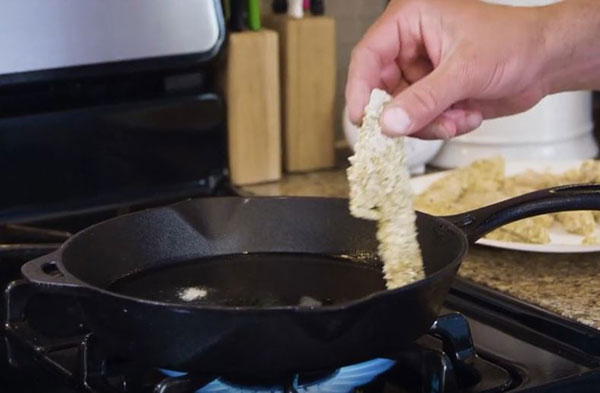
For this installment of Cook Your Catch, Taylor Wright, of “The Canadian Tradition” television series, shows how to make yellow perch tacos. A dish that is at once simple and exquisite.
Ingredients:
- Two whole lake perch (or four prepared fillets)
- 2 eggs
- 2 tablespoons cream
- 1/2 cup breadcrumbs
- 1/2 cup panko breadcrumbs
- 1 cup all-purpose flour
- 2 cups vegetable oil
- 1 cup shredded lettuce
Preparing the Fillets:
For this recipe, you can either purchase fresh, pre-cut yellow perch fillets or you can head out on the water yourself and catch your dinner.
- Details
Mercury Report
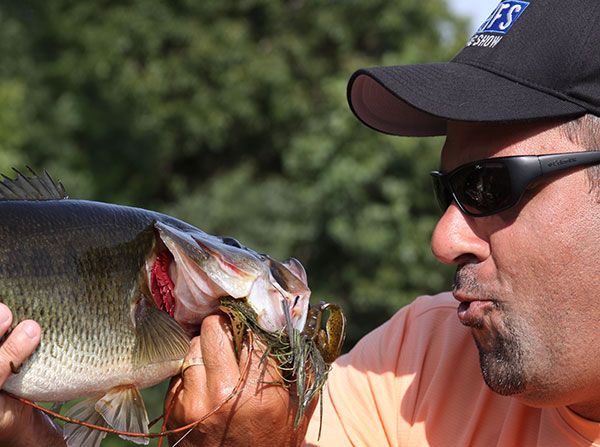 Mark Zona
Anglers might be surprised to learn the weatherman can be one of the best tipsters for predicting the fishing action. Specifically, reports on the upcoming barometric pressure trend can help catch fish.
Experts theorize air pressure changes affect a fish’s swim bladder, which is used to help a fish maintain neutral buoyancy. Because it is filled with air, a fish’s bladder is sensitive to pressure changes that occur when moving between different depths, and most believe it is also affected by changing air pressure. Low pressure causes the swim/air bladder to expand, which many believe causes fish discomfort and causes them to retreat to a lower depth where the higher pressure relieves this bloating sensation. Conversely, higher pressure can cause certain species of fish to suspend.
Keep in mind, these are generalizations, as what’s considered “shallow” and “deep” varies greatly by body of water, and the activities of fish vary greatly based on season, species and many other factors.