


- Details
Michiana Sportsman Spotlight
By Louie Stout
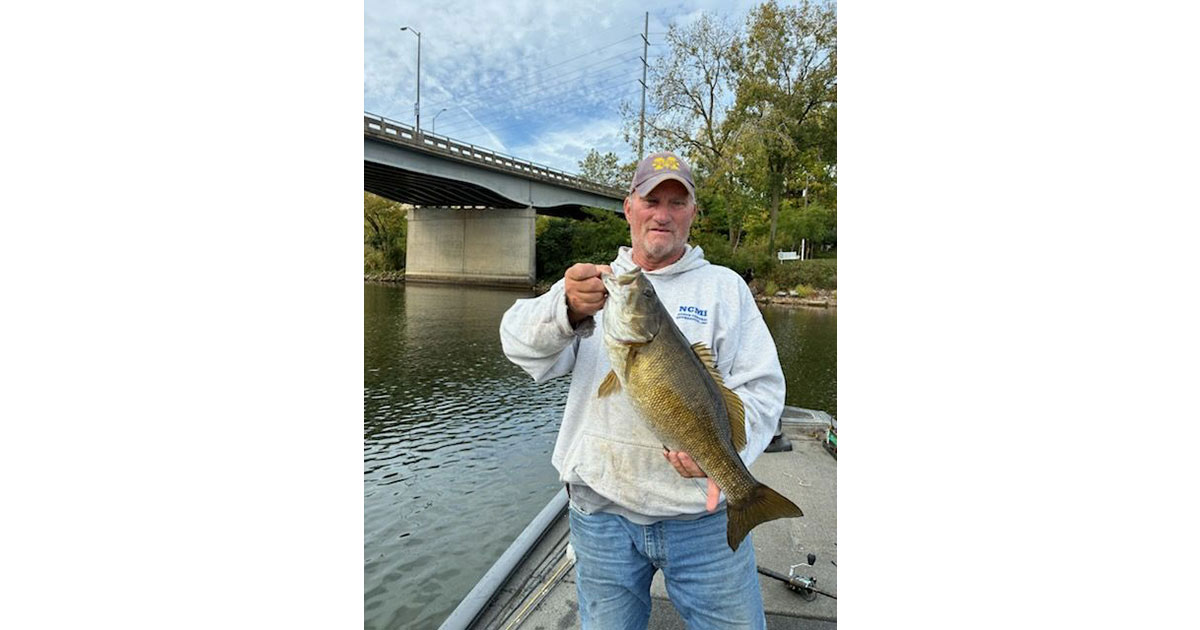
Name: Jim Horn
Hometown: Buchanan, Mich.
Occupation: Postal Supervisor
Favorite species and biggest fish of that species: Mostly bass, 24 ½-inch largemouth with an 1- inch girth.
Favorite Michiana lake: Diamond Lake
Hobbies when not fishing: Making baits for own use
If you on had one lure and why: ½-ounce black/blue or green pumpkin jig with a craw trailer because it catches big fish. When bass are keying on crawfish, I like a jig with a stand-up head.
Favorite rod and reel: Berkley Lightning Rod with Lew’s Super Duty Baitcaster.
Best tip to give a new Michiana angler: If you’re going to fish the St. Joseph River, practice casting accuracy. First cast needs to be on the money; if you land 8-12 inches away, you probably won’t get bit. Also, clearer the water, the farther you need to stay away from the target.
Jim Horn is a simple man who catches a heckuva lot of fish.
And while bass is his preferred species, he’s put the hurt on a lot of other species, such as walleye, panfish and pike.
His fishing philosophy is a lot different than most anglers’. He doesn’t get too caught up in modern technology or fancy lures.
- Details
Michiana Angler Spotlight
By Louie Stout
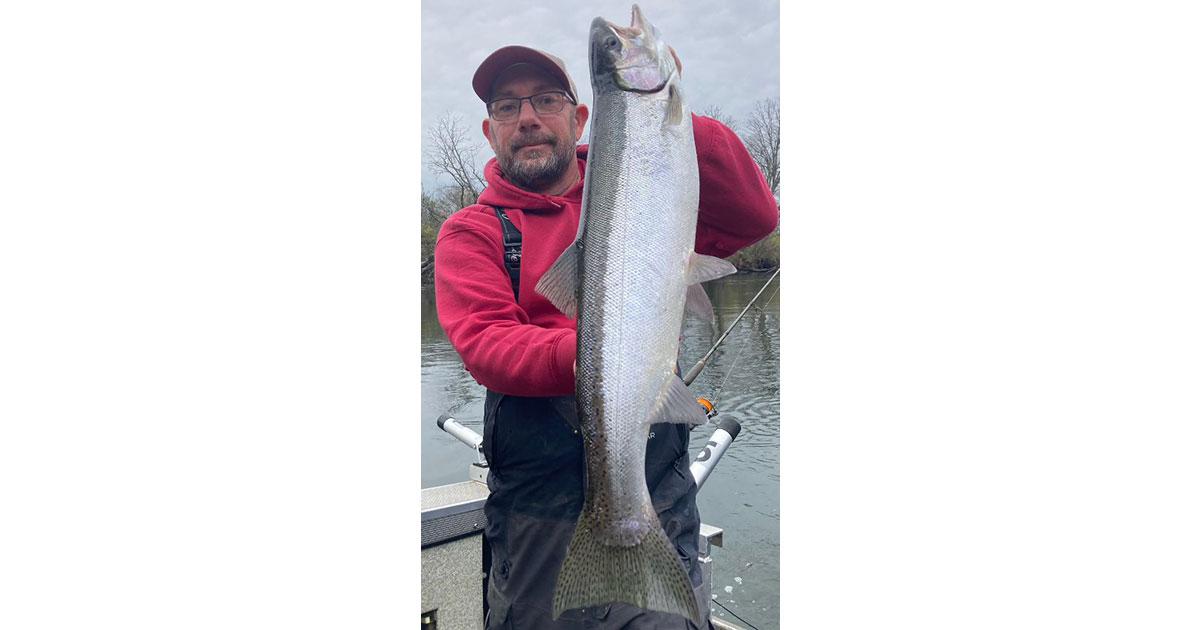
Mike Jones is a fishing freak who loves fishing, especially on the St. Joseph River for trout and salmon.
And while bass anglers may dream of someday fishing professionally, Jones is fulfilling his lifelong dream as a full-time fishing guide, which he began five years ago after spending years building boats at Bennington and saving the cash to pursue his dream.
“I’d fish 365 days a year if I could,” says the 1990 Mishawaka Penn grad and Osceola, Ind. resident.
He spends his winters guiding on the river and summers on Lake Michigan. And when time permits, he’s fishing for big catfish below river dams or dinking for the plentiful bluegill in the Indiana waters of the St. Joe.
“I guide all winter,” he says. “I won’t have a day off until Jan.14, and that’s only because I have a doctor’s appointment that day.”
His MJ’s Charter Service runs winter charters on his 23-foot enclosed Starcraft boat and summer charters on his 36-foot Trojan.
Here’s a Q&A I did with him:
MON: Is it hard finding clients to fish in winter weather?
Jones: Not for my boat. I keep the inside heated and we catch fish. If my trip doesn’t produce 15-20 steelhead bites I’m not happy. I love fishing for steelhead, but after about 6 months, I’ve got the itch to get out on the big lake and fish out there. The nice thing about river fishing is the clients can feel the bite and hook their own fish as opposed to trolling on the big lake. But both can be fun.
- Details
Michiana Sportsman Spotlight
By Louie Stout

Joe Sears doesn’t have a lot of major accomplishments to show for his bass tournament legacy, but he’s trying to build one.
Sears was a regular around the South Bend/southern Michigan team tournaments the past few years. He had some success with team partners, but last year he decided to challenge himself.
Sears stepped outside his comfort zone and began fishing bigger tournaments on St. Clair and other big bodies of water.
Michiana Outdoors News admires the fact he was willing to take that risk and expand his fishing knowledge by fishing against some of the Midwest best anglers. That’s why we asked him to participate in our Sportsman’s Spotlight.
Here’s a Q&A we did with him:
MON: You started a business built around Big-Eye Joe. How did that come about?
Sears: That’s a nickname Eben Lambert tagged me with because when we fished tournaments together, I often overestimated the weight of our fish. He said I was always big eyeing’ them. So, I was on Diamond Lake a year ago and a boat load of kids came up to harass me. I videotaped it and started a bigeyedjoe youtube channel and created some apparel and other stuff associated with it.
MON: What made you decide to fish big tournaments last year?
Sears: I wanted to test myself and try something different. Tournaments around home are always on the same lakes and were getting beat up. Bigger waters provide more diversity and opportunities to learn so I decided to stick my big toe in last year and went after it.
MON: And how was it?
Sears: Humbling, to say the least, especially when you come to weigh-in with only four fish in a five fish limit. But I did Ok, considering I was relatively new to this and I learned a lot. I learned to stop second-guessing my gut decisions. I learned what to do and what not to do.
I also learned about boating big water. I was in the worst weather ever been in at a tournament – an F1 tornado on St. Clair – and I drove through 7 footers for 12 miles to get to the weigh-in when a lot of guys didn’t make it back in time. I was scared to death!
MON: Will you fish bigger stuff in 2026?
Sears: I plan to cut back some. I’ll fish some Big Stack PayBack tournaments and jump into some BFLs.
MON: You damaged your boat in the last tournament you fished. What happened?
Sears: I was competing in the BFL Regional at Pickwick in Tennessee. I was coming out of a creek and got out to the main stretch and hit something. I’m not sure what it was, but it took out my prop shaft, took the prop completely off the motor and two cylinders are damaged. I was in 23rd place after day one and still finished 37th out of 104 other anglers. My boat is still in the shop.
MON: How much did you spend pursuing those tournaments and how much did you win back?
Sears: I spent about $12,000 and got back about $4,000. Those guys I was fishing against are very, very good, especially with their forward-facing sonar skills. If you took that technology out of the equation, you’d see shift in the names on the leaderboard.
MON: What are your thoughts on forward facing sonar?
Sears: I use it and I like the thought of new technologies; they’re key to advancements around the world. But you can spotlight these fish all you want but you still must convince them that your lure is something they want to eat. And here’s the thing, you still need a basic knowledge of how fish set up on structure and how they survive.
MON: Do you think it should be allowed in all tournaments?
Sears: If a series is going to allow it in tournament it should do it for all tournaments. If a series wants to limit or ban it, it should hold a separate series for that.
MON: Would you fish a series that didn’t allow it?
Sears: I would 100%, absolutely fish it.
Joe Sears Details
Hometown: Bristol, Ind.
Occupation: Owner, J&N Lawncare Services
Favorite species and biggest: Smallmouth bass, 6-10, Detroit River
Favorite Michiana lake: Wawasee.
Hobbies when not fishing: Making lead head jigs.
If you had one lure for Michiana: 1/2-ounce green pumpkin jig with a craw style trailer for skipping docks or fishing rock, weed edges.
Favorite tackle: Lew’s baitcast reel, 7.5:1 gear ratio and G. Loomis GLX rods.
Best tip for Michiana anglers: Avoid fishing the same old spots. Fish change and so should you. Always be on the lookout for new areas or transition areas that could hold fish.
- Details
By Louie Stout
As tournament directors put together their schedules for 2026, I’m curious to see if any have the will to at least partially limit the use of forward-facing sonar (FFS).
That’s what pro circuits are doing and for good reason.
Full disclosure – I have it and use it, but you probably won’t see me sitting in the middle of the abys and throwing at dots on a screen. FFS is a tremendous tool for fishing structure the old school way, but it also puts those without the technology at a disadvantage.
Based upon what I saw last year, several tournaments on many Michiana lakes were dominated by anglers who trolled around and only cast at dots they see on their electronics screen.
By limiting FFS, anglers who prefer to fish traditional methods or those who don’t have the technology would have a better chance.
Otherwise, these tournaments are headed to becoming scoping contests and, like the cliché says, “If you’re not scopin’, you’re hopin’.”
Big bass programs
Arkansas has started an “Arkansas Legacy Lunker Program” that is like the Texas’ ShareLunker Program. Both are designed to encourage angers to donate their big bass to the state agencies.
Fish agencies utilize giant bass to create genetically superior offspring with the intentions of creating bass fry for stocking in some lakes to create fish that grow to bigger sizes.
The minimum size for Texas is 13 pounds or bigger while Arkansas is accepting 10 pounds or bigger. When an angler catches one and keeps in his livewell, he calls the agency and they come pick it up and take it to a special hatchery facility.
Now, I know neither Indiana nor Michigan have the resources or the interest in such a program for our largemouth, but it would be so cool if something similar could be developed for smallmouth and even walleyes. (I’m sure my state biologists friends are cringing, but I still think it would be neat to try something like that.)
Cougar numbers growing
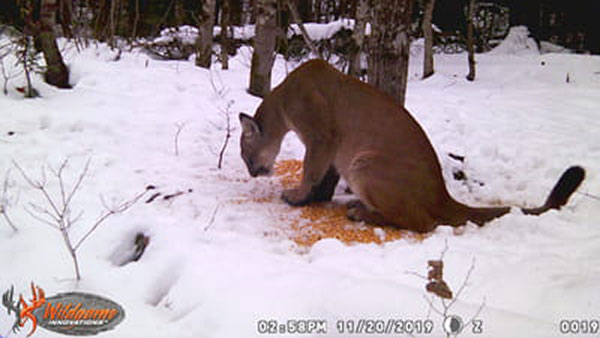
Do you remember hearing about cougar sightings in Michiana years ago? The DNR pooh-poohed the idea, and honestly, there was never a cougar confirmed or spotted on a trail camera around here.
Well, that sure isn’t the case in upper Michigan. The DNR reports that they have a record number of confirmed sightings, mostly in the upper peninsula.
There have been 26 so far this year with a month to go. The state has confirmed 161 sightings since 2008.
The Michigan DNR believes the increase in sightings is due to the popularity of trail cameras being used in northern counties.