


- Details
By Louie Stout
Much to the chagrin of avid ice anglers, the winter has been pretty darn mild.
What does that mean for our lakes come spring? Will it impact fish in those lakes?
We posed that to northern Indiana and southern Michigan fisheries biologists.
Call it wishful thinking, but one might think that predators fed better through the winter and should show signs of accelerated growth and weight.
Indiana biologist Matt Horsley said it might happen, but unlikely.
“Ice or no ice, fish activity is based upon water temperatures and less about ice cover,” he said. “During winter, temps below ice remain around 37 degrees, and lakes have been hovering at or just above that.”
- Details
By Louie Stout
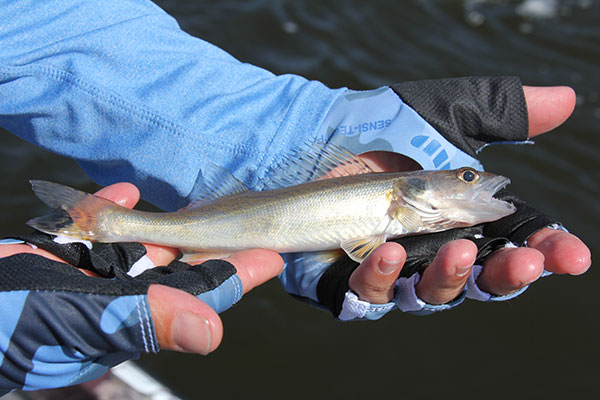 Young Walleye
A survey last fall of the 2021 St. Joseph River walleye stocking indicates lower than expected survival, but it could have been a timing thing.
St. Joseph River biologist Matt Horsley the DNR determines that if it turns up four, one-year-old walleyes per hour the stocking was successful. Last fall, they only got seven in two hours.
“History tells us the stockings do well there, so we still consider it a success,” Horsley said. “Our shocking survey could have been affected by the river, weather and time of year.”
The fish were stocked the previous year in a cooperative effort between the DNR and the Michiana Walleye Association. Another stocking is planned for this fall.
- Details
By Louie Stout
I admit I’m a hypocrite.
I don’t have the forward facing sonar but I think I want it. Once it improves, or the prices come down, I will get it.
But in the meantime, I’m beginning to wonder what kind of anglers this new technology has created.
While fishing area waters, I’ve watched anglers with the technology. They aren’t casting, but rather wandering around with the trolling motor, staring at the graph in search of a fish at which to throw.
And it’s not just me. Many pros are asking the same thing.
They all admit it’s a must-have if you fish professionally. But they also point out it can become a hindrance if you become addicted to it.
- Details
By Louie Stout
Young bass stocked into Koontz Lake seem to be surviving pretty well, but the future of the fishery continues to be impacted by lack of habitat.
The Indiana DNR was there last spring surveying the success of stockings that occurred in 2019 (20,000 2-4 inchers) and 2020 (11,000).
Koontz has had a history of producing big, older bass, but the DNR is concerned that spawning successes have diminished well below the state average.
It’s not normal practice for the state to stock bass in a natural lake, but Koontz was in need of something given the low success of natural reproduction.
“We were seeing hardly any fish surviving from natural spawns and that’s due to poor habitat within the lake,” said District Fisheries Biologist Tom Bacula. “We’ve shocked some nice fish but not the numbers, so we had some bass fingerlings available and decided to see if we could give the lake a boost.”