

- Details
MDNR Report
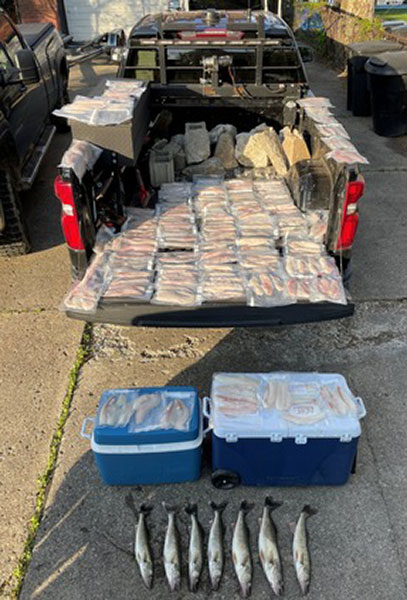
A group of anglers from northern Michigan was caught Friday with an overlimit of 34 walleye – more than double the daily legal limit, after fishing on the Detroit River.
“People visit Detroit from all over to take advantage of the abundant fishing offered by the Detroit River,” said Todd Szyska with the Michigan DNR Law Enforcement Division, and the division’s acting captain for the south region of the Lower Peninsula. “Our walleye fishery is world-class in part because of the many respectful anglers who follow the daily limits.”
The five anglers were staying at a rental property in the city of Detroit for the duration of their fishing trip.
Conservation officers saw the group north of Milliken State Park Friday morning. When the anglers returned several hours later, the officers observed them taking additional fish and approached the group with a search warrant.
In total, the five anglers were over the daily limit by 34 walleye. The daily walleye limit for the Detroit River is six fish per angler.
The anglers kept their legal daily limit and received citations for the misdemeanor offense.
Michigan’s current fishing season started April 1 and runs through March 30, 2027. A license is required for anyone 17 and older fishing Michigan waters. Get more information at Michigan.gov/Fishing.
- Details
MDNR Report
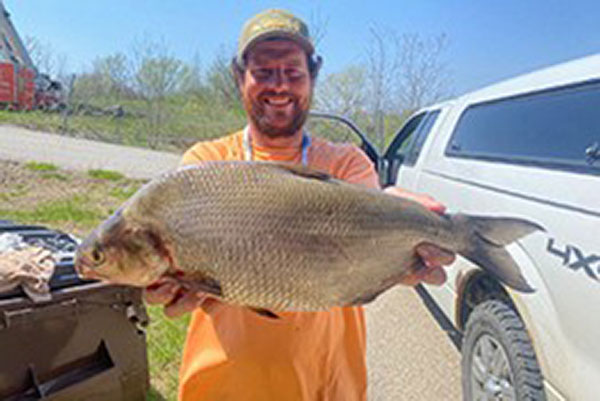
An angler from Lowell, Michigan, caught a new state-record fish: a gizzard shad that weighed 4.45 pounds and measured 20.3 inches long!
Sedrick Neinhuis was spincasting on the Grand River in Kent County on the afternoon of Wednesday, April 22, when he brought in the record-breaker.
This fish beats the previous state-record gizzard shad, which was 4.12 pounds and 21 inches, caught by baitcasting in 1996 on Lake St. Clair (St. Clair County). Gizzard shad are a fish native to Michigan and are named for their gizzard, a muscular organ filled with grit and stones that helps to break down food, more commonly associated with birds like chickens than with fish.
DNR fisheries biologist Matt Diana, who works out of Plainwell in the Michigan Department of Natural Resources’ Southern Lake Michigan Fisheries Management Unit, verified Neinhuis’ new state-record fish.
“We kind of knew the fish was there,” said Neinhuis of that day on the water. “Our mission this year was to get one close to 5 pounds. There are a lot of big ones out there, but it’s one of those fish people don’t ever report. I’m hoping next year we can get one even bigger.”
About state-record fish
Michigan's state-record fish are recognized by weight only. To qualify, fish must exceed the current listed state-record weight and be weighed on a certified commercial scale, and identification must be verified by a DNR fisheries biologist.
To view a current list of Michigan state-record fish by species, visit Michigan.gov/StateRecordFish.
- Details
LANSING, Mich. The Board of Directors of Michigan United Conservation Clubs (MUCC), a 501(c)(3) nonprofit organization, has unanimously approved a resolution to dissolve the organization, subject to all applicable legal and regulatory requirements.
For nearly 90 years, MUCC has served as a unified voice for conservation in Michigan, championing hunters, anglers, and outdoor enthusiasts through advocacy, education, and partnerships with state agencies and the broader conservation community.
Despite the deep commitment of its members, partners, and supporters, MUCC has faced sustained financial challenges that have impacted its long-term sustainability. Following careful evaluation of the organizations financial condition and available options, the Board determined that an orderly dissolution represents the most responsible course of action.
The dissolution process is expected to be completed by mid-June 2026 and will proceed in accordance with applicable federal and state laws governing nonprofit dissolution, including the orderly wind-down of operations, satisfaction of all obligations, and distribution of any remaining assets consistent with MUCC’s charitable purpose and 501(c)(3) requirements.
MUCC extends its sincerest gratitude to its members, partners, donors, and supporters for their longstanding commitment to its mission.
Additional updates will be provided as appropriate.
For more information, please visit mucc.org.
- Details
MDNR Report
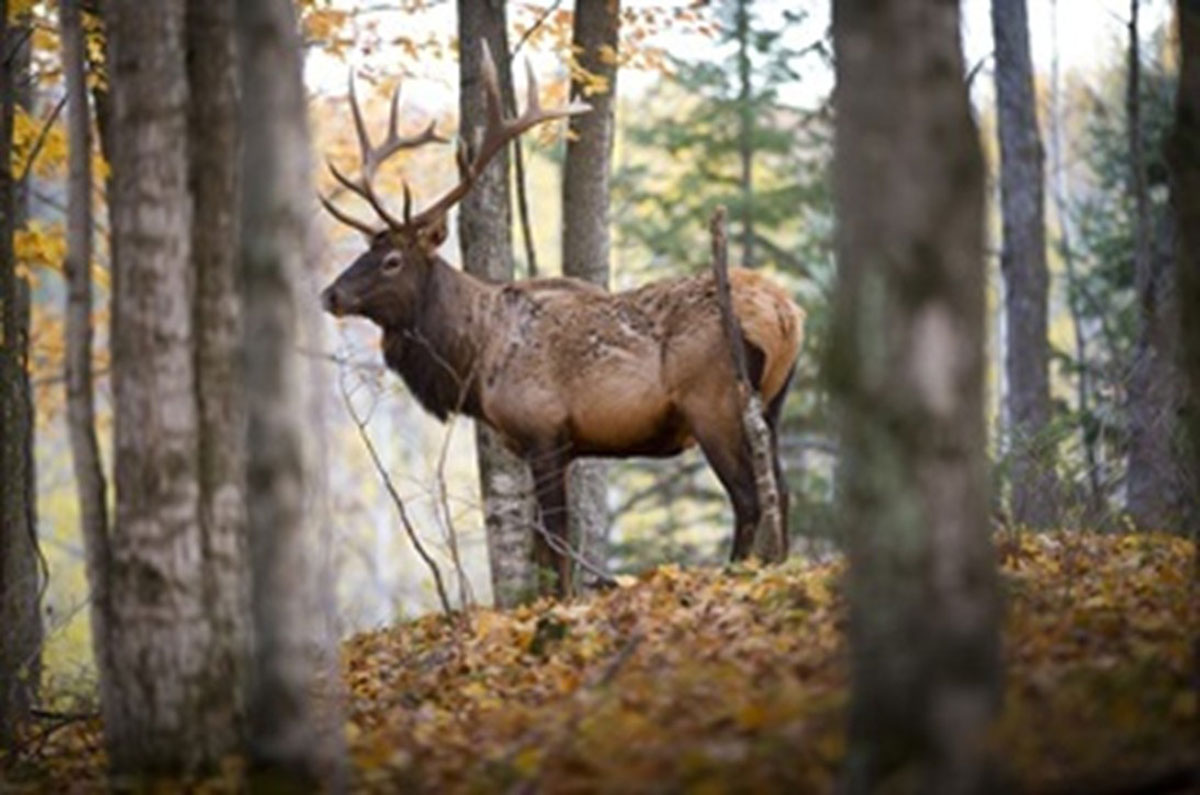
With the application period for Michigan’s elk season opening Friday, May 1, hunters should be aware of several key changes to the popular hunt.
On April 8, the Michigan Natural Resources Commission voted to establish elk hunting regulations for the 2026 and 2027 seasons. Those actions include:
- Setting the first elk hunt period in 2026 from Sept. 23 through Oct. 4, a 12-day, contiguous period. Previously, the first hunt period was broken up into three, four-day sessions that began in late August.
- Setting the second hunt period from Dec. 1 through Dec. 15, a 15-day period. Previously, the second hunt period was Dec. 13-21, a nine-day period that was closer to the Christmas and New Year’s holidays.
- Giving successful elk hunters 72 hours to present the elk head or entire animal for registration as directed by the Michigan Department of Natural Resources. Previously, hunters were required to register the entire elk within 24 hours of harvest.
Brent Rudolph, the DNR’s deer, elk and moose management specialist, said the changes are geared toward hunter convenience and increasing opportunities to harvest an iconic elk.
“For the first hunt period in particular, having a contiguous session that starts later in the season should make it easier for hunters to plan their hunt. The move also provides more favorable conditions and avoids the warm temperatures we’ve experienced during the earlier hunt in recent years,” Rudolph said.
Reduced bag limits
The NRC also decreased the number of state-issued elk licenses to 200 (compared to 260 offered in prior years) based on a recommendation from DNR personnel to help stabilize the elk herd in the northern Lower Peninsula.
A DNR aerial survey in early 2026 estimated the elk herd at 733 animals with a confidence interval of plus/minus 247, meaning the population could range between about 486 and 980 animals. That estimate generally falls within the DNR’s management goal of 500-900 animals established in the agency’s elk conservation and management plan.
To help keep the herd stabilized, the NRC:
- Kept the elk license quota for the first hunt period at 100, while changing the quota mix. Forty “any-elk” licenses will be issued (an increase of 10), and 60 antlerless-only licenses will be issued (a decrease of 10).
- Decreased the elk license quota for the second hunt period to 100 compared to 160 last year. That includes 30 any-elk licenses (a decrease of 20) and 70 antlerless-only licenses (a decrease of 40).
Elk applications and drawing
Elk hunting is limited to Michigan residents. Apply for an elk license from May 1-June 1. An application is $5, and each hunter is limited to one application per year.
Purchase an application from any license agent, online at Michigan.gov/DNRLicenses or through the Michigan DNR Hunt Fish mobile app. The app is available for download at the Google Play Store or the Apple App Store. Find a license agent at Michigan.gov/DNRLicenseAgents.
Drawing results will be available June 22.
Hunters are selected for an elk license through a weighted chance system. In the annual drawing, the total number of chances is equal to the number of chances an applicant has earned in past drawings (beginning in 2003) plus one chance for their current-year application. Those who are not selected for a license earn one chance for future elk drawings.
There is no guarantee you will ever be drawn for an elk license, regardless of the number of chances accumulated. The weighted selection system provides some advantage to hunters who apply year after year while still providing an opportunity to all applicants, including those applying for the first time.
The number of elk licenses available each year (200 for 2026) is very small compared to the number of expected license applicants (over 47,000).
To learn more about on the elk drawing, watch the “Elk Weighted Lottery System Explained” video at Michigan.gov/Elk.
Visit the DNR’s 2026 elk hunting regulations webpage for more information about the 2026-27 regulations.
- Details
MDNR Report
In response to the detection of bovine tuberculosis (TB) in a Charlevoix County cattle herd, the Michigan Departments of Natural Resources and Agriculture & Rural Development, and the U. S. Department of Agriculture are conducting deer sampling in Charlevoix and Antrim counties to determine if the disease is present in the local wild deer population. There have been no previously documented cases of bovine TB in deer in these counties.
Bovine TB is a bacterial disease that can affect all mammals, including humans. It is known to be present in the free-ranging white-tailed deer population in specific areas of northeastern lower Michigan, and the disease can be transmitted between deer and cattle.
To test for bovine TB, deer must be harvested with landowner consent, then transported to the Michigan State University Veterinary Diagnostic Laboratory. The DNR is committed to a respectful and responsible harvest and is working with partners to ensure that all venison that tests negative for bovine TB is donated to provide meals for local families.
“Disease does not follow property boundaries or county lines, and we appreciate the cooperation of private landowners who make these efforts possible,” said Mitch Marcus, DNR Wildlife Health supervisor. “It takes many partners working together to understand the impact of disease on the cattle herds and wild deer that Michiganders depend on.”
In addition to this focused sampling, bovine TB testing will be available for hunter-harvested deer from Charlevoix County this fall. Disease sampling efforts in Charlevoix and Antrim counties are unrelated to any other deer removals in the state.
For questions about testing deer for bovine TB in Charlevoix and Antrim counties, please contact the DNR at 989-732-3541. If cattle producers have questions related to bovine TB and their herd, please contact MDARD at 800-292-3939.