


- Details
By Louie Stout
 DNR Shuts Down Eagle Lake Parking Area
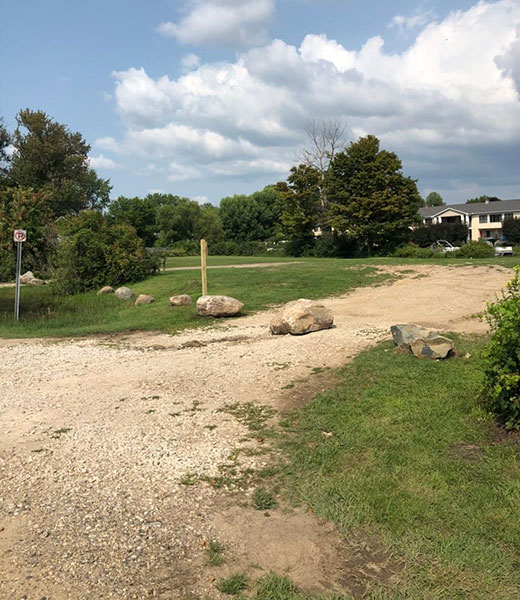
The Michigan DNR has blocked access to its Eagle Lake access parking property, prohibiting boaters who use the older boat ramp north of the area from parking there.
According to Gary Jones, the move was made when Cass County Ontwa Township officials complained of overcrowding of people and traffic along Eagle Lake road near the parking area.
The DNR bought the property more than three years ago and has allowed public parking there ever since. The grassy area is part of a new proposed DNR boating access site that has been tied up in litigation for nearly four years.
Boaters were using the property to park their trailers after launching at the existing launch along the roadside north of the parking area. That changed late last week when the DNR placed large boulders along the roadside to prevent people from parking there.
- Details
MDNR Report
 DNR Conservation Officers Seize 2,000 Pounds of Illegal Crayfish
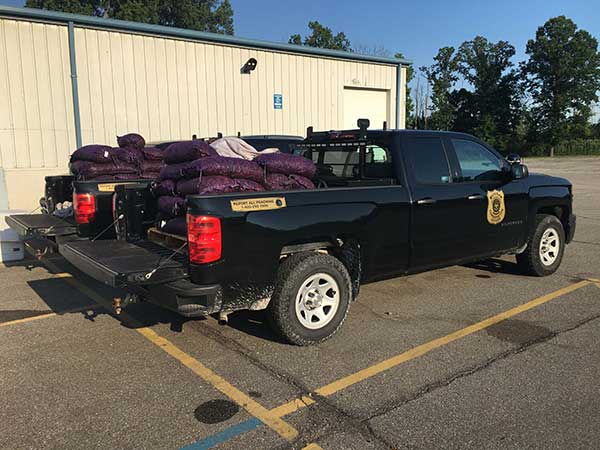
More than 2,000 pounds of live, illegal red swamp crayfish recently were seized by Michigan DNR conservation officers - the largest aquatic invasive species seizure by the Michigan DNR.
Red swamp crayfish are prohibited in both Michigan and Canada. They burrow and create shoreline erosion, creating instability. Additionally, they compete with native crayfish, reducing the amount of food and habitat available for amphibians, invertebrates and juvenile fish.
Conservation officers in St. Clair County were notified July 13 by U.S. Customs and the U.S. Fish and Wildlife Service when a commercial hauler transporting red swamp crayfish was denied entry into Canada and would be returning to Michigan. The commercial hauler was stopped by Canadian officials at the Sarnia, Canada border crossing in an attempt to leave the United States.
- Details
Deer hunters are reminded they can apply for a Michigan antlerless deer license July 15 to Aug. 15.
Some areas of the state have a limited number of antlerless deer license applications available, making applying for that deer management unit important for some. Private-land applications do require a landowner phone number, so have it ready.
Young hunters, 16 and under, can buy antlerless deer licenses over the counter July 15- Aug. 15.
Any leftover licenses that remain will go on sale Sept. 10 at 10 a.m.
For more details about antlerless deer hunting and to buy an application online, visit michigan.gov/deer.
- Details
MDNR Report
 Michigan Wolf Survey Shows Healthy Wolf Population in UP
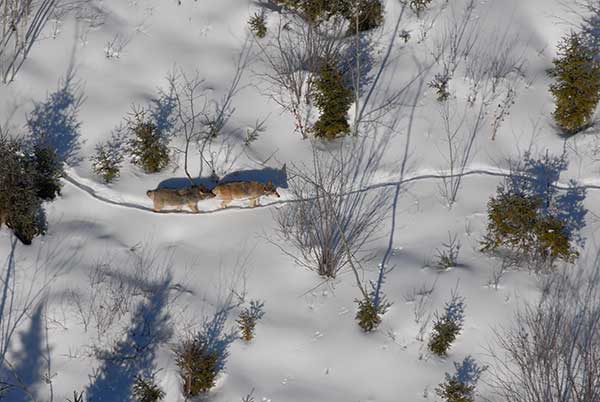
Two wolves on a winter trail from a previous DNR wolf survey in the Upper Peninsula.
Michigan Department of Natural Resources Wildlife Division officials said today the states wolf population has remained relatively stable over the past four wolf surveys, the most recent of which occurred this past winter.
DNR wildlife biologists estimate there was a minimum of 662 wolves found among 139 packs across the Upper Peninsula this past winter. The 2016 minimum population estimate was 618 wolves.
Based on our latest minimum population estimate, it is clear wolf numbers in Michigan remain viable and robust, said Russ Mason, chief of the DNRs wildlife division. A similar trend is apparent in Wisconsin and Minnesota. The western Great Lakes states wolf population is thriving and has recovered.
Fifteen more wolf packs were found during this past winters survey than in 2016, but pack size has decreased slightly and now averages less than five wolves.
- Details
The Dowagiac Conservation Club will host a Hunter Safety Class July 5-7 with registration set for Wednesday at the clubhouse.
The course will be held at the club from 6 p.m. to 9 p.m. July 5-6 and 8 a.m. to 2:30 p.m. July 7.
There is no charge for the class but students must pre-register with a birth certificate and attend all three classes to get their Hunter Safety Certification.
For more information, call Furmer, 269-646-9839.