


- Details
(Provided by MDNR)
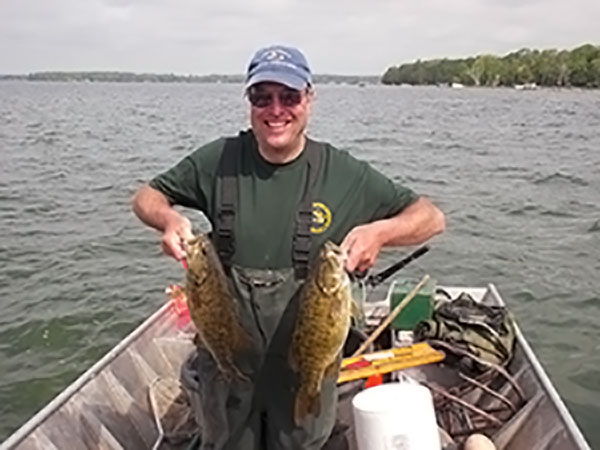 Lake Margrethe Shows Plenty of Angling Opportunity
At 1,922 acres, Lake Margrethe is the largest lake in Crawford County in Michigan's northern Lower Peninsula. Located just a couple of miles west of Grayling, it is easy to get to, making it one of the most popular fishing lakes in this part of the state.
It has long been stocked by the Michigan DNR with walleye and Great Lakes-strain muskellunge, but had not been surveyed since 2007 (general netting survey) and 2009 (fall electrofishing survey targeting walleye). Walleye had recently been stocked in 2011, 2013 and 2015, and muskellunge were stocked in 2012 and 2014 (plus Northern-strain muskellunge a number of years prior). So it was time for the DNR to go see how the fish populations of Lake Margrethe were doing.
DNR, Fisheries Division staff decided to get an early start on it, knowing an early effort could allow them a successful catch, particularly of muskellunge. The crew set nets on April 25, 2016. However, Mother Nature did not cooperate, and no muskies were captured.
- Details
(Provided by MDNR)
The Michigan DNR, in partnership with the Michigan Muskie Alliance, is investigating the muskellunge fisheries of the state again this year by distributing an online angler survey.
The 2017 Muskellunge Angler Survey will gather information about muskellunge angler demographics and catch data. Muskellunge anglers have been surveyed since 2014, but only online since 2016. Traditional methods, including creel and postcards, have not been as successful as collecting information through electronic means. The current survey can be found on the DNR website at michigan.gov/muskie and the Michigan Muskie Alliance website at www.michiganmuskiealliance.org/.
- Details
(Provided by MDNR)
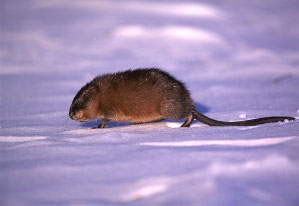 Just What Are Muskrats?May is American Wetlands Month - a month to appreciate and enjoy the wonders of wetlands! Take some time to experience this amazing native ecosystem by visiting one of Michigan's Wetland Wonders. There, you may find one of Michigan's most fascinating aquatic mammals - the muskrat.
Muskrats are a rich brown color and are roughly 18-25 inches long from the tip of their nose to the end of their hairless, round, brown tails. They weigh about 2-3 pounds and have partially webbed hind feet to help them swim in the marshes, lakes, ponds and slow-moving streams they inhabit.
Plants are the primary food source for muskrats, including the roots and stems of aquatic plants like cattails, arrowhead, waterlily and rushes. Muskrats will also sometimes eat meat, including fish, crayfish, mussels, turtles and frogs. Muskrats usually feed within 50 to 500 feet of their den.
Muskrats build dens, with one or more underwater entrances, in the sides of elevated banks along streams, lakes and ponds. In marshy areas, muskrats build their homes out of cattails. These cattail houses can be up to 6 feet in diameter and 4 feet high. The walls are up to an inch thick, and the interior of these cozy homes can be 35 degrees warmer than the outside air!
- Details
(Provided by MDNR)
The Michigan DNR announced it will not collect eggs from Great Lakes muskellunge in the Detroit River this month due to recent fish kills in Lake St. Clair that are attributed to a confirmed, widespread infection of viral hemorrhagic septicemia virus (VHSv).
Normally, the DNR collects eggs from the Detroit Rivers muskellunge population to be reared at Wolf Lake State Fish Hatchery in Mattawan and stocked each fall in Michigan waters throughout the state. With an increasing number of dead muskellunge being found in the Detroit River, and the confirmed presence of VHSv in Lake St. Clair, DNR fisheries managers feel the risk of contaminating this hatchery is too great to proceed with this year's rearing efforts.
VHSv is a contagious pathogen that causes the fish's blood vessels to leak, which can show as bloody patches on the skin. It is known to infect more than 30 species of Great Lakes fish and has been found in lakes Superior, Huron, Erie and Ontario, along with a few inland lakes. Some species such as lake sturgeon and walleye are very resistant to it, while others including bluegill, largemouth bass, muskellunge, gizzard shad and round goby are very susceptible.
- Details
(Provided by MDNR)
In 2014, the Michigan Natural Resources Commission and the Michigan DNR agreed to maintain deer regulations on a three-year regulatory cycle to stabilize regulations, reduce public confusion and enhance communications.
That three-year time frame has ended, and the DNR has prepared recommended changes to deer regulations and will present those changes at the May 11 NRC meeting.
The NRC has the exclusive authority to regulate the taking of game and sportfish.
Deer are very important to the citizens of Michigan. There is much interest going into this next regulation cycle, especially since we are proposing quite a few changes. It is critical that we provide an extensive summary of any recommended change so those who are interested can voice concerns to the NRC as part of the public input process, said Chad Stewart, DNR deer specialist.
We try to take a comprehensive approach when we construct our proposed changes," Stewart said. "We collected input from public comments and stakeholder groups over the last three years, and have identified the issues that are important to them. We then analyze the data that we have and make recommendations using the best biological and social science available.