


- Details
(Provided by MDNR)
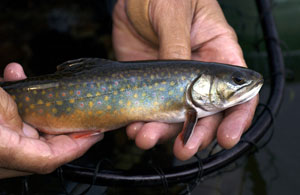 Michigan Seeks Comments on Inland Trout Management PlanThe Michigan DNR has released its draft inland trout management plan and is seeking public comment on it.
The plan, available online at michigan.gov/fishing under Angler Alerts, focuses on the ecology and management of populations of inland trout in rivers and inland lakes of Michigan.
The intent of the inland trout management plan is to provide an overview of inland trout habitats in Michigan, the biology and ecology of inland trout populations, and management activities directed toward inland trout and their habitats. This information provides a basis for understanding the role of inland trout in current and future management of fisheries in Michigan's inland lakes and streams.
- Details
(Provided by MDNR)
The Michigan DNR has approved bear hunting regulations for the 2017-2018 hunting seasons.
In order to reduce regulation confusion and to stabilize hunting quotas, bear hunting regulations currently are reviewed every two years instead of annually, which had been the previous practice. Michigan bear hunters will see the following changes beginning in the 2017 bear hunting season:
- Details
(Provided by MDNR)
The Michigan DNR has announced the 2016 results from its Master Angler program that recognizes large fish caught by recreational anglers.
This past year, 1,807 anglers representing 24 states and the countries of Canada and Austria submitted catches that were recognized as Master Angler fish. That's an increase from the 1,542 fish recognized in 2015 and nearly double the 987 fish recognized in 2014. Of the entries accepted, 1,078 were in the catch-and-keep category while 729 were in the catch-and-release category. A total of 241 anglers received certificates for fish placing in the top five for both categories.
- Details
(Provided by MDNR)
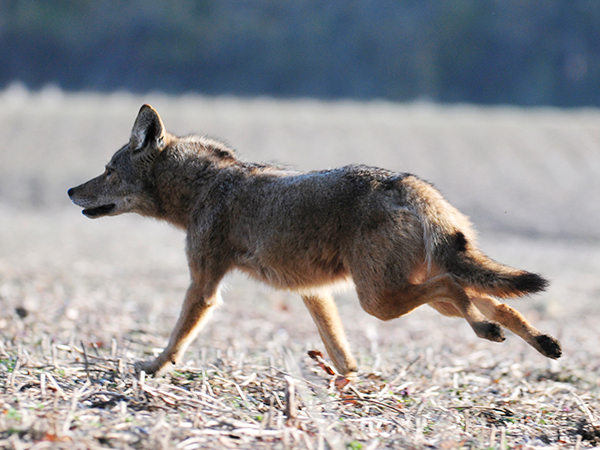 Coyote Sightings and What You Can Do to Prevent Conflicts
Coyotes can be found everywhere - forests, fields, farmlands, backyards, neighborhoods and cities.
Resourceful members of the dog family, coyotes have used human development to their advantage.
Coyotes have learned how to survive in urban landscapes, even near people. They take advantage of abundant natural foods that can often be found in urban and suburban areas, said Hannah Schauer, a Michigan Department of Natural Resources wildlife technician. Because they are highly adaptable, coyotes have expanded their range throughout North America, and can be found in every county in Michigan.
- Details
(Provided by MDNR)
The Michigan DNR is making it easier for citizens to report fish and game violations through the convenience of text messaging.
The Report All Poaching (RAP) hotline (800-292-7800) now accepts text messages in addition to telephone calls. Text messages may include photos. The RAP hotline is a toll-free, 24-hour, seven-days-a-week number that enables citizens to report violations of fish and game laws, as well as other natural resource-related laws. It is operated by DNRs Law Enforcement Division. The DNR also offers a web-based reporting form.