




What's New?

Wow! Paw Paw Lake keeps cranking out big catches as proven by the Michiana Singles Open tourney held on Father’s Day.

Bill Mathews and Kris Iodice continued their dominance at Diamond Lake, catching 13.65 pounds to win Saturday’s Southwest Michigan Anglers Club (SMAC) derby.
New Gear
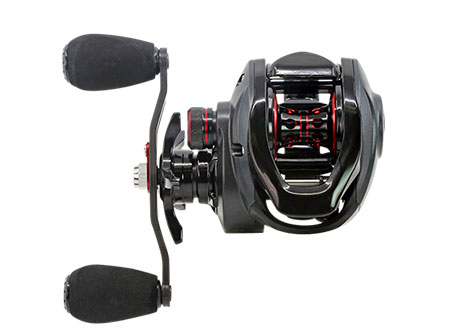
Okuma Fishing Tackle announces the all-new Eminent Baitcast Reel—a lineup of low-profile reels engineered to deliver refined design and performance at an unmatched value. The series introduces a distinctive audible drag click, giving anglers real-time feedback and heightened awareness when it matters most.
Newsflash


Grand Lake O’ the Cherokees to Host 2024 Bassmaster Classic
- Details
 Bassmaster Classic
When it comes to the Academy Sports + Outdoors Bassmaster Classic presented by Toyota, Grand Lake O’ the Cherokees has more than lived up to its name.
The 46,500-acre fishery provided some of the grandest moments in the history of the event when Classics were held there in 2013 and 2016 — and now, the picturesque reservoir located in the foothills of the Ozark Mountains will add to that grand lore when it plays host to the 54th renewal of the Super Bowl of Bass Fishing March 22-24, 2024.
B.A.S.S. made the announcement at a press conference in Tulsa on Tuesday morning, nearly 13 months before the event will take place.
“Planning the Bassmaster Classic, the greatest celebration of the sport of fishing, is a never-ending process,” said B.A.S.S. CEO Chase Anderson. “The B.A.S.S. team has been working with the people of Tulsa for well over a year to make this a reality.
“Now that it’s official, we couldn’t be more excited to be headed back to a city and fishery that already hold a special place in Classic history and is such an important area to the fishing community.”
As with past Classics held in Tulsa, daily weigh-ins will be held at the BOK Center in downtown Tulsa, with the Bassmaster Classic Outdoors Expo across the street at the Cox Business Convention Center, which boasts 275,000 square feet of event space. Daily takeoffs will be held about 90 miles away at the Wolf Creek Park and Boating Facility on Grand Lake.
Previous Bassmaster Classics drew phenomenal crowds lakeside and to packed venues around the “Capital of Route 66,” and more than 105,000 enthusiastic fans are expected for Classic Week festivities.
“When you saw 3,000 fans standing out in the freezing-cold weather every morning to watch the competitors launch their boats, that pretty much told you everything you needed to know,” said Eric Lopez, director of operations for B.A.S.S. “The people in that area love B.A.S.S. and bass fishing — and for those traveling in from out of town, the area has a fabulous selection of restaurants and hotels to choose from.
Mercury Unveils Its Firsts Electric Outboard
- Details
Mercury Report
 Mercury Electric Outboard
Mercury unveiled its all-new Avator™ 7.5e electric outboard recently. It’s the first electric outboard model from Mercury and the first in a series to be officially unveiled in 2023. More-powerful Avator 20e and 35e outboard concepts, which are currently in development, were also displayed at CES.
Advanced Controls, Batteries and Chargers
Slated to be available for purchase later this year, the Avator 7.5e electric outboard will be offered with tiller or remote controls. Tiller models are highly portable thanks to clever features like a tiller handle that folds down to become a carrying handle and a quick-connect mounting system that allows the outboard to snap into place on the transom bracket. Remote models pair with one of three control options designed to fit a variety of small boat helms.
All are powered by an interchangeable lithium-ion battery pack developed in partnership with the battery experts at Mastervolt®.
“By developing interchangeable batteries, we were able to give boaters the ability to outfit themselves with enough power to enjoy more fun adventures,” said Jim Hergert, senior category manager for small outboards at Mercury. “With any electric mobility system, range and runtime are impacted by many factors. In this case, they’re dependent on the boat, load, operating speed, water conditions and more. Most anglers and casual boaters who operate at varied speeds and make frequent stops should have plenty of runtime for an exciting trip on the water. Boaters who need to stay out longer or go farther can bring along an extra battery. Swapping batteries literally only takes seconds.”
The battery can be recharged overnight using the included charger, while additional higher-speed chargers will be available so boaters can choose their charge time. All chargers are compatible with a standard household outlet.
Page 49 of 285
Search





Advertise with Us!

Michiana Outdoors News provides advertisers a cost effective vehicle to target thousands of sportsmen across southern Michigan and northern Indiana.
Connect With Us